Open source startup founder, technology leader, mission-driven investor, and engineer. I just want to help.

Subscribe to get updates via email.

benwerd

werd.social/@ben


The blog is back

I’m really heartened to see old-school blogging have a mini-resurgence. I’ve got no idea if it’ll stick, but for now, my feed reader is aglow with posts that run the gamut from quick thoughts to long-form essays, often illustrated with personal photographs. More of this, please. Much more of this.

My favorite social network ever, by a long shot, is LiveJournal. Not only did Brad and co establish many of the norms that we now take for granted, but it was built around blogging: every post was a written piece. The comments were excellent, and everyone was contributing their own original work instead of reposting memes.

Blogs + readers approximates this, although the commenting situation is too fragmented. Commenting isn’t quite right in the indieweb, either: I’m hankering for long threaded discussions rather than Twitter-style replies. I think we’ll get there, though, and this is so much of a step forward from the social media morass.

More! More! More!

· Posts · Share this post


I would pay to maintain my Twitter blue check if it came with any actual benefits. Throw in 10% off at BevMo and maybe I'm in.

· Statuses · Share this post


I'm honestly really happy about the reception getblogging.org has received. It's made my week. Not bad for a hand-rolled single page of HTML! Thanks, everyone - I hope it continues to be useful.

· Statuses · Share this post


Substack and Medium

If you receive my posts via email, you’re now getting them through Substack. Nothing should substantially change, but they’ll look a little different.

This is the fourth newsletter platform I’ve used for my writing: MailChimp, ConvertKit, and Buttondown all preceded it. This new change - which, let’s be clear, is an experiment - is already a little different. That’s because, unlike the others, Substack is more of a social network than a newsletter platform whose main competitor is very clearly Medium.

(Worth declaring: I worked at Medium from 2016-2017 and consider its current CEO Tony Stubblebine to be a friend. I’ve also been publicly critical of Substack’s laissez-faire editorial strategy.)

Substack’s main draws are very similar to Medium’s: you can make money from your writing; it will provide a beautiful, easy-to-use interface; it will find you readers. The mechanics of how it does that are different, though, and worth thinking about in the context of social network design.

First, the money.

This is the big carrot for new writers. (Content from my website will remain free, by the way.) Medium sets you up with the partner network: subscribers pay a flat $5 a month through its site. Funds are then allocated based on the fraction of each paying user’s attention you attract.

That means you can work on a big piece of writing that you think will attract a lot of attention and get paid for it without a lot of business preparation. Medium’s paywall is leaky, so non-members will be able to read and help to promote it.

While Medium’s financial model is content-centric, Substack’s is personality-based. Readers opt in to subscribe to a publisher, just as they would any newsletter. But publishers can opt to establish payment tiers that give subscribers access to premium posts if they pay more money. Attention doesn’t come into it: a subscriber either believes you’re worth paying a monthly fee for or they don’t.

The other trick is that, on Substack, publishers have to sign up separately to Stripe in order to gather payments. That means Stripe handles Know Your Customer requirements on behalf of Substack. Between Stripe fees and Substack’s 10% take, the publisher is left with a little over 85% of subscription fees - which is a significantly better deal than many places on the web.

Using revenue as a lens, then, whether you choose Medium or Substack depends on whether you have a following who might pay for your work. If you do great work, or are working on a single, amazing piece of writing, but don’t have a following, Medium is clearly the better choice. If you already have a community or want to put in the work of building a following, Substack might have the edge right now.

Second, the interface.

Medium’s writing interface is still the best, hands down. The attention to detail is superb, from font kerning through to embedding.

Substack’s is more utilitarian, but is still cleanly designed and distraction-free. Because of its email origins, there’s no way it can possibly do some of the fancy embedding tricks that Medium is able to.

I’ve long written using iA Writer no matter where it’s going, but Medium’s interface remains much more enticing to me. There’s also an API and - crucially, excitingly - a way to import posts from your personal blog and have the canonical link set to your blog’s URL. That feature feels specifically built for me, and I love it.

Finally, the community.

Both platforms will find you readers, albeit in different ways.

Again, Medium’s model is content-centric: it will show you posts it thinks you’ll find useful or interesting, no matter who they’re by. The algorithm automatically promotes content inside implicit communities of interest. It will also try and show you content by people you know, however, partially by connecting to your Twitter network.

Substack’s is very personality-focused. It does the same Twitter trick as Medium: your followers from elsewhere who are already on Substack will know about your Substack feed. But it also operates using a system of direct recommendations; every Substack publisher directly suggests other publishers to follow. It’s relationship-based rather than algorithmic: one can imagine asking a publisher if they’d consider recommending you. Medium’s algorithm is more of a black box (because it’s likely being tweaked every day).

Both services now offer a feed. Medium’s, as discussed, is algorithmically-ordered so as to optimize for serendipity: you’ll discover new content you didn’t know you wanted to read. Substack’s is much more like a traditional feed reader, in that you’ll read the latest content from people you’re subscribed to. (In fact, beautifully, it is a feed reader: you can bring your own RSS feeds from elsewhere.) Substack has traditional blog-style comments and hearts; Medium has claps to indicate attention and the concept of stories that follow stories rather than threaded comments. Both have merit, although Substack’s approach is considerably more straightforward.

Why choose?

I don’t: I’m a happy user of both, while also publishing on my own site first in the indieweb tradition. I am, if you’re interested, experimenting with a unique, native Substack about my work writing a book. And you can follow me on Medium.

Moving to a community-based newsletter is strategic for me. I want to continue to build a following so I can share the work I’m doing. Moving away from a straight newsletter platform is also financially beneficial: services like ConvertKit cost real money every month to operate. You can get started on both Medium and Substack for free.

· Posts · Share this post


I voted. If you’re eligible, you should too.

· Statuses · Share this post


In a world where everything is purchased by subscription, only the subscription providers own anything - and by extension, they own everything.

· Statuses · Share this post


Another shitty day for democracy

I’m having trouble shaking today from my bones, so consider this post an attempted exorcism.

As I sit down to write, this was a day when a man broke into the Speaker of the House’s home in San Francisco, armed with a hammer, with the apparent intent of attacking her. When she turned out to be in the capital, he violently attacked her husband Paul, fracturing his skull.

This was also a day in which, following Elon Musk’s purchase of Twitter, use of white supremacist, misogynist, and homophobic language quintupled on the platform, while exiled white supremacists on alternative social networks bragged about having won.

Whatever you think about Nancy Pelosi’s politics, hopefully we can agree that breaking into her home and attacking her with a hammer is not the right way to go about challenging them. It’s obviously unhinged. But it is also reflective of a downgrading of democracy as a part of right-wing discourse. It sits on a spectrum with neoreactionaries like Peter Thiel who want to replace representative democracy with an authoritarian monarchy based on corporate plutocracy: something that sounds like an idea from a Philip K Dick novel but is increasingly, troublingly, mainstream.

Musk’s takeover of Twitter was welcomed by these communities because of his stated commitment to free speech. Of course, there’s a particular kind of speech that they care about: nobody was being banned from Twitter for calling for small government or lower taxes. Nobody was banned for arguing against marriage equality on a legal or social basis. It was hate speech and hate speech alone. The free speech that matters to these communities is the kind that allows them to demean people they see as lesser.

The thing about these ideas is that, although the people who wield this rhetoric are loud, they’re unpopular, and becoming more unpopular as time goes on. When polls claim that subsets of the population yearn for life as it was in the 1950s, they call these movements out for what they are: the dying gasps of the dregs of the 20th century, exhaled by wounded egos desperate for something that will make themselves feel more than they are. America’s demographics are becoming more diverse over time. For the pathetic, this is threatening.

It’s in this context of diminishing white supremacy that we see figures starting to argue against representative democracy. Of course they are: as their numbers dwindle, democracy is not a system they can win. The big lie of a thrown election is an ego-saving device that helps them believe they’re not shrinking away from prominence. But shrinking they are. So they need to find other ways of holding power: monarchy and insurrection.

And as their desperation rises, ugly old ideas rear their heads again. We hear again and again about “globalists” and “globalist conspiracies”. For the longest time, I didn’t understand what people meant by this term in the negative sense: considering peoples at a global level in a connected world seems like common sense. But, of course, with a heavy heart, I now understand that it refers to people who have an allegiance to some kind of world order that supersedes their allegiance to their country, which is an accusation that has long been levied at Jews. And correspondingly, there is the return of the “great replacement” conspiracy theory which posits that non-white immigrants are being brought into the country to replace white voters, often by you-know-who. And, yes, finally, the conspiracy theories about “groomers” are little more than reheated blood libel.

It’s not all anti-semitism. There’s an increasing number of people arguing against universal suffrage, as if women voting has somehow brought about their woes. Anti-Asian violence is on the rise. And of course, America has a rich seam of anti-Blackness that runs throughout.

Why, though? What’s the point of all this hate? In the end, it comes down to the maintenance of wealth and power. The bigotry always benefits someone. Just follow the money, whether it’s to fossil fuel companies that underwrite climate change denial, plutocrats who seek to cultivate their own political power, or companies that profit from modern day slavery through prison labor and worse. Hate is manipulation, same as it ever was.

“Cry liberal tears,” white supremacist edgelords yell from anonymous accounts. The anger is palpable, as if they’ve somehow been personally oppressed by policies that asked them not to practice outright bigotry. These people are not geniuses. There’s a sense of revenge behind their words: as if inclusive voices are personally responsible for their diminishing communities rather than the passage of time and their own actions. In choosing to deeply identify themselves with stagnation rather than change, they’ve doomed themselves. Change always wins. And the promoters of this hateful stagnation aren’t in it to help them at all.

It’s surreal to see ideas that bubbled to the surface and almost brought global civilization down a hundred years ago recycled on national TV and in the national discourse. What they’ll learn, though, is that they cannot win - not because they will face stiff opposition, although they will, but because their ideas don’t have legs to stand on. Alex Jones was ordered to pay almost $1 billion to the parents of Sandy Hook victims not because of any unfairness, but because he knowingly peddled bullshit that caused real harm. They will soon find, too, that Elon Musk is far from their savior: already, he has realized that he needs to capitulate to advertisers for his newly-acquired platform to survive. The dalliance with the disingenuous “free speech” crowd was in itself a ruse. Having saddled it with a billion dollars a year in interest payments alone, he is well aware that he needs to make it as mainstream as it comes. In turn, the people who find comfort in hate speech will find that they don’t have the allies they thought they did.

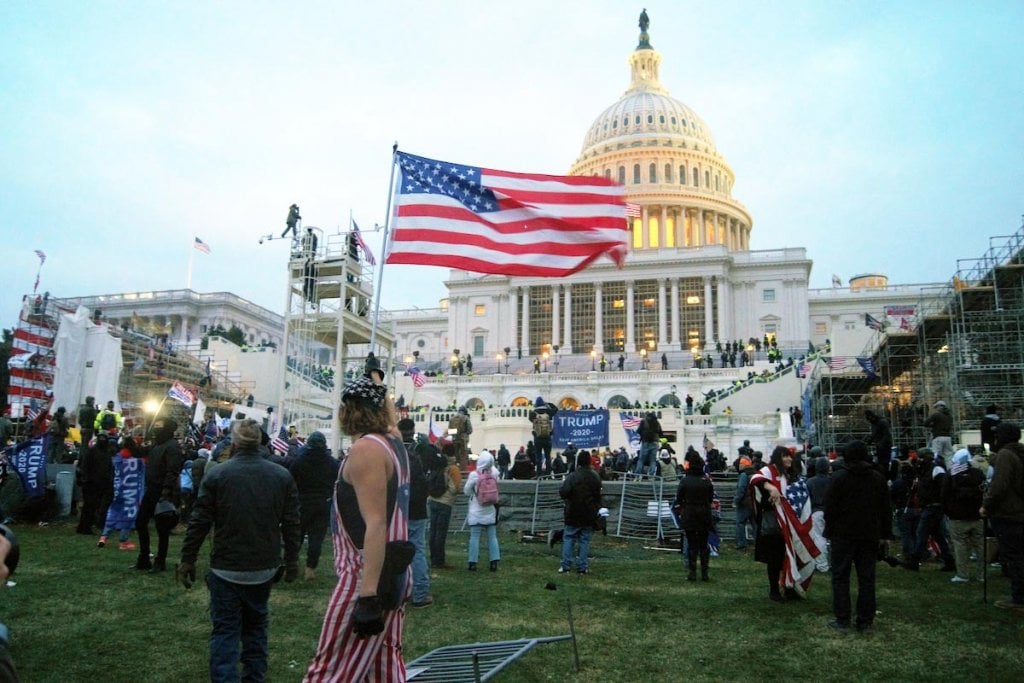
Which leaves the kinds of people who attack politicians with hammers and bring automatic weapons to pizza parlors and force their way into the Capitol building with guns and banners where they always were: as marks for people who manipulate their powerlessness for their own ends.

I don’t feel sorry for them: it’s a pathetic group that falls back to hate rather than positive action. By falling for the scam, their lot in life can only possibly get worse. Through their gullibility and violent conclusions, they put us all at risk.

But my real ire is reserved for the manipulators: the people playing power games. And those people, the plutocrats that think nothing of promoting hate to cement and grow their own power, are where my real worry lies, too.


Photo: United States Capitol outside protesters with US flag, by Tyler Merbler

· Posts · Share this post


I just learned that my two month old has teeth now. Presumably he'll have a goatee and be a trained barista by eighteenth months. Things moving a little too fast.

· Statuses · Share this post


I'm absolutely fascinated to learn what accent my child will have initially. Place your bets here.

· Statuses · Share this post


Given the choice, I'd vastly prefer to participate in a Circle-powered community than a Discord-powered one. Give me asynchronous discussions and calm UX over gamer-optimized real-time chat any day of the week.

· Statuses · Share this post


Monthly sponsors

I get multiple emails a day asking to pay to place a post on my website.

As of today, here’s the message I’m replying with:

Thanks for reaching out.

I don't accept paid posts on my website as such. I'm considering adding a monthly sponsor, which would give you an ad in the sidebar and at the bottom of the newsletter for the duration of the month, as well as the ability to publish a post at the beginning of the month. At the end of the month I would also write a post to thank you. All posts also go to my newsletter subscribers.

The cost for this is currently $2000. To get started with this, let me know a little more about the product you want to promote.

As I’ve mentioned before, I’m not writing here to make money, but if people keep asking, I’ll make them a deal.

· Posts · Share this post


Interesting today to see the people who call for everyone staying on Twitter - almost as if they've invested in the site being the center of their influence network.

Owning your relationships is a group inoculation.

· Statuses · Share this post


I made a website that only works if you’re smiling at it

I made a website that only works if you’re smiling at it.

(Caveat: it doesn’t seem to work on iPhone very well, and I’m not sure about Android, but I’ve tested it across browsers on desktop and iPad.)

Behind the scenes it uses face-api.js to identify your emotion from your webcam, and then applies the result to a CSS opacity filter on an absolutely positioned div. It’s a simple use of a little JavaScript, but it feels freaky - particularly as you continue to read the page, your face forced into a false grin that feels more and more of a burden as time goes on.

I wanted to make two points: that our operating systems will almost certainly be able to adapt to our human context as time goes on at a native level, and that emotional tracking feels invasive.

Other versions might show different content depending on your emotion or on what it thinks your gender is (which, of course, is also a problematic idea).

I stuck it on a domain that I acquired to make a different, dumber joke - Web 8: The Ocho - but it felt like a good home. We’re not that far away from this kind of invasive technology. It may seem horrible to us now, but the Overton window will have been dragged in that direction little by little in the meantime, so when it arrives we’ll likely accept it without question.

· Posts · Share this post


For some reason today feels like a good time to re-up my belief that all of you should blog: https://getblogging.org

· Statuses · Share this post


I finally killed the spider plant I bought when I first moved to California, and I'm really disproportionately bummed about it.

· Statuses · Share this post


The magic behind the earth

Over the last week I’ve found myself, many times, wanting to phone my mother. “I should tell Ma,” I’ll think, and it’ll take me a beat to remember. I can’t tell Ma. Ma’s gone.

In the little library nook that sat in the corner of my primary school classroom, 35 years ago, there was a book about ghosts. I devoured it. There were tales of ghosts of actors who still haunted theaters, and of ladies in stately homes. One of the chapters was about a phenomenon where someone would have a wholly real interaction with a loved one, there in the room with them, only to find they’d died far away the same night. I was fascinated with that idea, and internalized it far more deeply than I thought I had, because I realized when Ma died that some part of me thought I’d get to speak to her one more time.

I speak to her every day, of course. But I’m speaking to a figment; a version of her in my memory, which in turn has to also be me. In a way, it’s a trick I’m playing on myself, perhaps to make it easier, although I’m not sure that it really does.

I go on long walks, often late at night, to get some exercise but also to order my thoughts. Sometime last year, I was walking through the hills near my parents’ house, and the wind picked up from nowhere and ran through my hair. I stood still for a moment, goosebumps running up my skin, and for a moment I could have sworn it was her.

I’m supposed to be a sensible adult, whatever that means, but I’m still the kid who got up to draw comic books an hour before school, I’m still the kid who feels a kind of magic beating behind the earthly mundane, and I’m certainly still the kid who hopes to catch a glimpse of a ghost so he can see his mother again.

I find that child, a version of whom lives inside all of us, to be more interesting, more endearing, and more alive than the middle aged skinsuits we wear that claim to care deeply about MAUs and ARR and our IRAs. That child - this private version of ourselves - is driven by curiosity and whimsy and the wonder of possibilities. That child knows that magic exists, in some form, if they can only find out how to use it. And they love, so much. The trick is to let them breathe.

· Posts · Share this post


This is a commonly-held view. It's about to get rough out there. https://twitter.com/natfriedman/status/1585399067906932736

· Statuses · Share this post


If you feel like you have to justify your existence, you've already lost.

The best version of themselves anyone can be is the one that doesn't need permission.

That means creating environments where everyone can feel free to be themselves.

· Statuses · Share this post


Thinking about leaving Twitter

Regardless of what happens after the Elon Musk acquisition (if it even still goes through!), I’ve been thinking a lot about the effect social media - and particular, Twitter - has had on me, and how to change my relationship to it.

Alongside the sentiments of a lot of power users, I think I need to either leave Twitter permanently or significantly downgrade my involvement. Here’s why:

I don’t think it’s healthy (for me) to be this connected.

It’s a newsfeed on steroids: a dopamine rush of everything that could possibly be happening. It’s not just a backchannel to life, it’s a backchannel to everybody’s life, including their ids. If something important has happened, it’s there, instantly. If something unimportant has happened, it’s there, instantly. It’s all there, all of the time.

It’s good to be informed. But when it turns into an addiction - as it has for me, partially because of my own personality traits and partially because of the platform’s design - being informed can turn into a cognitive load that clouds other tasks.

A timeboxed learning activity - reading a book, checking out my feeds, skimming a newspaper, listening to a podcast, etc - is unambiguously healthy. An activity you feel compelled to do hundreds of times a day, like a smoker, is not. I’m not necessarily saying that it’s like this for everyone; I’m certainly saying it’s like this for me.

The reality Twitter connects me to is heightened.

Social media’s tendency to amplify extremely emotive events and content is well-documented.

Twitter famously has a “main character”, the dunkee of the day, who can vary from a noxious politician to someone unaware of their relative wealth and privilege. I’m not railing against “cancel culture” here - typically, these people deserve some (or quite a bit of) scorn. But I’m not sure I need or want to see the pile-ons, and I worry that the energy devoted to the main character actually hides the activity some of the worst actors in society, who go about their toxic days virtually undetected.

I have no interest in tone policing the internet, and there’s a lot of excellent work that’s come out of Twitter organizing: I think MeToo and Black Lives Matter are two very clear forces for good that started as hashtags to gather like minds. I want to see those communities, know about their work, and see how I can help. These days, I feel like I can better do that by reading articles, joining communities, and taking a more analytical approach.

It’s not necessarily a better approach for everyone. But for me: if I don’t control my inputs, I feel overloaded and my ability to make sound judgments is impaired.

In a world where content moderation is scaled back and far-right-wing accounts are reinstated, I can’t imagine any of this will get better.

The FOMO of not being on Twitter is bullshit.

I’m afraid of leaving Twitter for two reasons: because I might miss something from someone, and because someone might miss something from me. In other words, I feel like I need to be on the platform to stay informed for the good of myself, and to let people know about the work I’m doing for the good of my career.

The most informative page on Twitter for me is Twitter Blue’s Top Articles, which is a lot like the Nuzzl service it bought a few years a go: a list of the top links people I’m following (and the people they’re following) have posted.

The most fun is, of course, the main stream. But I’m finding that I can connect with most people in other, calmer ways: notably through their blogs and newsletters. I love the people I follow on Twitter, and I have no qualms about adding them to my subscriptions. I want to read everyone’s long-form thoughts - and even their short-form thoughts, when they’ve been posted with just enough friction to prevent them from being a firehose of id.

Do I think people would miss me? Not as such, but I do think my website would have fewer readers to begin with. Twitter is easily my single biggest referrer today. This is another argument for downgrading my involvement rather than disappearing entirely, but I’m hopeful that this dynamic will change. I’d love for there to be a new way to discover people to read and interact with. But also, I suspect that if I focus on a different approach, I’ll find communities elsewhere.

Discourse on Twitter tends to follow a power law because its circles of influence follow a power law. So my suspicion is that smaller communities will also be more interesting: more radical, perhaps, and certainly more different from one another.

Social media platforms have done a lot of work to make themselves feel like (and maybe be?) the place to see and be seen. I have to wonder if that’s akin to cigarette companies associating their product with being cool. Cigarettes are a lucrative product; so are social media boosts that help you be seen by more people.

I want to concentrate again.

Maybe this is all this post had to say: I hate the feeling of being distracted. Social media pushes me to the right of the Yerkes-Dodson graph, impeding my cognitive performance and getting in the way of the things I want to do. It’s a genuine addiction: something to be kicked.

I’ve found it noticeable that when I take time away from social, my concentration span regrows. I also just have more time to spend thinking about other things. In a world where I have increasing commitments, finding ways to make the way I use my time more impactful feels important for me. I’m raising a child; I’m doing a job I love; I’m writing a book. I’m not sure that leaves much time for getting angry on the internet.

Which brings me to, finally:

Social media is not the internet.

There’s so much more out there. The web remains a sea of interconnected ideas, across a kaleidoscope of forms and sources. Spending most of my time on just a handful of billion dollar sites squanders the possibilities and runs contrary to my values. There’s so much to be said for diversifying inputs, but there are only so many hours. It makes sense to economize.


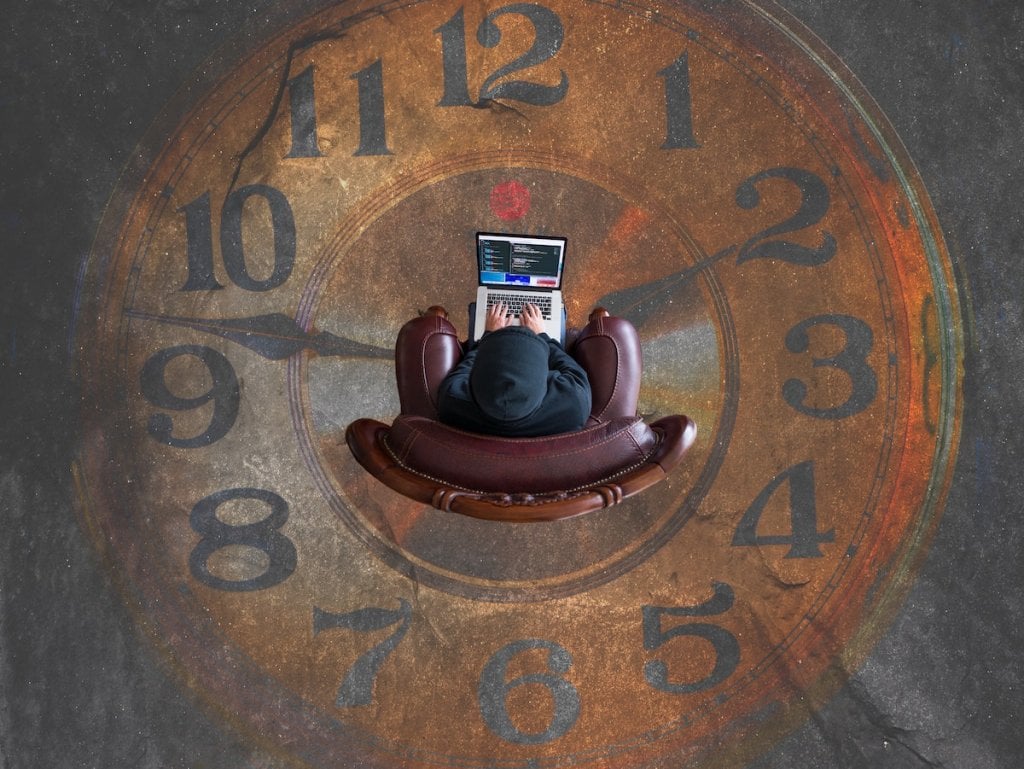
Photo by Kevin Ku on Unsplash

· Posts · Share this post


An intent-centered desktop

I’ve been thinking about how I use my computer, and why I’m so dissatisfied with the experience. Here’s what I think, in a nutshell:

My computer, as currently set up, is application-centric (or, if I wanted to be really uncharitable, brand-centric). If I want to save a note, I’ve got to load Obsidian. If I want to save a to-do, I go to my browser and open Google Tasks. If I want to write a blog post, I open iA Writer. And so on.

Yuck. That’s a lot of excess cognitive load for no reason.

What I really want is a user-centered desktop. If I want to save a note, I enter a key combination and a window appears for just as long as I need to save it, superimposed on whatever else I’m doing; then it disappears. I want to be able to choose which app I use to save my notes, in the same way I choose my default web browser. But I don’t want to have to associate “notes” (or “tasks” or “posts”) with the name of the application, let alone go and load it.

Some of this is already possible for me, with a little work. Alfred is one of the first things I install on any new computer, and Workflows were designed for this kind of idea.

But at the same time, not every application supports the idea of transient creator interfaces: the floating “create” modal that allows me to save a note or make a change for as long as it’s useful and then disappears. Some apps, like Mem, have made a selling point of providing one - but I wish it was a default, integrated part of the operating system.

A reasonable shortcut might be a simple editor app that provides the create modal for all apps, with different template presets (notes, posts, tasks, etc), that then is designed to sync what you’ve written with other applications, whether directly or in conjunction with Alfred. It could also take command line input.

Does something like this exist? Am I missing something obvious?

· Posts · Share this post


How is Stage Manager so good on Mac and so bad on iPad?

· Statuses · Share this post


Thing I'd like: a personal trainer for my personal goals. Not a coach; more like a really hardcore product manager for me as a person.

· Statuses · Share this post


Fun that one of the kids who would spill onto the street from Boroughmuir High School in the afternoons exactly when I lived down the road from it is now the new Doctor Who.

· Statuses · Share this post


Stage Manager on iPad: confusing to use and not what I want an iPad for. Even on my actual computers, I tend to full-screen apps and use them one at a time. This feels like a mode to make everything needlessly more chaotic.

· Statuses · Share this post


At the children's ER last night, a nurse congratulated us on managing to have a boy, while another apologized that I, as the dad, might have to feed the baby sometimes. In progressive San Francisco! There's still so much to change.

· Statuses · Share this post

Email me: ben@werd.io

Signal me: benwerd.01

Werd I/O © Ben Werdmuller. The text (without images) of this site is licensed under CC BY-NC-SA 4.0.