 

San Francisco, enough is enough. It's time to look further afield.

This afternoon, Greg Wester tweeted this screen grab:

Your eyes are not deceiving you. That's a 420 square foot studio apartment - not even a one bedroom - for $3,050 a month. That's a base cost: your bills, and most likely parking, are extra.

There are only two kinds of people who can afford this:

  • Workers on a substantial salary (realistically $100K+, which would still leave you with a bi-weekly check of a little under $2500 after taxes, meaning rent would be well over 50% of your monthly cost)
  • The independently wealthy

Let's leave aside the obvious social inclusion issues at play here, and the effect this has on diversity in the city. Let's ignore that this is killing the artistic temperament of the city and turning it into a primarily financial center like any other. Let's pass over the inevitable effect this will have on the city when these high-value residents start to ebb away. Let's pretend not to see the rising homelessness problem. Not because those are unimportant issues - they're vital to the future of San Francisco - but because it's harmful to the ecosystem that helped create this situation to begin with.

If only rich people can afford to live in San Francisco, it is impossible to really innovate. All the creative energy is being driven out. There's no way for ordinary people - people who haven't made it yet - to experiment. Everyone is either on salary or has raised money from institutional investors with a proven business model.

So the gentrification cycle turns:

Deindustrialization creates low-rent vacancies in industrial districts; artists are drawn to these districts by the depressed rents and spacious "lofts"; the district becomes a hub of avant garde creativity, generating media attention and foot traffic, both of which create a "buzz" around the neighborhood; shops and restaurants are drawn to the area to cater to the increased foot traffic and capitalize on the "buzz;" the introduction of these shops and restaurants in turn induces more foot traffic, more media attention, and more "buzz;" eventually national chain stores see the area as ripe for investment and begin to move in; finally, of course, each of these trends causes rents to escalate until, with the arrival of deep-pocketed chain stores, the very artists who made the district trendy are priced out.  The district ends up as nothing more than a high-end outdoor shopping mall with little street "cred," and the artists relocate to a new low-rent industrial area, triggering the process all over again.

We've seen this process start to rapidly transform Oakland:

Oakland neighborhoods that are experiencing "advanced gentrification," according to the study, include Lower Bottoms, Old Oakland, and Northgate/Koreatown. The researchers define "advanced gentrification" as areas that have experienced significant demographic changes and high levels of real estate investment. Those areas are also very vulnerable to gentrification due to their locations near transit, historic housing stocks, rising house prices, and high rates of market-rate developments. [...] The researchers also said “the crisis is not yet half over” and that the city can expect the displacement of lower-income households to accelerate in coming years.

The interactive map is worth exploring for yourself.

All of which means that the rents in Oakland are already rapidly increasing (partially because it's within commuting distance of San Francisco). So where's next? If I'm running a small startup that needs to lengthen its runway while I figure out my product / market fit - or better yet, if I'm an artist that wants to live somewhere nurturing, affordable and creative - where can I go?

My money's on one of two places:

Sacramento.

As Thrillist noticed this summer, California's capital has a plethora of food and culture, for a much lower living cost:

We have a hard time even talking about San Francisco rent anymore. We start sweating, breaking out in hives... yeah. Especially when we think about rent in Sacramento. I mean, look at this -- $1,650 for a four-bedroom HOUSE!? That’ll get you, what... a patch of ground under the freeway in San Francisco?

Pretty much. In fact, Sacramento is 36.5% cheaper to live in than San Francisco overall (and rent is 65% less). And, yeah, it's the seat of state government, which gives enterprise startups access to a different kind of infrastructure. The only real bummer is that if you do need to get back to the Bay Area for meetings, the drive will take you two hours in good traffic.

Santa Rosa.

Situated in the middle of wine country, Santa Rosa is also adjacent to a lot of the trappings of fine living, although it's a little less hot on live music and theater. (Those needs are met by Sebastopol, just a few minutes down the road, which is also a base for O'Reilly Publishing.) Overall, it's a little more industrial than Sacramento in itself, but is set in outstandingly beautiful countryside and high-class local amenities.

But here's the big plus: as well as being super-close to Petaluma (home of TWiT), Sebastopol, Sonoma, Healdsburg and Napa, Santa Rosa is only an hour's drive from San Francisco. The Smart Train will provide effective public transport for the north bay - something it's sorely lacking right now - and further reduce the commuting pain. The first stretch, between Santa Rosa and San Rafael, opens in 2016. It'll use the same Clipper card system used by BART and Muni, effectively linking the north bay to the greater San Francisco Bay Area transit system. And expansions will link the train to the existing ferry infrastructure.

My bet is that the Santa Rosa corridor will be the next place to look. Its top-tier office space is a third of San Francisco's cost, it's surrounded by beautiful countryside and some of the country's best food, and is still within a hop, skip and a jump of Silicon Valley.

· Posts · Share this post


My 2016 year in review

Rather than taking a retrospective look back at 2015, I think it's interesting to look ahead think about what I want my themes for the next year to be, both personally and professional. Here's mine; I'd love to see yours.

Be more social.

I want to spend more time around more people. Humans are social animals; spending more time around people has an important effect on my mood (as well as opening new horizons and opportunities).

I love people, but I spend a lot of my time behind a screen. When I'm on my deathbed, I don't think I'll look back and think, "gosh, I wish I'd spent more time on the Internet". I want to spend more time away from a screen, not thinking about work or computers, hanging out with people I care about.

And guess what: I bet it'll improve my work, too.

Be healthier.

I’ll turn 37 in the first week of 2016. As much as I hate to admit it, I have to acknowledge that I’m approaching middle age. I intend to live past 90, but that doesn’t happen by chance.

I'm also worried about what happens if I encounter a major health issue later in life. If you have to have a major operation - something many people I love have had to do - your chances of survival and recovery are much better if you're fit. It still feels a bit weird to be accepting my own mortality, but that's just stage one; stage two is embracing it.

Accept the superficial.

I was brought up to believe that appearance doesn't matter; that it's what's inside that counts. This should be true, but it isn't at all.

I know that my personal appearance affects how I feel, even aside from first impressions, but even today, I feel actively guilty for thinking about it. This is a very silly thing to be worried - particularly given what I do for a living. I could write a whole essay about all the issues at play here. It's a weird hang-up.

Be more organized.

Specifically, I'm going to start scheduling more of my off-time in the same way that I schedule meetings.

Not only will this allow me to schedule in gym time and other exercise, but keeping a tighter schedule will give me more free time for chilling out, hanging out, personal creativity, and trying new things: all vital parts of being an actual human being.

Separate creativity and work.

I've repeated this quote before: "the business of business is business". Work can be creative, which is awesome, but very few of us are lucky enough to have a job that is our creative outlet. I think if you try and shoehorn that creative need in, you run the risk of being unsatisfied both with your creativity and with your job.

I want to write more; draw more; publish short stories and write more personal pieces. And in turn, I want to be more focused in my work. What I build does not need to be a reflection of me, and in turn, who I am is not a reflection of what I build. This perhaps sounds trite and reductive, but it's important.

Be more "me".

In 2016, I want to be more political. I'm less interested in tweeting links than actually marching on the streets, phoning representatives and doing real work to support the causes and politicians I believe in. I believe in a fairer society, globally, and I'm not ashamed to want to advocate and fight for that. I want to live in a progressive society.

So politics is one thing. But I value art, and creativity, and outsider culture. I want to spend more of my time in the kinds of anarchic artistic communities I was a part of in Edinburgh. Mainstream culture is deeply conservative, and deeply boring. I think the voices pushing at the edges are usually the most interesting, and I think it's a real shame that there aren't more safe spaces for them.

I want to be more experimental in my personal expression. I want to be more supportive of the voices I value. I want to be clearer in my non-support for the status quo.

I don't think this hurts what I do (although I'd do it even if it did). In a world that's becoming increasingly algorithmic and computational, our humanity is our sustainable competitive advantage.

It's good to be a person. I want to nurture more of myself, and more of the people around me, in the year ahead.

· Posts · Share this post


How to shorten a tweet

It can be hard to keep status messages to 140 characters or less (or a 116 character message if you've included a link). I realized recently that I follow the same algorithm to bring it down to size every time, so I thought I'd write down my steps. Maybe the process can even be automated?

These steps are in order. If the tweet is under the character limit after a step is completed, there's obviously no need to continue to the next one.

1. Eliminate Oxford commas.
I'm in favor of the Oxford comma as a way to bring clarity to sentences with multiple clauses, but they take up valuable space. Every comma counts, and there are other ways to clarify your sentence construction.

2. Remove non-essential adverbs.
Adverbs can be essential modifiers that allow you to fine-tune the message you're conveying (usually, locally, here, there). They can also be used to convey the writer's emotional tone (really, extremely, very). While removing the second set will change the tone, it won't materially change the underlying meaning of the sentence. In fact, many writers would probably argue that it will result in a clearer sentence.

3. Replace "and" with an ampersand.
The ampersand - & - is only meant to be used in informal situations. What could be more informal than a tweet?

4. Change written numbers to Arabic numerals.
Written numbers and numerals aren't interchangeable: consider the sentence "4 score and 7 years ago", which carries less gravity, despite being functionally identical. Commonly, numbers under 10 are spelled out. This rule isn't hard and fast, however, and can be suspended in the context of a tweet. Again, the meaning of your message won't be lost. Note that this doesn't mean you should replace numerical homophones with numbers, which is an easy way 2 lose respect from your readers.

5. Use common abbreviations.
Just as you lose some gravity by replacing written-out numbers with their symbolic equivalents, replacing "with" with "w/" gives your tweet the quality of a hastily-written note. Nonetheless, "w/" (with), "w/o" (without), "wrt" (with respect to) and "b/c" (because) will save you a handful of characters. You can save more by using "eg" (exemplī grātiā, which means "for example") and "ie" (id est, or "in other words"). I lightly bend grammatical rules by omitting the punctuation marks that should normally be present in e.g., i.e., a.m. and p.m.

6. Rewrite your tweet to use shorter sentences.
Consider the sentence "I was going to go see Star Wars, but it was sold out, so I ended up seeing The Big Short instead" (96 characters). You could rewrite this as "Star Wars was sold out. I saw The Big Short instead." (52 characters). By doing so, you've saved 44 characters that you could use for a short review or a link. There's nothing wrong with using several shorter sentences in place of a longer one. If you wanted to be fancy, you could use a semicolon instead of a period. Just remember Kurt Vonnegut's take on them: "They are transvestite hermaphrodites representing absolutely nothing. All they do is show you've been to college."

7. Screw the rules.
The final option is to proudly reject the 140 character limit. Writers like Marc Andreessen do this with a construction called a tweetstorm: a series of tweets, where each post is written by hitting reply on the previous one. Twitter threads them together into something like a blog post. There's another option: because I tweet using Known, I can keep writing, and the end of my tweet will turn into a link to the full text. However, both of these options are an inconvenience to the reader, and should only be used if there's no way you can limit your message to a single post.

· Posts · Share this post


The complicated, liberating metadata of my future children

My future children, should I have any, will come from a tapestry of places. From my side of their lineage alone, they will come from three continents. They will have multiple passports. They'll share my sense of both coming from a specific place but also no place at all. I don't completely identify with my nationalities, and it's likely that neither will they.

It wasn't until well into my adult life that I understood how far the metadata of my identity diverged from most peoples'. Many people include a nationality in the fabric of who they are; I have multiple, and don't completely identify with any of them. Particularly here in the US, many people identify with a religion; I don't believe in any. For a lot of people, they have a deep, historical relationship with their communities that goes back for generations; mine goes back less than one.

People seem to be very worried about how their culture changes in the face of immigration. The truth is that culture has always been changing through the ebb and flow of populations.

In the 1300s, the Spanish began to drive out their Jewish population - once one of the most prosperous communities of Jews in the world. Continuing a pattern that has been repeated all over the world, they robbed and murdered them, ultimately forcing them to convert to Catholicism, leave the country, or die. Some found their way to Switzerland, where they became textile millers in an area of Zurich called Werd ("river island"). Eventually, they moved their home to the nearby municipality of Elgg.

In the 1600s, a group of English puritans moved to Holland in order to escape the volatile politics and religious intolerance of the time. After some time there, they became afraid of losing their cultural identity to the Dutch, so they secured investment to start a new colony in America. There, they had more control, and could live by their values.

In the 1800s, the Dutch established a system of indentured labor in Indonesia, under a brutal colonial rule and racist caste system. In the 20th century, they enacted some political reforms and invested in infrastructure in the country, allowing the indigenous population limited freedoms like education, but squashed the nationalist movements that began to emerge. The Japanese invaded during the second world war, placing many of the Dutch settlers in internment camps. When that war ended, the Indonesians fought for independence, seizing assets and infrastructure, and many settlers fled back to the Netherlands. Post-war life was hard there, and some found themselves seeking asylum in places like California.

In the early 1900s, between 30,000 and 60,000 Jews were killed in Ukraine over a three year period. Escaping was hard; many families failed. What was once one of the largest Jewish communities in the world was decimated. Some families made it to places like New York, where they changed their names and identities. Partially this was to culturally assimilate into their new home; partially this was because America itself harbored anti-semitic sentiments until well after the second world war.

This is a subset of the events that lead to me, and will lead to my hypothetical future children. I'm descended from Swiss textile merchants, who wound up having a hand in the Reformation; a Mayflower passenger who became the religious leader of the colony; a leader of the resistance against the Japanese in Indonesia whose whole family, including my toddler father, was interned; a major union leader in New England who had fled from Ukraine. My grandfather who served in the US Army and had to deny his Jewishness when he was captured by the Nazis (and survived to later meet Einstein, have tea with Sylvia Plath, and translate Crime and Punishment into English). My academically-inclined parents who moved to study at Oxford for a year and stayed for over twenty.

Growing up in England, I was ashamed of my identity. Teenagers leap on any difference, and my background - even in Oxford, a university city with an ever-changing population of visiting academics - made me feel like an alien. Because I had an English accent, people felt free to say how much they hated Europeans and Americans around me. At one point, I considered changing my last name to Ward, because whenever I had to tell someone my last name over the phone, that's what they would repeat back to me. "Werdmüller." "Ward?" "Werdmüller." "Ward."

As I grew older, I began to bristle against this more and more. "You can become a British citizen, you know," people would tell me, almost without fail, whenever they discovered I wasn't. It was meant kindly, I think: they were proud of their national identity, and they wanted me to be able to attach that metadata to mine, too.

What they missed was that it was an erasure of who I was. My identity really is wrapped up in all these migrations of people - not just hundreds of years ago, but right now. All of it is a part of me. If you asked me today, I wouldn't change my name for the world, and I wouldn't give up any of my history to be able to say I was from any one place. I'm an immigrant everywhere, and that's okay. I proudly come from a long line of immigrants and nomads.

I've learned, the hard way, that this is confronting for many people. They're proud of being British or American, and perhaps my rejection of that somehow reflects on those values. Nationality and religion are shortcuts to identity, in the same way the way you dress can be. In particular, the idea that I am not tethered to any one country - and don't want to be - is very difficult to accept. As one ex-girlfriend put it, "it's like you don't want to fit in".

Today, a growing percentage of the world's population - a little over 40% - is connected over the Internet. We have the ability to  speak to people virtually anywhere, instantly, which means relationships can emerge over greater distances, in greater numbers. The number of dual or multiple citizenships has been rapidly increasing during my lifetime (although no government officially keeps track), and it will continue as more and more people gain the freedom to easily travel and communicate globally.

Many people complain about how immigration is changing the cultural landscape of their country. In America, a country founded by immigrants relatively recently, this is ridiculous. But it's ridiculous everywhere: in a sense, the world is a country of immigrants. Borders can be seen as a kind of top-down attempt to inhibit movement in order to preserve resources, but people have always moved. The ebb and flow of populations is the heartbeat of human civilization.

Which brings me back to my hypothetical future children. I'm anxious that they not be forced to fit into someone else's cookie-cutter idea of what their identity should be. They have the rich histories of the two people who will lead to them; of countries and religion, persecution and immigration. Ultimately, they will have the privilege of deciding who they want to be, and how they define themselves. The usual metadata need not apply.

· Posts · Share this post


Why we built Known

Known has become the easiest way to create an online community to support your class or group. We've built an easy-to-use platform that lets people publish in a group with a variety of media, from blog posts and photographs to files and points on a map. Each post can be private or public; every Known site as a whole can be private or public. And it all works on any device, from the biggest, strongest desktop to the most entry-level smartphone, as long as it comes with a web browser.

Institutions like Harvard and MIT use it to run classes; so do groups teaching web skills in rural India, activists promoting racial justice, writers who need to control their identities, and open source hackers.

Here's how we got here, and here's where we're going.

Finding a fit in higher education

We arrived at Matter knowing we wanted to give people more ownership over their conversations and content online. As well as investing in our team and creating a structured environment for us to grow our company, they gave us a grounding in design thinking which helped us change the way we think about technology businesses.

It was through this process, and hundreds of hours of conversations with teachers and students, that we discovered a deep need in education for social platforms. 98% of higher educational institutions use something called a Learning Management System - platforms like Blackboard and Moodle - but very few report that they are satisfied with the experience. These platforms focus on administration, rather than learning. While they are often used for classroom teaching, they fall comically short of the kinds of social experiences students are used to.

Enter Known. Our platform runs as a stand-alone community site, but it can also integrate with a school's LMS to add those much-needed social features. We offer single sign on to campuses, and unlike many social platforms, let you publish any kind of file you need to. All our plans come with unlimited storage and bandwidth, so you don't need to worry about capacity. We sell SaaS subscriptions, and enterprise licenses for organizations that want to run Known on their own infrastructure.

We also understand that conversations don't just happen in tiny sites on the web. Known sites can push their content across social networks: audio, for example, can be immediately copied to a SoundCloud account. Using brid.gy, we can pull replies and likes from those social networks back to the community, so everything is always stored in one place.

Social infrastructure for campuses

The possibilities are endless. Any campus can run as many Known communities as they need to. We also know that discovering all the content being created on a campus is key, so we've started to provide social hubs and search engines for all of it. On-campus users can search for content that only they can see; visitors to a campus can search for and discover content that has been made public. The result is an easy-to-use gateway to everything happening at a campus. It's never been done before.

We know that in education, one size rarely fits all. So we offer design sprints, where we'll arrive on campus and run design thinking sessions with students, faculty and staff. These allow us to tailor the product to meet the needs of a particular institution, so it complements their activities, their design, and their culture. (These sprints turn out to be useful whether you end up using Known or not.)

Because that's the other thing about Known: it's open source and extremely customizable.

An open source core

In VentureBeat, Lightspeed's John Vrionis writes:

The OSS companies that will be pillars of IT in the future are the companies that leverage a successful OSS project for sales, marketing, and engineering prioritization but have a product and business strategy that includes some proprietary enhancements. They’ve figured out that customers are more than happy to pay for an enterprise-grade version of the complete product, which may have security, management, or integration enhancements and come with support. And they also understand that keeping this type of functionality proprietary won’t alienate the community supporting the project the way something such as a performance enhancement would.

This is our strategy. Our core platform is available on GitHub: you can get it right now. We offer a fully-managed service, with unlimited storage and bandwidth, so you don't need to worry about server maintenance or capacity. But we also offer premium features like LTI integrations, file uploads, and searchable user directories.

We love our open source community. Thousands of people use Known to publish on their own site as an indieweb blog, and the activity helps us build a better platform for everyone. Every single page on every Known site has a little heart icon. Click it, and you're prompted to send us feedback. We read every single message personally, and it allows people who aren't developers or designers to contribute to the community and help us develop the product.

John goes on to say:

OSS businesses turn the customer discovery process completely upside down. Open source software is put into the wild, and the company immediately receives signals from those who are interested. Entrepreneurs get the benefit of real data and usage to help them decide where to focus engineering and sales-and-marketing resources. This is tremendously helpful and important. Data, not guessing, drives prioritization of the limited resources at a company’s disposal.

The combination of an open source development model and a design thinking product process means that we can rapidly prototype new ideas, and get strong signals from real people about the desirability of our platform.

Beyond education

It's obvious that a flexible community platform that runs on any device has applications beyond education. With LDAP / Active Directory integration, you can run it alongside your intranet to support a project or a company. Because you can make a community private, we've even seen families use it to share photos of their children that they wouldn't feel comfortable publishing on Facebook.

Mozilla's CEO Chris Beard said today that he thought of revenue as "a means to do better for the world". We agree: it is important to be a growing, valuable company, but in service to being able to provide a platform that can support any class and give anyone in the world a voice in a space they control. The total market for Known in education is measured in billions of dollars, but our potential goes beyond that.

We're living in a world where everyone can be connected, but only a handful of companies control those conversations. Censorship and surveillance are growing threats. By creating an open, easy-to-use platform that works on every device, we can help everyone own their own conversations. Not only can top-tier universities and companies benefit, but we can help disadvantaged communities, too. From non-profits sharing resources in developing nations to vulnerable groups who need to protect their identities right here in America, we believe we can make a difference.

Our role as technologists is to build a better future where everyone is represented. That's the promise of the web, and it's something core to our mission and beliefs. We're building what I call respectful software, and by showing it can be successful, we will encourage other vendors to follow.

Today, it's the best way to build an online community. But Known has an even brighter future ahead of it. We're excited to bring it to you.

Get involved

Check out our website, and follow us at @withknown on Twitter.

If you're a developer, you can find our core platform on GitHub, and you're invited to join the developer mailing list.

And you can always email me at ben@withknown.com. I'd love to talk to you.

· Posts · Share this post


Why WordPress's new Calypso interface is genius

Matt Mullenweg just introduced a new management interface for WordPress:

Today we’re announcing something brand new, a new approach to WordPress, and open sourcing the code behind it. The project, codenamed Calypso, is the culmination of more than 20 months of work by dozens of the most talented engineers and designers I’ve had the pleasure of working with (127 contributors with over 26,000 commits!).

How does WordPress, a twelve-year old server-side product, compete with new, beautiful publishing services like Medium? And how does Automattic grow its $1.16bn valuation?

One of the biggest problems with self-hosted software has been the technical barrier. By now, many users are comfortable with installing an application from CPanel or, maybe, FTPing files to some shared web space. But it's hard - and these approaches only really work with relatively old-school PHP-based software.

New, evented server-side platforms like Node allow you to build completely new kinds of experiences, but installing them is beyond the reach of most self-hosted users.

So, first, WordPress introduced a core API, using best practices from the modern web, making it far easier to publish third-party client applications.

And then they introduced Calypso: a completely new administration interface, based on Node and React. It's open source and works with any WordPress site, but it requires a WordPress.com account. It also uses the WordPress.com servers to power a new reader interface. Effectively, if you want to have a superior reading, writing and administration experience on WordPress, you need to use their service.

In his post, Matt adds:

With core WordPress on the server and Calypso as a client I think we have a good chance to bring another 25% of the web onto open source, making the web a more open place, and people’s lives more free.

I think that has the potential to be true. The new interface is incredibly fast, beautiful, and functional - and you can continue to own your data on your own server, if you want to. But this is also a rebuttal to anyone who thinks that everything should sit on your own server. With this change, WordPress is now, at least in part, a centralized service - albeit one where you get to choose where your data is stored.

Or to put it another way: WordPress powers 25% of the web, and Calypso is a strong step in the direction of putting all of that under the control of services run by Automattic. I don't think that's bad at all: I want both WordPress and Automattic to be wildly successful, and I see this as a smart way to maintain and grow their position.

My expectation: we'll start to see more examples of this data-interface separation, where the logic and data will sit wherever you want, and the beautiful apps and interfaces will be powered by centralized services. Architectually, it makes sense. And it's about time open source moved away from its limitations and built the best possible user interfaces it can.

· Posts · Share this post


Let in the refugees. How we respond to them is a reflection of who we are.

George Packer in the New Yorker this week:

A lot of people in this country are disgracing themselves this week. They include politicians of both parties—though many more Republicans than Democrats—and all regions. Their motives vary: deep-seated bigotry, unreasoning fear, spinelessness, opportunism, or some unholy mix of them all.

They say you only really know the true nature of someone's character in a crisis. Similarly, you only know the character of your country when people are in need. For citizens of the US and the UK - the two major countries I've called "home" - there has been a lot to be ashamed of.

We have the threat of terrorism, now from Isis, and atrocities being committed all over the world. We also have a stream of people who are fleeing those same atrocities, in a manner that is reminiscent of Jewish people fleeing the Nazis before and during the second world war.

Back then, both the US and the UK turned down Jewish refugees, sending them back to their deaths in mainland Europe. There were numerous reasons, which you can now hear by watching the news, as they are parrotted by today's politicians as reasons we shouldn't accept refugees from Syria and Iraq.

Of course, they maintain that this is a different debate. It's not. As Josh Zeitz writes in Politico:

In short, most of the elements that conservatives like David Frum cite as differentiating factors between now and then—fear of refugee violence, fear of their inability or desire to assimilate, concern over their economic dependence, suspicion of their ideological alienation and radicalism —were in fact central to the debate over admitting Jewish refugees in the 1930s.

Considering today's refugees in the same way does not diminish the plight of the Jews in the second world war, or in any way lessen the horrors of the Holocaust. This week, the United States Holocaust Memorial Museum felt the need to release a statement:

Acutely aware of the consequences to Jews who were unable to flee Nazism, the United States Holocaust Memorial Museum looks with concern upon the current refugee crisis. While recognizing that security concerns must be fully addressed, we should not turn our backs on the thousands of legitimate refugees. 

The Museum calls on public figures and citizens to avoid condemning today’s refugees as a group. It is important to remember that many are fleeing because they have been targeted by the Assad regime and ISIS for persecution and in some cases elimination on the basis of their identity.

The humanitarian case is clear, but immigration is also a net economic benefit in both the US and the UK. This leaves racism and xenophobia as the largest reasons to reject these refugees.

If you want to find racist and xenophobic arguments, you often have to look no further than Facebook. Here are two:

I've seen arguments that the immigrants are all fighting-age men, and a secret army is somehow being sent to destroy the US from within, like the plot of a bad 1980s cold war action movie. When I responded with the actual UN demographics of registered refugees, I was told one can't trust the UN because of their treatment of Israel. So far, the logic on display is so loose that I haven't found an adequate way to respond.

I've also seen many arguments which agree with Ted Cruz that we should be screening for Christians. Ironically, Cruz's suggestion itself proves that Christians aren't necessarily more moral than anyone else. "There is no meaningful risk of Christians committing acts of terror," Cruz said, forgetting that the majority of domestic terrorist attacks since 9/11 have been committed by white Christians.

I believe it's important to stand up to these kinds of arguments. For many people, discussing politics online - or around the Thanksgiving table - is taboo. But words matter, and deeds matter. The plight of an entire group of people fleeing terror and death in part depends on us changing the minds of the population, and sending a signal to our representatives that racism and xenophobia will not be tolerated.

Shouting at each other isn't necessarily effective, although we've developed a culture of it (and sometimes voices need to shout to be heard). We need to sit down, particularly with our loved ones, and have reasoned, fact-based conversations that lead to mutual understanding.

Love has to win. Peoples' lives are at stake.

· Posts · Share this post


Open issues: lessons learned building an open source business

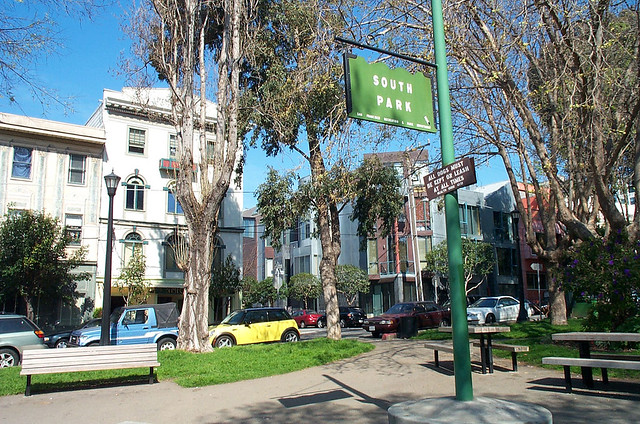
South Park

Prologue:

The first time I ever visited South Park, the tiny patch of grass in downtown San Francisco that the Matter garage would later back onto, Biz Stone bought me a coffee. We circled the park and talked about Elgg, our open source social networking product, and Twitter, the startup he was working on at the time.

The most important piece of advice he gave us was this: hold something back. It's fine to open source your code, to release an open product, but you've got to hold back the thing that will make you valuable.

This was the most important advice we received about Elgg. We ignored it completely.


Six years later: September 2014.

Erin and I stepped down from the Paley Center stage in New York, exhausted. Most accelerators have one demo day. Because Matter is so closely tied to both media and technology, it has two: one at the Folsom Street Foundry in San Francisco, in the heart of SoMa, and the other in New York, the city where most of America's media companies call home.

Known, we told an audience of media luminaries like Jeff Jarvis and industry investors, was a way for post-secondary students to save their coursework, notes and discussions on a site that they controlled. In a world where students are used to delightful apps and beautiful user experiences, the Learning Management Systems used by 93% of institutions are an abomination that actively hinder learning. Worse, when a course is over, all of the discussions and resources that were collaboratively made by the class are deleted forever. With Known, students can publish to their own site, and syndicate to these other platforms, allowing them to take control over their learning using a beautiful, mobile-first user interface.

Better yet, we told the audience, Known has an open source core. We know that one size doesn't fit all in education. With Known, every single feature has an API endpoint, and every single feature can be customized to fit both the needs of the institution and the student. The first pilot is happening right now, and we're getting great feedback.

Applause. Seven minutes later, we were done. This was day zero for our company: the next day, the hard work would begin.


Skip forward: September 2015.

I looked around the table at Garaje. Most of the alumni from Matter's third class were here, and had great stories to tell: Musey were thriving and building beautiful design apps; LocalData were helping to improve American cities; Louder were preparing their acquisition by Change.org. Over in New York, Stringr were delivering video to more and more news stations.

In some ways, Known was doing well. Our software was powering tens of thousands of websites. We had received great coverage at our launch, and continued to get fantastic feedback from educators all over the world. People were using Known to teach on five continents.

Yet at the same time, we didn't know how we were going to pay rent, and growth was linear. For a project, we were doing well. For a company, we weren't doing well - and there were still only two of us.

What went wrong?


First, you have to understand open source.

Open source is best defined by its four freedoms, which are inspired by Roosevelt's declaration of the four freedoms that every human should be able to enjoy. These dictate that you should be able to:

0. Run the program as you wish, for any purpose
1. Study how it works, and modify its function
2. Redistribute copies “so you can help your neighbor”
3. Distribute copies of your modified versions

The intention is that open source software is free as in speech: it grants you liberties over the code you run that you might not get with other products.

Unfortunately, the word "free" is overloaded: it has multiple possible meanings. In reality, open source has become synonymous with free as in beer: software that you can use without incurring any direct licensing costs.

Our strategy was to create an open core that people could freely distribute, and then layer premium services over the top. If you didn't want to worry about managing servers, we had an excellent SaaS product. If you didn't want to worry about managing APIs to third-party platforms, we offered Convoy. Finally, we wanted to provide access to a network of trusted consultants who could create customizations for institutional customers.

Our utopian vision was to have organic growth through sharing, leading to institutional customers. This didn't happen - at least, not as fast as we needed it to.


Second, you have to understand startups.

We have exact numbers internally, but a good rule of thumb in San Francisco is that, to break even, we need to bring in $10,000 per employee per month. This covers below market rate salaries, as well as all the overheads you incur when you're running a business (for example, taxes and moderate infrastructure costs). It doesn't cover some of the extra investment you really need to put into sales, marketing and product development.

To be relatively comfortable as a two-person company, we need to clear $240,000 per year. That's a tough ask for many businesses, which is one reason why investors are useful: they back your team and put money into your company, making a bet that you'll be profitable later on and will be able to pay them back and then some.

Consider, also, that most teams are not limited to two people. I've got a development and product management background; Erin is an analyst and user experience expert. We need to bring on a full-time technical lead and a front-end designer. I can't do either my CEO (sales! research! business development!) or web development jobs justice, and Erin can't do her user experience or front-end jobs justice. We also need to have redundancy on our staff, so if one of us is sick or out doing sales work, the company can continue to be productive. As soon as you start talking about building a real team, those numbers explode.

I don't believe it's possible to start a consumer startup as a full-time endeavor without significant investment. Unlike businesses, only a tiny minority of consumer users are willing to pay money. You need to have enough runway (the time left in your company before it runs out of money) to reach a mass-market audience, and then make sure you're either solving a problem that they are willing to pay for a solution to. Because it's so hard to get money from consumers, these businesses often make their money through advertising: reaching targeted, engaged audiences is absolutely a problem that advertisers will pay for a solution to.

Enterprise startups potentially require less investment, but the sales cycle - the time it takes to sell to an individual customer - is potentially much longer, and the total cost to acquire a single customer is much higher. You need to have enough money in the bank to make this work; investment is a useful vehicle to bring your company to the next stage of its development.

Investors protect their money by minimizing risk. In this context, open source is a liability: remember the free as in beer problem? By giving away the portion of your product that captures value, you're essentially devaluing your business to zero. Why would anybody invest in that? I'm sincerely grateful that Matter did invest in our team. In return, the least we can do is be a good steward of investor value.

That $240,000? It's a baseline. Biz was completely right: you need to hold back the thing that makes you valuable.


Feedback is a gift - and so is open source.

When they work well, open source communities are amazing things: collaborative groups of disparate people all agreeing to make software together for use by the commons. As a methodology, it's beautiful, and can showcase the best of humanity.

When you're building a product for sale, it's important that you've identified a problem that people will pay money to have solved for them, and that you're solving it well. That means talking to a lot of people, and both making and iterating a lot of rough prototypes. Your product has to be compelling, well-made and scalable. As it's concisely described in design thinking circles, you need to constantly be testing its desirability, feasibility and viability.

When your product is open source, you'll get a lot of feedback from the community. This is important to take on board, and the community is a hugely valuable part of your ecosystem - but at the same time, it's unlikely that open source community members are customers. It's possible that they're users; it's also possible that they're open source enthusiasts who are just happy to see another project join the movement.

Open source projects, as a whole, have famously bad usability. That's because their feedback loop is constrained to other developers. One recent example of this disconnect is a heated debate about using Slack vs Internet Relay Chat. To non-technical users, IRC is arcane and unfriendly (which also accurately describes many of the discussions that take place there), yet many open source maintainers couldn't understand the problem.

When you're building a compelling product, the license should be irrelevant. It should be compelling whether it's completely closed or released under the GPL: the license is how you distribute the product, not something that's inherent to the product itself.

Unfortunately, in the case of Known, I think a lot of people liked it because it was free and open source. This was a bad signal - and certainly not one that will lead to paying customers and a thriving business. (It's worth saying here that a consistent voice of real support has been the indie web community, alongside companies like Reclaim Hosting, which legitimately wants to see us succeed.)


I'm not Donald Trump, but ...

The biggest surprise I've had since starting Known is the amount of feedback complaining that we're trying to make money with it. Usually this comes with some kind of a complaint about startups and capitalism.

If you know me, you'll know that my politics err on the liberal side of liberal; Bernie Sanders and Elizabeth Warren are the US politicians who best describe the country I want to live in. I'm hardly a hardcore conservative capitalist. Nonetheless, I was taken aback to discover that we'd accidentally joined an anti-capitalist movement: we've been very open about being a business since the day we announced our existence.

In fact, I really wanted to show that it was possible to create a profitable, thriving business creating respectful software that gives users full control of their data. I think it's important.

Here are some real things I've heard about making money from open source:

  • We should have a universal basic income so people won't have to worry about how they'll make money.
    A universal basic income is not money from the sky; it's a proven way to create a real safety net, but it does rely on taxation. It doesn't work if everyone relies on a basic income, and the idea that you should have to live at the lowest possible income if you're going to build respectful software is both ridiculous and kind of offensive. Welfare is important, but not as a way to pay for open source software.
  • We should be striving to build a post-money society.
    I mean, to be fair, I'm a Star Trek fan too.
  • We should just build software for the love of it and not worry about making money.
    Most egregiously, we've heard this from people who literally take our free product and sell services around it.

All of these are obviously detatched from reality.

This culture of anti-capitalism in open source is actively harmful. It's a reason why so few women (1.5%!) participate in open source projects, for example, and why people in disadvantaged communities are underrepresented. Having the ability to work on a project for free represents enormous privilege. At its best, open source can be a way for people to contribute to a global commons and freely exchange ideas; at its worst, it's exploitative and exclusionary.

It's devalued our time. I get personal requests on all channels on a daily basis - email, Twitter, Facebook, even unsolicited phone calls - asking for free help. (I no longer give free personal help, except on the mailing list, where it can be used to grow a commons of support information that everyone can use.) Sometimes these calls for free help come from people who are making money from our labor.

Open source doesn't need folk songs. It needs a way to fairly compensate the people who participate in it. I'm not at all against anti-capitalism - but it sure is hard to build a business on it.


But aren't there a lot of profitable open source businesses?

No.

We've most often been compared to WordPress, which powers over 23% of the web. Automattic is valued at over $1.1bn, has a huge team worldwide, and is widely held as the poster child for open source businesses.

In reality, the WordPress open source project is held by a non-profit foundation. Automattic concentrates solely on hosted services.

Ghost, another project we've been compared to, is a non-profit entity in its entirety. It made a lot of its money by crowdfunding as a WordPress plugin, before switching to becoming a node.js project. This technical change made it much harder to install, making their paid, hosted services an easy choice.

Ind.ie hasn't really launched Heartbeat, their distributed social network, but their project is significantly better-funded than Known. This is partially because they crowdfunded as a smartphone, before choosing to shift their attention to a more focused problem.

Mozilla has a long history that stems from Netscape. Their success is not something that a new entrant to the market could replicate.

Red Hat is held up as a model open source business: its current market cap is $14.8bn, or roughly 2.8% of a Google. It provides professional services and support licensing around its Linux distributions.

Infrastructure is a more profitable place for open source to thrive: MongoDB, CoreOS and Docker are all examples of well-funded open source startups. Each one sells better support, trustability and reliability - which makes sense to pay for if you're building a business on top of their technologies.

For these businesses, open source allows them to build a bigger market for their products, which they can then capitalize on. It's a smart strategy that has very little to do with freedom, and everything to do with growth.


What about other funding methods?

BountySource, the crowdfunding platform for open source projects, is one oft-mentioned funding method. It's actually a pretty great idea, that I think will wonderfully for hobbyists, and will encourage developers on distributed projects to work on smaller bugs and features. I don't foresee it covering our costs.

Similarly, Patreon works very well for personal projects, and is redefining how some artists make their money.

We currently make a significant portion of our income through professional services, but this isn't sustainable for a number of reasons. As Tomasz Tunguz at Redpoint Ventures pointed out earlier this year in this excellent analysis:

The data suggests that customers are willing to pay 20%+ margins on price points of greater than $200,000. Less than that price point, the data shows it to be difficult to operate a professional services team at better than breakeven.

When you consider all of the overheads inherent to running a company, you would actually make more money just being a freelance developer. Professional services jobs are often one-offs, and while they sometimes lead to contracts, it can be an equal effort to go find the next one. It's not a great way to grow.

That also negates the common argument about making money by providing tertiary services like support and customization. These strategies add more risk to the business, and don't cumulatively add value. At lower price points, it's not even a lifestyle business: it's hand to mouth.


What's next?

None of this should be a downer. I want to open a real conversation about making money sustainably with respectful software. Between Elgg and Known, I've spent the majority of my career working on these issues. I think they're solvable, and I think the result will be a better software ecosystem.

Known isn't at all going away, and we continue to release new versions every single month. We're evaluating the services we provide around it, but we love how the community has rallied around it, and we love how it's being used. We expect it to live and breathe for a long time.

However, we're learning from companies like Automattic, and non-profits like the WordPress Foundation. We're thinking hard about how the project is supported. And it should go without saying that we're committed to building a valuable, growing business.

There's a strong movement around creating alternatives to software that tracks and spies on us. I think that's a fantastic thing. Building software is about empowering people to do things they previously couldn't. But a part of building empowering tools is to make sure they can be provided sustainably. If you're doing something good, you need to be able to keep doing it - and whether you like it or not, that means money.

We need to have a stronger conversation about money in open source, and about building healthy businesses on respectful software.


Conclusions

As either Milton Friedman or Alfred P. Sloan said: "the business of business is business". Build a healthy business; don't be led by ideology. You're not helping build a more open world if you're showing that being open is unsustainable or detrimental; show that you can do well.

And when you succeed, use the fruits of your labor to do good.

We'll be here, cheering for you.


I wrote a follow-up to this post: why we built Known.

· Posts · Share this post


Help me debug a personal project

Working title: ten questions

A fully anonymous site where you answer 10 questions that attempt to pinpoint your beliefs on social and economic issues. These aren't essay questions, exactly, but neither are they multiple choice: the idea is to get you to explain your point of view without judgment. Each question is followed up with: "why?"

Once you've answered the 10 questions, and their reasons, you answer some simple demographic questions: your very rough location in the world, your religion, optionally your race and gender, and how you self-identify on the political spectrum.

When you're done, you're given a special link that allows you to come back and edit. No email addresses or passwords are ever taken, and server logs aren't kept.

The interviews are then made available for filtering by those demographics - or there's a random button that picks a random one out for viewing. Essays can be flagged, but will only be removed for illegal / irrelevant content.

My hope is to create a body of essays that will explain belief systems other than your own, in a calm, non-judgmental way.

Dumb? Irrelevant? Redundant? Let me know (or let me know how you'd iterate).

· Posts · Share this post


Untestable, unsafe and on the freeway: why cars need to be open source

Our devices are working against us. 

Recently, we learned that Volkswagen was falsifying its mandatory E.P.A. emissions tests. Because each test has a set of characteristics that don’t accurately match real-world driving conditions, the internal software running in 11 million cars could deduce that an official test was taking place. Under these conditions, the cars would turn on enhanced emissions controls, which allowing them to pass the tests but reduced mileage and other driver-friendly features. In the real world, the cars had better mileage and acceleration, but were spewing illegal levels of pollution.

This was far from an isolated incident. Less than a week later, it emerged that some Mercedes, BMW and Peugeot vehicles were using up to 50% more fuel than laboratory testing suggested. Meanwhile, on average, the gap between tested carbon emissions and real-world performance is 40% - up from 8% in 2001. And while Volkswagen’s software broke the law, detecting test conditions to cheat on results is a widespread practice that has become an open secret in the industry.

These practices extend far beyond cars: even our televisions are faking data. Recently, some Samsung TVs in Europe were found to use less electricity in laboratory tests than under real-world viewing conditions.

In each case, the software powering the device was unavailable to be tested. In a world where cars are heavily scrutinized to ensure passenger safety, examiners had very little way to determine what the software was doing at all. According to the Alliance of Automobile Manufacturers, providing access to this source code would create  “serious threats to safety or security” (pdf). Even the Environmental Protection Agency agreed, arguing that opening the source code could lead to consumers hacking their cars to achieve better performance.

Anyone who’s worked in computer security will know that this is a spurious argument. Obscuring source code doesn't make software safer: on the contrary, more scrutiny allows manufacturers to find flaws more quickly.

Earlier this year, Wired demonstrated that hackers could remotely kill the brakes on a Jeep from a laptop in a house ten miles away from the vehicle. The same hackers had previously demonstrated that they could achieve complete control over a Ford Escape and a Toyota Prius: these vulnerabilities appear to be widespread and not limited to any particular manufacturer.

In the light of these exploits, it’s extremely likely that developers are already cheating tests by hacking their cars, without E.P.A. or manufacturer knowledge. Indeed, a cursory Google search reveals hackers talking about cheating on their emissions tests using Arduinos and other devices. To quote one participant in one of these forums: “I 100% believe that these tests are a complete joke/scam and therefore should be cheated with any and all available means.”

In a world where cars are increasingly driven by complex software, the only reliable way to test them is to inspect their source code. This is true following revelations that Volkswagen falsified their E.P.A. tests, and it will become increasingly crucial as autonomous vehicles become widespread.

McKinsey & Co predicts that autonomous vehicles will be widespread in around 15 years. The consequences of hacking your vehicle today are largely environmental: not something that should be discounted, but also not life-threatening except in aggregate. Once autonomous vehicles are commonplace, your car’s software algorithm will be the only thing keeping you from crashing into another family on the interstate. 

Autonomous vehicles will eliminate an enormous percentage of car accidents, and we should not fear their introduction. However, hackers will certainly attempt to alter the software running their vehicles in order to go faster, impress their friends, perform stunts, and so on. If the software infrastructure inside a vehicle is kept secret from regulators, only the manufacturer will have any way of determining if this has taken place.

More pressingly, it’s now become apparent that manufacturers can’t be trusted to protect our interests. Even if it is impossible to hack an autonomous vehicle – which would be hard to believe – we need to ensure that the algorithms and software that power these products are as rigorously testable as the steel and rubber we sit in.

Opening source code to scrutiny does not limit its owner’s intellectual property rights. It also doesn’t prevent a manufacturer from making a profit or protecting their unique inventions. It does, however, allow us to trust their products. This is important for all connected devices, but cars are uniquely life-threatening when misused. 

Legislators should act to protect our safety. In the same way that seatbelts and other safety measures were made mandatory, the source code that powers modern vehicles should be made available both to regulators and the public. Security through obscurity is no security at all.

Help is available: we’ve been doing this in the software industry for decades. The open source community should help manufacturers build more open software while retaining their intellectual property. 

Open software is in the public interest, particularly when lives are at stake.

· Posts · Share this post


I am not a developer

Since co-founding Known with Erin Richey eighteen months ago, one of my biggest professional challenges, both inwardly and outwardly, has been this:

I am not a developer.

I have development skills and was a startup CTO for a decade. Absolutely. I know how to architect a system and write code. I can smell when someone is trying to bullshit me about what their technology is and how it works. I keep on top of emerging technology and I enjoy having conversations about it.

But I am not a developer.

That's not my role. Nor should it be.

When we started Known, I became (once again) a co-founder, but also a CEO - a crucial position in any company. Among other things, the CEO is responsible for:

  • Setting strategy and vision
  • Building a nurturing company culture
  • Creating an amazing team
  • Making money

The last one probably should have come first. I think a good way of putting it is that my job is to make myself redundant - but until then, do everything that needs to be done.

If the company doesn't grow, I've failed. If the company runs out of money, I've failed. If we put out a shitty product, I've failed. If we lose momentum in the market and people stop thinking of us, I've failed.

Engineering is crucial. Design is crucial. Business development is crucial. Sales and marketing are - guess what? - crucial. You can't get by with one of those things alone.

It turns out that I still write code. Sometimes, I write a lot of code. But the more time I spend building product, the more time is taken away from doing the hard work of validating and selling it. Writing code is like spinning your wheels when you're building the wrong thing.

Validation is crucial. I'm not Steve Jobs. (For one thing, I don't have a huge team of engineers and designers whose work I can take credit for.) Figuring out product / market fit, pricing and your go-to-market strategy are not things you can hand-wave away between other things. It's a full-time profession.

If we fail, it's because of decisions I made. I've made many mistakes - as any founder does - but one of the most important was to fail to have a technical co-founder. I thought because I was the technical partner, that we didn't need one. In fact, every technology startup needs a technical co-founder, even when the CEO is technical themselves.

If we succeed, it's because we've overcome this limitation and managed to grow an awesome team at a company with a nurturing culture and a killer vision. It will be beause we've made something that people want and pay for in significant numbers, and have captured value while providing even more value to the people we serve. It won't be because we have great code, although great code will be a component. It won't be because we have great design, although great design will be a component. It won't be because we have an amazing sales and marketing strategy, although we'll need it.

I'm lucky. Through Matter, we got high-end training in design thinking and access to an incredible community, as well as the ability to pitch like a pro. Through my network of peers, I'm constantly inspired by other CEOs who are building businesses they're proud of, and I learn from them as much as possible. By being in the San Francisco Bay Area, I'm a part of a community of experts. My task is to draw all of this together - as well as my startup experience, and my experience building technology. My task is to build a successful company.

I am not a developer.

· Posts · Share this post


The whole Internet: much more than the web, apps, or IoT

This morning, I woke up and checked my notifications on my phone. (I know, I know, it's a terrible habit.) I took a shower while listening to a Spotify playlist, got dressed, and put my Fitbit in my pocket. I made some breakfast and ate it in front of last night's Daily Show on my Apple TV. Then I opened my laptop, logged into Slack, launched my browser and checked my email.

I've spent a lot of time over the last decade advocating for the web as a platform. To be fair to me, as platforms go, it's a good one: an easy-to-use, interconnected mesh of friendly documents and applications that anyone can contribute to. Lately, though, I've realized that many of us have been advocating for the web to the exclusion of other platforms - and this is a huge mistake.

It's not about mobile, either. I love my iPhone 6 Plus, which in some ways is the best computing device I've ever owned (it's certainly the most accessible). Apps are fluid, beautiful, immediate and tactile. Notifications regularly remind me that I'm connected to a vast universe of information and conversations. But, no, mobile apps aren't the natural heir to the web.

Nor is it about the Internet of Things, or the dedicated devices in my home. My Apple TV is the only entertainment device I need. My Fitbit lets me know when I haven't been moving enough. I have an Air Quality Egg that attempts to tell me about air quality. My Emotiv EEG headset can tell me when I'm focused. But none of these things, either, are the future of the Internet.

I think this is obvious, but it's worth saying: no single platform is the future of the Internet. We've evolved from a world where we all sat down at desktop and laptop computers to one where the Internet is all around us. Software really has eaten the world.

What ubiquitous Internet means is that a mobile strategy, or a web strategy, aren't enough. To effectively solve a problem for people, you need to have a strategy that holistically considers the whole Internet, and the entire galaxy of devices at your disposal.

That doesn't mean you need to have a solution that works on every single device. Ubiquity doesn't have to mean saturation. Instead, the Internet has evolved to a point where you can consider the platforms that are most appropriate to the solution you're providing. In the old days, you needed to craft a solution for the web. Now, you can craft a solution for people, and choose what kinds of devices you will use to deliver it. It's even becoming feasible to create your own, completely new connected devices.

The opportunities are almost endless. Data is flowing everywhere. But as with mobile and the web in earlier eras of the Internet, there will be land grabs. When any device can talk to any device and any person, the perception will be that owning the protocols and the pipes is incredibly valuable. Of course, the real value on the Internet is that the pipes are open, and the protocols are open, and anyone can build a solution on the network.

For me, this is a huge mental shift, but one that's incredibly exciting. The web is just one part of a nutritious breakfast. We have to get used to building software that touches every part of our lives - not just the screens on our desks and in our pockets. The implications for media and art are enormous. And more than any other era of the Internet, the way we all live will be profoundly changed.

· Posts · Share this post


Why it isn't rude to talk about politics (and I think we should be doing it more)

It's often said that you shouldn't talk about politics, religion or money. I tend to think those are all part of the same thing: conversations about how the world is, and should be, organized. Anyone who's been watching the American electoral system warm up its engines will be in no doubt that your views and status in any one of those prongs affect the other two. And all are inseparable from the cognitive biases that your context in the world has given you.

So let's restate the maxim: it's rude to talk about the world.

Why?

The reason that's most often given is that people might disagree with you. It might start an argument, someone might be offended by your viewpoint, or you might be offended by a deeply-held position from someone else. As the thinking goes, we should try to avoid offending other people, and we shouldn't be starting arguments.

Living in a democracy, I take a different view. Each of us has a different context and different opinions, which we use to inform the votes we cast to elect the government we want, allowing us to help dictate how our communities should be organized. That's awesome, and a freedom we shouldn't take for granted. It's also the fundamental bedrock of being a democratic citizen.

I want to be better informed, so I can cast better votes and be a better citizen. Which means I want to hear different views, that potentially challenge my own. If you define offence as a kind of shock at someone else's disregard for your own principles, I want to be offended. I want to know other peoples' deeply-held beliefs and principles, because they allow me to calibrate mine. I don't exist in a vacuum.

I think the world would be better if we used our freedoms and were more open with our beliefs. The challenge is that it is not always safe to do so. Middle class politeness is one thing; for millions of Muslims in America, like communists and Jews before them, sharing their beliefs can be life-threatening. For a supposedly democratic nation, America is spectacularly good at stigmatizing entire groups of people.

I'd like to think that this is where the politeness principle comes from, as a kind of protection mechanism for more vulnerable members of our community. I don't think that's the case. I think it's much more to do with maintaining a cultural hegemony, and the harmful illusion that all citizens are united in their beliefs and principles.

Citizens don't all have the same beliefs and principles. This is part of the definition of democracy, and we should embrace it.

Citizens don't all have the same privileges and contexts. As a white, middle-class male, I have privileges that many people in this country are not afforded, and a very secure filter bubble to sit inside. I think it's my duty to listen and amplify beyond the walls of that bubble. Candidates for the President of the United States are, in 2015, suggesting that we have "a Muslim problem" in terms that echo the Jewish Question from before the Second World War. Even if you don't believe in advocating for people in ways that don't directly affect you, this directly affects you. It's all about what kind of country we want to be living in. It's all about how it's organized.

It's also about what kind of world we want to be living in. I think it's also my duty, as a citizen of one of the wealthiest nations on earth, to listen and amplify beyond our border walls. Citizens of countries like Iran, Yemen and Burkina Faso are people too, with their own personal politics, religions, hopes and dreams.

We've been given this incredible freedom to talk and advocate, to assemble and discuss, and we should use it.

Yes, there will be arguments. It would be nice to say, "hey, we shouldn't get angry with each other," but these are issues that cut to the core of society. Tone policing these debates is in itself oppressive and undemocratic. And while I'd like to be able to say, "we should have a free and even exchange of ideas, and I won't think less of you for what you believe," that actually isn't true. If you believe that Muslims are second class citizens, or that the Black Lives Matter movement isn't important, I do think a little worse of you, just as some of you will likely think worse of me for thinking socialism is an okay idea or for not believing in God. We can respect each other as citizens, and have respect for our right to have opinions. We should still talk. And as dearly held as my beliefs are, I want to know when you think I'm wrong: it's how I learn.

What we shouldn't do is tell people that they should just accept what they're given, and take the world as it is. That's not what being in a democracy is all about, and it's what we do when we tell people to shut up about what they believe.

· Posts · Share this post


Is crowdfunding the answer in a post-ad universe?

Crowdfunding

Albert Wenger of Union Square Ventures asks:

How then is journalism to be financed? As I wrote in 2014, I continue to believe that crowdfunding is the answer. Since then great progress has been made by Beaconreader, Kickstarter’s Journalism category, and also Patreon. Together the amounts are still small but it is early days. Apple’s decision to support these adblockers may well help accelerate the growth of crowdfunding and that would be a good thing – I don’t like slow page loads and distracting ads but I will happily support content creation directly (just highly unlikely to do so through micropayments while reading). All of this provides one more reason to support Universal Basic Income – a floor for every content creator and also more people who can participate in crowdfunding.

I've also heard Universal Basic Income argued for as a solution to funding open source projects. I'm not sure I buy it, so to speak - I think it's not fair to assume that content creators should live on a minimum safety net wage. I do strongly believe in a Universal Basic Income, but as a strong safety net that promotes economic growth rather than something designed to be relied on. For one thing, what happens if everyone falls back to a Universal Basic Income? Could the system withstand that, and would the correct incentives be in place?

I love the idea of crowdfunding content. This does seem to put incentives in the correct place. However, when systems like Patreon work well (and they often do), the line between crowdfunding and a subscription begins to blur. When you're paying me whenever I create content, with a monthly cap, and I create content on a regular basis, it starts to look a lot like it's just a monthly subscription. If you pick up enough monthly subscriptions, it starts to look like real money - a thousand people at $10 a month would lead to a very comfortable wage for a single content creator (even in San Francisco and New York).

So remove the complexity: recurring crowdfunding is just a subscription with a social interface. Which is fine. For recurring content like news sources and shows, I think subscriptions are the future.

For individual content like movies, albums and books, campaigns begin to make a lot of sense. But crowdfunding isn't magic: funders won't necessarily show up. I've been told that I should really have 33% of my campaign contributions pre-confirmed before the campaign begins, and I suspect that's not possible for most unknown artists.

There needs to be a positive signal of quality. In the old days, there were PR campaigns, which were paid for by record labels and publishing companies. Unless we only want rich artists and established brands to make money making content, we need a great, reliable way to discover new, high-quality independent media. And then we need to be able to make an informed decision whether we want tob buy.

As great as Patreon, Kickstarter, Indiegogo and the others are, we're not there yet. Social media won't get us there alone - at least not as is. But there's money to be made, and I'm convinced that whoever unlocks discovery will unlock the future of content on the web.


Image: Crowdfunding by Rocío Lara

· Posts · Share this post


Meet the future of online commerce - and the future of the web.

Meet the future of online commerce:

We're all used to content unbundling: very few of us are loyal to magazines, blogs or personal websites any more. We consume content through our social feeds, clicking on articles that people we care about have recommended. Articles are atoms of content, flowing in a social stream, unbundled from their parent publications. Very few of us visit content homepages any more.

Products like Stripe Relay let vendors do the same with commerce. Suddenly you can get products in your social stream, which you can share and comment on, as well as buy right there. There's no need to visit a store homepage like Amazon.com. You can find products anywhere on the web, and click to buy wherever you encounter them.

There's no point in vendors having apps: the app experience is handled by the social stream (be it Facebook, Twitter, or something more open). The homepage also becomes significantly less crucial to purchasing, just as it's become much less crucial to serving content. In fact, there's often no need to visit a standalone web page at all, except perhaps to learn more about the product. Even then, you can imagine this extended content traveling along the social stream with the main post, in the same way that Facebook's Instant Articles become part of their app.

It's no accident that Google and Twitter are creating an open source version of instant articles. Facebook's version is a proof of concept that shows the way: websites are not destinations any longer. The social stream has become a new kind of browser, where users navigate through social activities rather than thematic links.

Social streams used to be how we discovered content on web pages. Increasingly, the content will live in the stream itself.

A battle is raging over who will own this real estate, and Facebook is winning it hands down. However, that doesn't mean they'll win the war over how we discover information online - there's plenty of precedent in computing for the more open alternative eventually winning. And that's what Google and Twitter are betting on:

Another difference between the Google/Twitter plan and other mobile publishing projects is that Google and Twitter won’t host publishers’ content. Instead, the plan is to show readers cached Web pages — a “snapshot of [a] webpage,” in Google’s words — from publishers’ sites.

The language of the web will still be a crucial part of how we communicate. What's at stake is who controls how we learn about the world, and an open plan allows us to dictate how that content is consumed.

If Facebook is the Apple Mac of social feeds, Twitter has the potential to be the IBM PC. And that may, eventually, be how they succeed.

In the meantime, the web has turned a corner into a new era of social commerce and free-flowing content. There's no turning back the clock; platform owners need to embrace these dynamics and run fast.

· Posts · Share this post


"I'd like to introduce you to Elle": four September 11ths

September 11, 2001

I was in Oxford, working for Daily Information. My dad actually came into the office to let me know that it had happened - I had been building a web app and had no idea. For the rest of the day I tried to reload news sites to learn more; the Guardian was the only one that consistently stayed up.

The terror of the event itself is obvious, but more than anything else, I remember being immediately hit by the overwhelming sadness of it. Thousands of people who had just gone to work that day, like we all had to, and were trapped in their office by something that had nothing to do with them. I remember waiting for the bus home that day, watching the faces in all the cars and buses that passed me almost in slow motion, thinking that it could have been any of us. I wondered what their lives were like; who they were going home to see. Each face was at once unknowable and subject to the same shared experiences we all have.

I was the only American among my friends, and so I was less distanced from it than them. I remember waiting to hear from my cousin who had been on the New York subway at the time. I'm kind of a stealth American (no accent), so nobody guarded what they said around me. They definitely had a different take, and among them, as well as more widely, there was a sense of "America deserved this". It's hard to accurately describe the anti-American resentment that still pervades liberal Britain, but it was very ugly that day. On Livejournal, someone I followed (and knew in real life) posted: "Burn, America, burn".

One thing I agreed with them on was that we couldn't be sure what the President would do. America had elected a wildcard, who had previously held the record for number of state executions. It seemed clear that he would declare war, and potentially use this as an excuse to erode freedoms and turn America into a different kind of country; we had enough distance to be having those discussions on day one.

There were so many questions in the days that followed. Nobody really understood what had happened, and the official Bush explanations were not considered trustworthy. People brought up the American-led Chilean coup on September 11, 2003, when Salvador Allende had been deposed and killed; had it been symbolically related to that? Al Qaeda seemed like it had come out of nowhere.

Meanwhile, the families of thousands of people were grieving.


September 11, 2002

I had an aisle to myself on the flight to California. The flight had been cheap, and it was obvious that if something were to happen on that day, it wouldn't be on a plane. Airport security at all levels was incredibly high; nobody could afford for there to be another attack.

I had graduated that summer. Earlier that year, my parents had moved back to California, mostly to take care of my grandmother. They were living in a small, agricultural town in the central valley, and I had decided to join them and help for a few months. This was what families do, I thought: when someone needs support, they band together and help them. Moreover, my Oma had brought her children through a Japanese internment camp in Indonesia, finding creative ways to keep them alive in horrifying circumstances. My dad is one of the youngest survivors of these camps, because of her. In turn, taking care of her at the end of her life was the right thing to do.

In contrast to the usual stereotype of California, the central valley is largely a conservative stronghold. When I first arrived, it was the kind of place where they only played country music on the radio and there was a flag on every house. Poorer communities are the ones that disproportionately fight our wars, and there was a collage in the local supermarket of everyone in the community who had joined the army and gone to fight in Afghanistan.

The central valley also has one of the largest Assyrian populations in the US, which would lead to some interesting perspectives a few years later, when the US invaded Iraq.

Our suspicions about Bush had proven to be correct, and the PATRIOT Act was in place. The implications seemed terrible, but these perspectives seemed to be strangely absent on the news. But there was the Internet, and conversations were happening all over the social web. (MetaFilter became my go-to place for intelligent, non-histrionic discussion.) I had started a comedy site the previous year, full of sarcastic personality tests and articles that were heavily influenced by both The Onion and Ben Brown's Uber.nu. Conversations were beginning to happen on the forum there, too.

I flew back to Edinburgh after Christmas, and found a job in educational technology at the university. Dave Tosh and I shared a tiny office, and bonded over talking about politics. It wasn't long before we had laid the groundwork for Elgg.


September 11, 2011

I was sitting at the kitchen table I'm sitting at now. It had been my turn to move to California to support a family-member; my mother was deeply ill and I had to be closer to her. I had left Elgg when she was diagnosed: there were disagreements about direction, and I was suddenly reminded how short and fragile life was.

My girlfriend had agreed that being here was important, and had come out with me, but had needed to go home for visa reasons. Eventually, after several more trips, she would decide that she didn't feel comfortable living in the US, or with marrying me. September was the first month I was by myself in my apartment, and I found myself without any friends, working remotely for latakoo in Austin.

Rather than settle in the valley, I had decided that the Bay Area was close enough. I didn't have a car, but you could BART to Dublin/Pleasanton, and be picked up from there. The valley itself had become more moderate over time, partially (I think) because of the influence of the new UC Merced campus, and the growth of CSU Stanislaus, closer to my parents. Certainly, you could hear more than country music on the radio, and the college radio station was both interesting and occasionally edgy.

I grew up in Oxford: a leafy university town just close enough to London. Maybe because of this, I picked Berkeley, another leafy university town, which is just close enough to San Francisco. (A train from Oxford to London takes 49 minutes; getting to San Francisco from Berkeley takes around 30.) My landlady is a Puerto Rican novelist who sometimes gave drum therapy sessions downstairs. If I look out through my kitchen window, I just see trees; the garden is dominated by a redwood that is just a little too close to the house. Squirrels, overweight from the nearby restaurants, often just sit and watch me, and I wonder what they're planning.

Yet, ask anyone who's just moved here what they notice first, and they'll bring up the homeless people. Inequality and social issues here are troublingly omnipresent. The American dream tells us that anyone can be anything, which means that whens someone doesn't make it, or they fall through the cracks, it must be their fault somehow. It's confronting to see people in so much pain every day, but not as confronting as the day you realize you're walking right by them without thinking about it.

Countless people told me that they wouldn't have moved to the US; not even if a parent was dying. I began to question whether I had done the right thing, but I also silently judged them. You wouldn't move to another country to support your family? I asked but didn't ask them. I'm sorry your family has so little love.

I don't know if that was fair, but it felt like an appropriate response to the lack of understanding.


September 11, 2014

"I'm Ben; this is my co-founder Erin; and I'd like to introduce you to Elle." Click. Cue story.

We were on stage at the Folsom Street Foundry in San Francisco, at the tail end of our journey through Matter. Over five months, we had taken a simple idea - that individuals and communities deserve to own their own spaces on the Internet - and used design thinking techniques to make it a more focused product that addressed a concrete need. Elle was a construct: a student we had invented to make our story more relatable and create a shared understanding.

After a long health journey, my mother had finally begun to feel better that spring. 2013 had been the most stressful year of my life, by a long way; mostly for her, but also for my whole family in a support role. I had also lost the relationship I had once hoped I'd have for the rest of my life, and the financial pressures of working for a startup and living in an expensive part of the world had often reared their head. Compared to that year, 2014 felt like I had found all my luck at once.

Through Matter, and before that, through the indie web community, I felt like I had communities of friends. There were people I could call on to grab a beer or some dinner, and I was grateful for that; the first year of being in the Bay Area had been lonely. The turning point had been at the first XOXO, which had been a reminder that individual creativity was not just a vital part of my life, but was somethign that could flourish on its own. I met lovely people there, and at the sequel the next year.

California had given me opportunities that I wouldn't have had anywhere else. It's also, by far, the most beautiful place I've ever lived. Standing on that stage, telling the world what we had built, I felt grateful. I still feel grateful now. I'm lucky as hell.

I miss everyone I left behind a great deal, but any time I want to, I can climb in a metal tube, sit for eleven hours while it shoots through the sky, and go see them. After all the health problems and startup adventures, I finally went back for three weeks last December. Air travel is odd: the reality you step out into supplants the reality you left. Suddenly, California felt like a dream, and Edinburgh and Oxford were immediate and there, like I had never left. The first thing I did was the first thing anyone would have done: I went to the pub with my friends.

But I could just as easily have walked out into Iran, or Israel, or Egypt, or Iraq, or Afghanistan. Those are all realities too, and all just a sky-ride in a metal tube away. The only difference is circumstance.

Just as so many people couldn't understand why I felt the need to move to America, we have the same cognitive distance from the people who live in those places. They're outside our immediate understanding, but they are living their own human realities - and our own reality is distant to them. The truth is, though, that we're all people, governed by the same base needs. I mean, of course we are.

My hope for the web has always been that getting on a plane wouldn't be necessary to understand each other more clearly. My hope for Known was that, in a small way, we could help bridge that distance, by giving everyone a voice that they control.

I think back to the people I watched from that bus stop often. You can zoom out from there, to think about all the people in a country, and then a region, and then the world. Each one an individual, at once unknowable and subject to the same shared experiences we all have. We are all connected, both by technology and by humanity. Understanding each other is how we will all progress together.

· Posts · Share this post


Get over yourself: notes from a developer-founder-CEO

Known, the company I founded with Erin Jo Richey, is the third startup I've been deeply involved in. The first created Elgg, the open source social networking platform; I was CTO. The second is latakoo, which helps video professionals at organizations like NBC News send video quickly and in the correct format without needing to worry about compression or codecs. Again, I was CTO. In both cases, I was heavily involved in all aspects of the business, but my primary role was tending product, infrastructure and engineering.

At Known, I still write code and tend servers, but my role is to put myself out of that job. Despite having worked closely with two CEOs over ten years, and having spent a lot of time with CEOs of other companies, I've learned a lot while I've been doing this. I've also had conversations with developers that have revealed some incorrect but commonly-held assumptions.

Here are some notes I've made. Some of these I knew before; some of these I've learned on the job. But they've all come up in conversation, so I thought I'd make a list for anyone else who arrives at being a business founder via the engineering route. We're still finding our way - Known is not, yet, a unicorn - but here's what I have so far.


The less I code, the better my business does.

I could spend my time building software all day long, but that's only a fraction of the story. There's a lot more  to building a great product than writing code: you're going to need to talk to people, constantly, to empathize with the problems they actually have. (More on this in a second.) Most importantly, there's a lot more to building a great business than building a great product. You know how startup founders constantly, infuriatingly, talk about "hustling"? The language might be pure machismo, but the sentiment isn't bullshit.

When I'm sitting and coding, I'm not talking to people, I'm not selling, I'm not gaining insight and there's a real danger my business's wheels are spinning without gaining any traction.

The biggest mistake I made on Known is sitting down and building for the first six months of our life, as we went through the Matter program. If I could do it again, I would spend almost none of that time behind my screen.


Don't scratch your own itch.

In the open source world, there's a "scratch your own itch" mentality: build software to solve your own problems. It's true that you can gain insight to a problem that way. But you're probably not going to want to pay yourself for your own product, so you'd better be solving problems for a lot of other people, too. That means you need to learn what peoples' itches are, and most importantly, get over the idea that you know better than them.

Many developers, because they know computers better than their users, think they know problems better than them, too. The thing is, as a developer, your problems are very different indeed. You use computers dramatically differently to most people; you work in a different context to most people. The only way to gain insight is to talk to lots and lots of people, constantly.

If you care passionately about a problem, the challenge is then to accept it when it's not shared with enough people to be a viable business. A concrete example: we learned the hard way that people, generally, won't pay for an indie web product for individuals, and took too long to explore other business avenues. (Partially because I care dearly about that problem and solution.) A platform for lots of people to share resources in a private group, with tight integration with intranets and learning management systems? We're learning that this is more valuable, and more in need. We're investigating much more, and I'm certain we'll continue to evolve.


Pick the right market; make the right product. Make money.

Learning to ask people for money is the single hardest thing I've had to do. I'm getting better at it, in part thanks to the storytelling techniques we picked up at Matter.

Product-market fit is key. It can't be overstated how important this is.

Product-market fit means being in a good market with a product that can satisfy that market.

The problem you pick is directly related to how effectively you can sell - not just because you need to be solving real pain for people, but because different problems have different values. A "good market" is one that can support a business well, both in terms of growth and finance. Satisfy that market, and, well, you're in business.

We sell Known Pro for $10 a month: hardly a bank-breaking amount. Nonetheless, we've had plenty of feedback that it's much too expensive. That's partially because the problem we were solving wasn't painful enough, and partially because consumers are used to getting their applications for free, with ads to support them.

So part of "hustling" is about picking a really important problem for a valuable market and solving it well. Another part is making sure the people who can benefit from it know about it. The Field of Dreams fallacy - "if you build it, they will come" - takes a lot of work to avoid. I have a recurring task in Asana that tells me to reach out to new potential customers every day, multiple times a day, but sales is really about relationships, which takes time. Have conversations. Gain insight. See if you can solve their problems well. Social media is fun but virtually useless for this: you need to talk to people directly.

And here's something I've only latterly learned: point-blank ask people to pay. Be confident that what you're offering is valuable. If you've done your research, and built your product well, it is. (And if nobody says "yes", then it's time to go through that process again.)


Do things that don't scale in order to learn.

Startups need to do things that scale over time. It's better to design a refrigerator once and sell lots of them than to build bespoke refrigerators. But in the beginning, spending time solving individual problems, and holding peoples' hands, can give you insight that you can use to build those really scalable solutions.

Professional services like writing bespoke software are not a great way to run a startup - they're inherently unscalable - but they can be an interesting way to learn about which problems people find valuable. They're also a good way to bootstrap, in the early stages, as long as you don't become too dependent on them.


Be bloody-minded, but only about the right things.

Lots of people will tell you you're going to fail. You have to ignore those voices, while also knowing when you really are going to fail. That's why you keep talking to people, making prototypes, searching for that elusive product-market fit.

Choosing what to be bloody-minded about can be nuanced. For example:


Technology doesn't matter (except when it does).

Developers often fall down rabbit holes discussing the relative merits of operating systems and programming languages. Guess what: users don't care. Whether you use one framework or another isn't important to your bottom line - unless it will affect hiring or scalability later on. It's far better to use what you know.

But sometimes the technology you choose is integral to the problem. I care about the web, and figured that a responsive interface that works on any web browser would make us portable acros platforms. This was flat-out wrong: we needed to build an app. We still need to build an app.

The entire Internet landscape has changed over the last six years, and we were building for an outdated version that doesn't really exist anymore. As technologists, we tend to fall in love with particular products or solutions. Customers don't really work that way, and we need to meet them where they're at.


Non-technical customers don't like options.

As a technical person, I like to customize my software. I want lots of options, and I always have: I remember changing my desktop fonts and colors as a teenager, or writing scripts for the chatrooms I used to join. So I wasn't prepared, when we started to do more conversations with real people, for how little they want that. Apple is right: things should just work. Options are complexity; software should just do the right things.

I think that's one reason why there's a movement towards smaller apps and services that just do one thing. You can focus on solving one thing well, without making it configurable within an inch of its life. If a user wants it to work a different way, they can choose a different app. That's totally not how I wish computers worked for people, but if there's one thing I've learned, it's this: what I want is irrelevant.


Run.

Run fast. Keep adjusting your direction. But run like the wind. You're never the only person in the race.


Investment isn't just not-evil: it's often crucial.

Bootstrapping is very hard for any business, but particularly tough if you're trying to launch a consumer product, which needs very wide exposure to gain traction and win in the marketplace. Unless you're independently wealthy or have an amazing network of people who are, you will need to find support. Money aside, the right investors become members of your team, helping you find success. Their insights and contacts will be invaluable.

But that means you have to have your story straight. Sarah Milstein puts it perfectly:

Entrepreneurs understandably get upset when VCs don’t grasp your business’s potential or tell you your idea is too complex. While those things happen, and they’re shitty, it’s not just that VCs are under-informed. It’s also that their LPs won’t support investments they don’t understand. Additionally, to keep attracting LP money, VCs need to put their money in startups that other investors will like down the road. VCs thus have little incentive to try to wrap their heads around your obscure idea, even if it’s possibly ground-breaking. VCs are money managers; they do not exist to throw dollars into almost any idea.

Keep it simple, stupid. Your ultra-cunning complicated mousetrap or niche technical concept may not be investable. You know you're doing something awesome, but the perception of your team, product, market and solution has to be that it has a strong chance of success. Yes, that rules some ventures out from large-scape investment and partially explains why the current Silicon Valley landscape looks like it does. So, find another way:


Be scrappy.

Don't be afraid of hacks or doing things "the wrong way". If you follow all the rules, or you're afraid of going off-road and trying something new, you'll fail. Beware of recipes (but definitely learn from other peoples' experiences).


Most of all: get over yourself, and get over why you fell in love with computers.

If empathy-building conversations and user testing tell you one thing, it's this: your assumptions are almost always wrong. So don't assume you have all the answers.

You probably got into computers well before most people. Those people have never known the computing environment you loved, and it's never coming back. You're building for them, because they're the customer: in many ways the hardest thing is to let go of what you love about computers, and completely embrace what other people need. A business is about serving customers. Serve them well by respecting their opinions and their needs. You are not the customer.

It's a hard lesson to learn, but the more I embrace it, the better I do.


Need a way to privately share and discuss resources with up to 200 people? Check out Known Pro or get in touch to learn about our enterprise services.

· Posts · Share this post


On the new web, get used to paying for subscriptions

Piccadilly Circus The Verge reports that YouTube is trying a new business model:

According to multiple sources, the world’s largest video-sharing site is preparing to launch its two separate subscription services before the end of 2015 — Music Key, which has been in beta since last November, and another unnamed service targeting YouTube’s premium content creators, which will come with a paywall. Taken together, YouTube will be a mix of free, ad-supported content and premium videos that sit behind a paywall.

At first glance, this seems like a brave new move for YouTube, which has been ad-supported since its inception. But it turns out that ads on the platform actually haven't been doing that well - and have been pulling down Google's Cost-Per-Click ad revenues as a whole.

However, during the company's earnings call on Thursday, Google's outgoing CFO Patrick Pichette dismissed mobile as the reason for the company's cost-per-click declines. Instead it is YouTube's fault. YouTube's skippable TrueView ads "currently monetize at lower rates than ad clicks on Google.com," Mr. Pichette said. He added that excluding TrueView ads -- which Google counts as ad clicks when people don't skip them -- the number of ad clicks on Google's own sites wouldn't have grown as much in the quarter but the average cost-per-click "would be healthy and growing year-over-year."

If Google's CPC ad revenue would otherwise be growing, it makes sense to switch YouTube to a different revenue model. Subscriptions are tough, but consumers have already shown that they're willing to pay to access music and entertainment services (think Spotify and Netflix).

But what if those revenues don't continue to climb? Back in May, Google confirmed that more searches take place on mobile than on desktop. That pattern continues all over the web: smartphones are fast becoming our primary computing devices, and you can already think of laptops and desktops as the minority.

Enter Apple, which is going to include native ad blocking in the next version of iOS:

Putting such “ad blockers” within reach of hundreds of millions of iPhone and iPad users threatens to disrupt the $70 billion annual mobile-marketing business, where many publishers and tech firms hope to generate far more revenue from a growing mobile audience. If fewer users see ads, publishers—and other players such as ad networks—will reap less revenue.

This is an obvious shot across the bow to Google, but it also serves another purpose. Media companies disproportionately depend on advertising for revenue. The same goes for consumer web apps: largely thanks to Google, it's very difficult to convince consumers to pay for software. They're used to getting high-quality apps like Gmail and Google Docs for free, in exchange for some promotional messages on the side. In a universe web web browsers block ads, the only path to revenue is to build your own app.

From Apple's perspective, this makes sense: it encourages more people to build native apps on their platform. The trouble is, users spend most of their time in just five apps - and most users don't download new apps at all. The idea of a smartphone user deftly flicking between hundreds of beautiful apps on their device is a myth. Media companies who create individual apps for their publications and networks are tilting at windmills and wasting their money.

Which brings us back to subscriptions. YouTube's experiment is important, because it's the first time a mass-market, ad-supported site - one that everybody uses - has switched to a subscription model. If it works, and users accept subscription fees as a way to receive content, more and more services will follow suit. I think this is healthy: it heralds a transition from a personalized advertising model that necessitates tracking your users to one that just takes money from people who find what you do valuable. You can even imagine Google providing a subscription mechanism that would allow long-tail sites with lower traffic to also see payment. (Google Contributor is another experiment in this direction.)

If it doesn't work, we can expect to see more native content ads: ads disguised as content, written on a bespoke basis. These are impossible to block, but they're fundamentally incompatible with long-tail sites with low traffic. They also violate the line between editorial and advertising.

Media companies find themselves in a tough spot. As Bloomberg wrote earlier this year:

This is the puzzle for companies built around publishing businesses that thrived in the 20th century. Ad revenue has proved ever harder to come by as reading moves online and mobile, but charging for digital content can drive readers away.

Something's got to give.


Photo by Moyan Brenn on Flickr.

· Posts · Share this post


What would it take to save #EdTech?

Education has a software problem.

98% of higher educational institutions have a Learning Management System: a software platform designed to support the administration of courses. Larger institutions often spend over a million dollars a year on them, once all costs have been factored in, but the majority of people who use them - from educators through to students - hate the experience. In fact, when we did our initial user research for Known, we couldn't find a single person in either of those groups who had anything nice to say about them.

That's because the LMS has been designed to support administration, not teaching and learning. Administrators like the way they can keep track of student accounts and course activity, as well as the ability to retain certain data for years, should they need it in the event of a lawsuit. Meanwhile, we were appalled to discover that students are most often locked out of their LMS course spaces as soon as the course is over, meaning they can't refer back to their previous discussions and feedback as they continue their journey towards graduation.

The simple reason is that educators aren't the customers, whereas administrators have buying power. From a vendor's perspective, it makes sense to aim software products at the latter group. However, it's a tough market: institutions have a very long sales cycle. They might hear about a product six months before they run a pilot, and then deploy a product the next year. And they'll all do it at the same time, to fit in with the academic calendar. At the time of writing, institutions are looking at software that they might consider for a pilot in Spring 2016. Very few products will make it to campus deployment.

There are only a few kinds of software vendors that can withstand these long cycles for such a narrow market. By necessity, they must have "runway" - the length of time a company can survive without additional revenue - to last this cycle for multiple institutions. It follows that these products must have high sticker prices; once they've made a sale, vendors cling to their customers for dear life, which leads to outrageous lock-in strategies and occasionally vicious intra-vendor infighting.

Why can't educators buy software?

If it would lower costs and prevent lock-in, why don't institutions typically allow on-demand educator purchasing? One reason is what I call the Microsoft Access effect. Until the advent of cloud technologies, it was common for any medium to large organization to have hundreds, or even thousands, of Access databases dotted around their network, supporting various micro-activities. (I saw this first-hand early in my career, as IT staff at the University of Oxford's Saïd Business School.) While it's great that any member of staff can create a database, the IT department is then expected to maintain and repair it. The avalanche of applications can quickly become overwhelming - and sometimes they can overlap significantly, leading to inefficient overspending and further maintenance nightmares. For these and a hundred other reasons, purchasing needs to be planned.

A second reason is that, in the Internet age, applications do interesting things with user data. A professor of behavioral economics, for example, isn't necessarily also going to be an expert in privacy policies and data ownership. Institutions need to be very careful with student data, because of legislation like FERPA and other factors that could leave them exposed to being sued or prosecuted. Therefore, for very real legal reasons, software and services need to be approved.

The higher education bubble?

Some startups have decided to overcome these barriers by declaring that they will disrupt universities themselves. These companies provide Massively Open Online Courses directly, most often without accreditation or any real oversight. I don't believe they mean badly: in theory an open market for education is a great idea. However, institutions provide innumerable protections and opportunities for students that for-profit, independent MOOCs cannot provide. MOOCs definitely have a place in the educational landscape, but they cannot replace schools and universities, as much as it is financially convenient to say that they will. Similarly, some talk of a "higher education bubble" out of frustration that they can't efficiently make a profit from institutions. If it's a bubble, it's one that's been around for well over a thousand years. Universities, in general, work.

However, as much as startups aren't universities, universities are also not startups. Some institutions have decided to overcome their software problem by trying to write software themselves. Sometimes it even works. The trouble is that effective software design does not adhere to the same principles as academic discussion or planning; you can't do it by committee. Institutions will often try and create standards, forgetting that a technology is only a standard if people are using it by bottom-up convention (otherwise it's just bureaucracy). Discussions about features can sometimes take years. User experience design falls somewhere towards the bottom of the priority list. The software often emerges, but it's rarely world class.

Open source to the rescue.

Open source software like WordPress has been a godsend in this environment, not least because educators don't need to have a budget to deploy it. With a little help, they can modify it to support their teaching. The problem is that most of these platforms aren't designed for them, because there's no way for revenue to flow to the developers. (Even when educators use specialist hosting providers like Reclaim Hosting - which I am a huge fan of - no revenue makes its way to the application developers in an open source model.) Instead, they take platforms like WordPress, modify them, and are saddled with the maintenance burden for the modifications, minus the budget. While this may support teaching in the short-term, there's little room for long-term strategy. The result, once again, can be poor user experience and security risks. Most importantly, educators run the risk of fitting their teaching around available technology, rather than using technology to support their pedagogy. Teaching and learning should be paramount.

As Audrey Watters recently pointed out, education has nowhere near enough criticism about the impact of technology on teaching.

So where does this leave us?

We have a tangle of problems, including but not limited to:

  • Educators can't acquire software to support their teaching
  • Startups and developers can't make money by selling software that supports teaching
  • Institutions aren't good at making software
  • Existing educational software costs a fortune, has bad user experience and doesn't support teaching

I am the co-founder and CEO of a startup that sells its product to higher education institutions. I have skin in this game. Nonetheless, let's remove "startups" from the equation. There is no obligation for educational institutions to support new businesses (although they certainly have a role in, for example, spinning research projects into ventures). Instead, we should think about the inability of developers to make a living building software that supports teaching. Just as educators need a salary, so do the developers who make tools to help them.

When we remove startups, we also remove an interest in "disrupting" institutions, and locking institutions into particular kinds of technologies or contracts. We also remove a need to produce cookie-cutter one-size-fits-all software in order to scale revenue independently of production costs. In teaching, one size never fits all.

We also know that institutions don't have a lot of budget, and certainly can't support the kind of market-leading salaries you might expect to see at a company like Google or Facebook. The best developers, unless they're particularly mission-driven, are not likely to look at universities first when they're looking for an employer. The kinds of infrastructure that institutions use probably also don't support the continuous deployment, fail forward model of software development that has made Silicon Valley so innovative.

So here's my big "what if".

What if institutions pooled their resources into a consortium, similar to the Open Education Consortium (or, perhaps, Apereo), specifically for supporting educators with software tools?

Such an organization might have the following rules:

LMS and committee-free. The organization itself decides which software it will work on, based on the declared needs of member educators. Rather than a few large products, the organization builds lots of small, single-serving tools that do one thing well. Rather than trying to build standards ahead of time, compatibility between projects emerges over time by convention, with actual working code taking priority over bureaucracy.

Design driven. Educators are not software designers, but they need to be deeply involved in the process. Here, software is created through a design thinking process, with iterative user research and testing performed with both educators and students. The result is likely to be software that better meets their needs, released with an understanding that it is never finished, and instead will be rapidly improved during its use.

Fast. Release early, release often.

Open source. All software is maintained in a public repository and released under a very liberal license. (After all, the aim here is not to receive a return on investment in the form of revenue.) One can easily imagine students being encouraged to contribute to these projects as part of their courses.

A startup - but in the open. The organization is structured like a software company, with the same kinds of responsibilities. However, most communications take place on open channels, so that they can at least be read by students, educators and other organizations that want to learn from the model. The organization has autonomy from its member institutions, but reports to them. In some ways, these institutions are the VC investors of the organization (except there can never be a true "exit").

A mandate to experiment. The aim of the organization is not just to experiment with software, but also the models through which software can be created in an academic context. Ideally, the organization would also help institutions understand design thinking and iterative design.

There is no doubt that institutions have a lot to gain from innovative software that supports teaching on a deep level. I also think that well-made open source software that follows academic values rather than a pure profit motive could be broadly beneficial, in the same way that the Internet itself has turned out to pretty good thing for human civilization. As we know from public media, when products exist in the marketplace for reasons other than profit, it affects the whole market for the better. In other words, this kind of organization would be a public good as well as an academic one.

How would it be funded? Initially, through member institutions, perhaps on a sliding scale based on the institution's size and public / private status. I would hope that over time it would be considered worthy of federal government grants, or even international support. However, just as there's no point arguing about academic software standards on a mailing list for years, it's counter-productive to stall waiting for the perfect funding model. It's much more interesting to just get it moving and, finally, start building software that help teachers and students learn.

· Posts · Share this post


The Internet is more alive than it's ever been. But it needs our help.

Another day, another eulogy for the Internet:

It's an internet driven not by human beings, but by content, at all costs. And none of us — neither media professionals, nor readers — can stop it. Every single one of us is building it every single day.

Over the last decade, the Internet has been growing at a frenetic pace. Since Facebook launched, over two billion people have joined, tripling the number of people who are connected online.

When I joined the Internet for the first time, I was one of only 25 million users. Now, there are a little over 3 billion. Most of them never knew the Internet many of us remember fondly; for them, phones and Facebook are what it has always looked like. There is certainly no going back, because there isn't anything to return to. The Internet we have today is the most accessible it's ever been; more people are connected than ever before. To yearn for the old Internet is to yearn for an elitist network that only a few people could be part of.

This is also the fastest the Internet will ever grow, unless there's some unprecedented population explosion. And it's a problem for the content-driven Facebook Internet. These sites and services need to show growth, which is why Google is sending balloons into the upper atmosphere to get more people online, and why Facebook is creating specially-built planes. They need more people online and using their services; their models start to break if growth is static.

Eventually, Internet growth has to be static. We can pour more things onto the Internet - hey, let's all connect our smoke alarms and our doorknobs - but ultimately, Internet growth has to be tethered to global population.

It's impressive that Facebook and Google have both managed to reach this sort of scale. But what happens once we hit the population limit and connectivity is ubiquitous?

From Vox:

In particular, it requires the idea that making money on this new internet requires scale, and if you need to always keep scaling up, you can't alienate readers, particularly those who arrive from social channels. The Gawker of 2015 can't afford to be mean, for this reason. But the Gawker of 2005 couldn't afford not to be mean. What happens when these changes scrub away something seen as central to a site's voice?

In saying that content needs to be as broadly accessible as possible, you're saying that the potential audience for any piece must be 3.17 billion people and counting. It's also a serious problem for journalism or any kind of factual content: if you're creating something that needs to be as broadly accessible as possible, you can't be nuanced, quiet, or considered.

The central thesis that you need to have a potential audience of the entire Internet to make money on it is flat-out wrong. On a much larger Internet, it should theoretically be easier to find the 1,000 true fans you need to be profitable than ever before. And then ten thousand, and a million, and so on. There are a lot of people out there.

In a growth bubble (yes, let's call it that), everyone's out to grab turf. On an Internet where there's no-one left to join and everyone is connected, the only way you can compete is the old-fashioned way: with quality. Having necessarily jettisoned the old-media model, where content is licensed to geographic regions and monopoly broadcasters, content will have to fight on its own terms.

And here's where it gets interesting. It's absolutely true that websites as destinations are dead. You're not reading this piece because you follow my blog; you're either picking it up via social media or, if you're part of the indie web community and practically no-one else, because it's in your feed reader.

That's not a bad thing at all. It means we're no longer loyal readers: the theory is that if content is good, we'll read and share it, no matter where it's from. That's egalitarian and awesome. Anyone can create great content and have it be discovered, whether they're working for News International or an individual blogger in Iran.

The challenge is this: in practice, that's not how it works at all. The challenge on the Internet is not to give everyone a place to publish: thanks to WordPress, Known, the indie web community and hundreds of other projects, they have that. The challenge is letting people be heard.

It's not about owning content. On an Internet where everyone is connected, the prize is to own discovery. In the 21st century more than ever before, information is power. If you're the way everyone learns about the world, you hold all the cards.

Information is vital for democracy, but it's not just socially bad for one or two large players to own how we discover content on the Internet. It's also bad for business. A highly-controlled discovery layer on the Internet means that what was an open market is now effectively run by one or two companies' proprietary business rules. A more open Internet doesn't just lead to freedom: it leads to free trade. Whether you're an activist or a startup founder, a liberal or a libertarian, that should be an idea you can get behind.

The Internet is not dead: it's more alive than it's ever been. The challenge is to secure its future.

· Posts · Share this post


Market source: an open source ecosystem that pays

Open source is a transformative model for building software. However, there are a few important problems with it, including but not limited to:

  1. "Libre" has become synonymous with "no recurring license", meaning it's hard for vendors to make money from open source software in a scalable way.
  2. As a result, "Open source businesses" are few and far between, except for development shops that provide services on top of platforms that other people have built for free, and service businesses like Red Hat. (Red Hat is the only sizeable open source business.)
  3. Even if the cost to the end user is zero, the total cost to produce and support the software does not go down.
  4. There is a diversity problem in open source, because only a few kinds of people can afford to give their time for free, meaning that open source software misses out on a lot of potential contributions from talented people.

I believe that the core product produced by a business can never be open source. In Red Hat's case, it's services. In Automattic's case, it's the Akismet and the WordPress.com ecosystem (WordPress itself is run by a non-profit entity). In Mozilla's case, it's arguably advertising. Even GitHub, which has enabled so much of today's open source ecosystem, itself depends on a closed-source platform. After all, they need to make money.

Nonetheless, having an open codebase is beneficial:

  1. It gives the userbase a much greater say in the direction of the software.
  2. It allows the software to be audited for security purposes.
  3. It allows the software to be adapted for environments and contexts that the original designers and architects did not consider.

So how can we retain the benefits of being open while allowing for scalable businesses?

One option I've been thinking about combines the mechanics of crowdfunding platforms like Patreon with an open source dynamic. I call it market source:

  1. End users pay a license fee to use the software. This could be as low as $1, depending on the kind of software, and the dynamics of its audience. (For example, $1 is totally fair for a mobile app; an enterprise intranet platform might be significantly higher.)
  2. In return, users receive a higher level of support than they would from a free open source project, perhaps including a well-defined SLA where appropriate.
  3. Users also get access to the source code, as with any open source codebase. Participants are encouraged to file issues and pull requests.
  4. Accepted pull requests are rewarded with a share of the pool of license money. Rather than rewarding by volume of code committed - after all, some of the best commits remove code - this is decided by the project maintainers on a simple scale. Less-vital commits are rewarded with a smaller share of the pool than more important commits.
  5. Optionally: users can additionally place bounties on individual issues, such that any user with an accepted pull request that solves the issue also receives the bounty.
  6. The pool is divided up at the end of every month and automatically credited to each contributor's account.

For the first time, committers are guaranteed to be compensated for the unsolicited work they do on an open source project. Perhaps more importantly, funding is baked into the ecosystem: it becomes much easier for a project to bootstrap based on revenue, because it is understood by all stakeholders that money is a component.

The effect is that an open source project using this mechanism is a lot like a co-operative. Anyone can contribute, as long as they adhere to certain rules, and they will also receive a share of the work they have contributed to.

These dynamics are not appropriate for every open source project. However, they create new incentives to participate in open source projects, and - were they to be successful - would create a way for new businesses to make more secure, open software without committing to giving away the value in their core product.

· Posts · Share this post


Two years of being on the #indieweb

For the last two years, I haven't directly posted a single tweet on Twitter, a single post on Facebook or LinkedIn, or a photo on Flickr. Instead, I publish on my own site at werd.io, and syndicate to my other services.

If Flickr goes away, I keep all my photos. If Twitter pivots to another content model, I keep all my tweets. If I finally shut my Facebook profile, I get to keep everything I've posted there. And because my site is powered by Known, I can search across all of it, both by content and content type.

My site is Known site zero. It's hosted on my own server, using a MongoDB back-end. I'm also writing 750 words a day on a withknown.com site - kept away from here because this site is mostly about technology, and those pieces are closer to streams of consciousness. Very shortly, though, I'll be able to syndicate from one Known site to another.

The indie web community has created a set of fantastic protocols (like webmention) and use patterns (like POSSE). I'm personally invested in making those technologies accessible to both non-technical and impatient users - partially because I'm very impatient myself.

This is a community that's been very good to me, and I find it really rewarding to participate. I'm looking forward to continuing to be a part of it as it goes from strength to strength.

· Posts · Share this post


Let's expand the Second Amendment to include encryption.

The German media is up in arms today because both German politicians and journalists were surveilled by the United States. Meanwhile, Germany is being sued by Reporters Without Borders this week for intercepting email communications. Over in the UK, Amnesty International released a statement yesterday after learning that their communications had been illegally intercepted. (Prime Minister David Cameron also declared his intention to ban strong encryption this week.) France legalized mass surveillance in June.

Everyone, in other words, is spying on everyone else. This has profound democratic implications.

From Amnesty International's statement:

Mass surveillance is invasive and a dangerous overreach of government power into our private lives and freedom of expression. In specific circumstances it can also put lives at risk, be used to discredit people or interfere with investigations into human rights violations by governments.

Furthermore:

We have good reasons to believe that the British government is interested in our work. Over the past few years we have investigated possible war crimes by UK and US forces in Iraq, Western government involvement in the CIA's torture scheme known as the extraordinary rendition programme, and the callous killing of civilians in US drone strikes in Pakistan: it was recently revealed that GCHQ may have provided assistance for US drone attacks.

It has been shown that widespread surveillance creates a chilling effect on journalism, free speech and dissent. Just the fact that you know you're being surveilled changes your behavior, and as the PEN American Center discovered, this includes journalism. Journalism, in turn, is vital for a healthy democracy. A voting population is only as effective as the information they act upon.

Today is July 3. It seems appropriate to revisit the Second Amendment to the Constitution of the United States, which was passed by Congress and ratified by the States in two forms:

A well regulated Militia, being necessary to the security of a free State, the right of the people to keep and bear Arms, shall not be infringed.

A well regulated militia being necessary to the security of a free state, the right of the people to keep and bear arms shall not be infringed.

The Supreme Court has confirmed [PDF] that this has a historical link to the older right to bear arms in the English Bill of Rights: "That the Subjects which are Protestants may have Arms for their Defence suitable to their Conditions and as allowed by Law." The Supreme Court has also verified multiple times that the right to bear arms is an individual right.

In 2015, guns are useless at "preserving the security of a free state", and cause inordinate societal harm. Meanwhile, encryption is one of the most important tools we have for preserving democratic freedom. We already subject encryption to export controls on the munitions list. It seems reasonable, and very relevant, to expand the definition of "arms" in the Second Amendment to include it. Let's use the effort that has been put into allowing individual citizens to own firearms, and finally direct it to preserving democracy.

While this would protect the democratic rights of US citizens, it would not impact the global surveillance arms race in itself. It would be foolish to only consider the freedom of domestic citizens: Americans are not more important than anyone else. However, considering the prevalence of American Internet services, and the global influence of American policy as a whole, it would be a very good first step.

· Posts · Share this post


Just zoom out.

Sometimes it's important to step out of your life for a while.
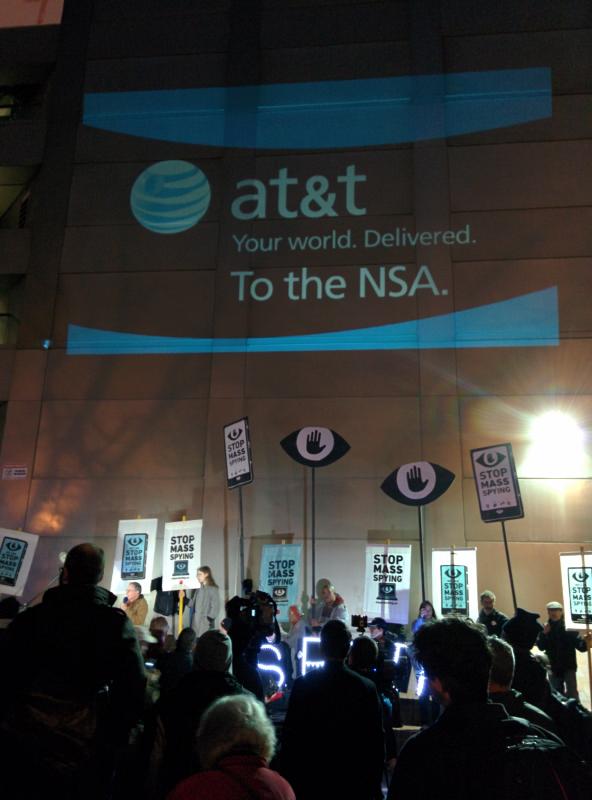
I spent the last week in Zürich, reconnecting with my Swiss family in the area. A long time ago, I named an open source software platform after a nearby town that my family made their home hundreds of years ago: Elgg. I hadn't been back to the town since I was a child, and visiting it stirred echoes of memories that gained new focus and perspective.

I grew up in the UK, more or less, and while I had some extended family there, mostly they were in Switzerland, the Netherlands and the United States. I've always been fairly in touch with my US family, but not nearly enough with my European cousins. Effectively meeting your family for the first time is surreal, and it happens to me in waves.

Growing up as an immigrant, and then having strong family ties to many places, means that everywhere feels like home and nothing does. I often say that family is both my nationality and my religion. Moving to the US, where I've always been a citizen, feels no more like coming home than moving to Australia, say. Similarly, walking around Zürich felt like a combination of completely alien and somewhere I'd always been - just like San Francisco, or Amsterdam. My ancestors were textile traders there, centuries ago, and had a say in the running of the city, and as a result, our name crops up here and there, in museums and on street corners.

So, Zürich is in the atoms of who I am. So is the Ukrainian town where another set of ancestors fled the Pogroms; so are the ancestors who boarded the Mayflower and settled in Plymouth; so are the thousands of people and places before and since. My dad is one of the youngest survivors of the Japanese concentration camps in Indonesia, who survived because of the intelligence and determination of my Oma. His dad, my Opa, was a prominent member of the resistance. My Grandpa translated Crime and Punishment into English and hid his Jewishness when he was captured as a prisoner of war by the Nazis. My great grandfather, after arriving in New England from Ukraine, was a union organizer, fighting for workers' rights. My Grandma was one of the kindest, calmest, wisest, most uniting forces I've ever known in my life, together with my mother, even in the face of wars, hardship, and an incurable disease.

All atoms. Entire universes in their own right, but also ingredients.

And so is Oxford, the city where I grew up. Pooh Sticks from the top of the rainbow bridge in the University Parks; the giant horse chestnut tree that in my hands became both a time machine and a spaceship; the Space Super Heroes that my friends and I became over the course of our entire childhoods. Waking up at 5am to finish drawing a comic book before I went to school. Going to an English version of the school prom with my friends, a drunken marquee on the sports field, our silk shirts subverting the expected uniform in primary colors. Tying up the phone lines to talk to people on Usenet and IRC when I got home every day, my open window air cooling my desktop chassis. My friends coming round on Friday nights to watch Friends, Red Dwarf and Father Ted; LAN parties on a Saturday.

In Edinburgh, turning my Usenet community into real-life friends. Absinthe in catacombs. Taking over my house on New Year's Eve, 1999, and having a week-long house party. Walking up Arthur's Seat at 2am in a misguided, and vodka-fuelled attempt to watch the dawn. Hugging in heaps and climbing endless stairs to house parties in high-ceilinged tenements. Being bopped on the head with John Knox's britches at graduation. The tiny, ex-closet workspace we shared when we created Elgg, where the window didn't close properly and the smell of chips wafted upwards every lunchtime. And then, falling in love, which I can't begin to express in list form. The incredible people I have been lucky enough to have in my life; the incredible people who I have also lost.

And California too. We are all tapestries, universes, and ingredients. Works in progress.

If we hold a screen to our faces for too long, the world becomes obscured. Sometimes it's important to step out of your life for a while, so you can see it in its true perspective.

· Posts · Share this post


If we want open software to win, we need to get off our armchairs and compete.

The reason Facebook dominates the Internet is that while we were busy having endless discussions about open protocols, about software licenses, about feed formats and about ownership, they were busy fucking making money.

David Weinberger writes in the Atlantic:

In the past I would have said that so long as this architecture endures, so will the transfer of values from that architecture to the systems that run on top of it. But while the Internet’s architecture is still in place, the values transfer may actually be stifled by the many layers that have been built on top of it.

In short, David worries that the Internet has been paved, going so far as to link to Joni Mitchell's Big Yellow Taxi as he does it. If the decentralized, open Internet is paradise, he implies, then Facebook is the parking lot.

While he goes on to argue, rightly, that the Internet isn't completely paved and that open culture is alive and well, the assumption that an open network will necessarily translate to open values is obviously flawed. I buy into those values completely, but technological determinism is a fallacy.

I've been using the commercial Internet (and building websites) since 1994 - which is a lifetime in comparison to some Internet users, but makes me a spring chicken in comparison to others. The danger for people like us is that we tend to think of the early web in glowing terms: every website felt like it was built by an intern and hosted in a closet somewhere (and may well have been), so the experience was gloriously egalitarian. Anyone could make a home on the web, whether you were a megacorporation or sole enthusiast, and it had an equal chance of gaining an audience. Many of us would like this web back.

Before Reddit, there were Usenet newsgroups. (I'll take a moment to let the Usenet faithful calm down again.) Every September, a new group of students would arrive at their respective universities and get online, without any understanding of the cultural mores that had come before. They would begin chatting on Usenet newsgroups, and long-standing users would groan inwardly as they quietly taught the new batch all about - remember this word? - netiquette.

In September, 1993, AOL began offering Usenet access to its commercial subscribers. This moment became known as "the eternal September", because the annual influx of new Internet users became a constant trickle, and then a deluge. There was no going back, and the Internet culture that had existed before began to give way to a new culture, defined by the commercial users who were finding their way online.

"Eternal September" is a loaded, elitist term, used by people who wanted to keep the Internet for themselves. As early web users, rich with technostalgia and a warm regard for the way things were, we run the risk of carrying the torch of that elitism.

The central deal of the technology industry is this: keep making new shit. Innovate or die. You can be incredibly successful, making a cultural impact and/or personal wealth beyond your wildest dreams, but the moment you rest on your laurels, someone is going to eat your lunch. In fact, this is liable to happen even if you don't rest on your laurels. It's a geek-eat-geek world out there.

For many people, Facebook is the Internet. The average smartphone user checks it 14 times a day, which of course means that a lot of smartphone users check it far more than that. In the first quarter of this year, Facebook had 1.44 billion monthly active users. That means that almost 20% of the people on Earth don't just have a Facebook account: they check it regularly. In comparison, WordPress, which is probably the platform most used to run an independent personal website, powers around 75 million sites in total - but Apple's App store has powered over 100 billion app downloads.

Are all those people wrong? Does the influx of people using Facebook as the center of their Internet experience represent a gargantuan eternal September? Or have apps just snuck up and eaten the web's lunch?

Back in 2011, I sat on a SXSW panel (yes, I'm that guy) about decentralized web identity with Blaine Cook and Christian Sandvig. While Blaine talked about open protocols including webfinger, and I talked about the ideas that would eventually underly Known, Christian was noticeably contrarian. When presented with the central concepts around decentralized social networking, his stance was to ask, "why do we need this?" And: "why will this work?"

In the Atlantic, David Weinberger references Christian's paper "The Internet as the Anti-Television" (PDF), where he argues that the rise of CDNs and other technologies built to solve commercial distribution problems have meant that the egalitarian playing field that we all remember on the web is gone forever. While services like CloudFlare allow more people than ever before to make use of a CDN, it requires some investment - as do domain names, secure certificates, and even hosting itself. (The visual and topical diversity of GeoCities and even MySpace, though roundly mocked, was very healthy in my opinion, but is gone for good.)

For most people, Facebook is faster, easier to use, and, crucially, free.

Rather than solving these essential user problems, the open web community disappeared up its own activity streams. Mailing list after mailing list filled with technical arguments, without any products or actual technical innovation to back them up. Worse, in many organizations, participating in these arguments was seen as productive work, rather than meaningless circling around the void. Very little software was shipped, and as a result, very little actual innovation took place.

Organizations who encourage endless discussion about web technologies are, in a very real way, promoting the death of the open web. The same is true for organizations that choose to snark about companies like Facebook and Google rather than understanding that users are actually empowered by their products. We need to meet people where they're at - something the open web community has been failing at abysmally. We are blindsided by technostalgia and have lost sight of innovation, and in doing so, we erase the agency of our own users.

"They can't possibly want this," we say, dismissively, remembering our early web and the way things used to be. Guess what: yes they fucking do.

This stopped being a game some time ago. Ubiquitous surveillance, diversity in publishing and freedom of the press are hardly niche issues: they're vital to global democracy. A world in which most of our news is delivered to us through a single provider (like Facebook), and where our every movement and intention can be tracked by an organization (like Google) is not where any of us should want to be. That's not inherently Facebook or Google's fault: as American corporations, they will continue to follow commercial opportunities. It's not a problem we can legislate or just code away. The issue is that there isn't enough of a commercial counterbalancing force, and it really matters.

Part of the problem is that respectful software - software that protects a user's privacy and gives them full control over their data - has become political. In particular, "open source" has become synonymous with "free of charge", and even tied up with anti-capitalism causes. This is a mistake: open source and libre software were never intended to be independent from cost. The result of tying up software that respects your privacy with the idea that software should come without cost is that it's much harder to make money from it.

If it's easier to make money by violating a user's autonomy than protecting it, guess which way the market will go?

A criticism I personally receive on a regular basis is that we're trying to make money with Known (which is an open source product using the Apache license). A common question is, "shouldn't an open source project be free from profit?"

My answer is, emphatically, no. The idea behind open source and libre software is that you can audit the code, to ensure that it's not doing something untoward behind your back, and that you can modify its function. Most crucially, if we as a company go bust, your data isn't held hostage. These are important, empowering values, and the idea that you shouldn't make money from products that support them is crazy.

More importantly, by divorcing open software from commercial forces, you actually remove some of the pressure to innovate. In a commercial software environment, discussing an open standard for three years without releasing any code would not be tolerated - or if it was, it would be because that standard was not significant to the company's bottom line, or because the company was so mismanaged that it was about to disappear without trace. (Special mention goes to the indie web community here, for specifically banning mailing lists and emphasizing shipping software.)

The web is no longer a movement: it's a market. There is no vanguard of super-users who are more qualified to say which products and technologies people should use, just as there should be no vanguard of people more qualified than others to make political decisions. Consumers will speak with their wallets, just as citizens speak with their votes.

If we want products that protect people's privacy and give people control over their data and identities - and we absolutely should - then we have to make them, ship them, and do it quickly so we can iterate, refine and make something that people really love and want to pay for. This isn't politics, it's innovation. The business models that promote surveillance and take control can be subverted: if we decide to compete, we can sneak up and eat their lunch.

Let's get to work.

· Posts · Share this post

Email me: ben@werd.io

Signal me: benwerd.01

Werd I/O © Ben Werdmuller. The text (without images) of this site is licensed under CC BY-NC-SA 4.0.