
19 min read
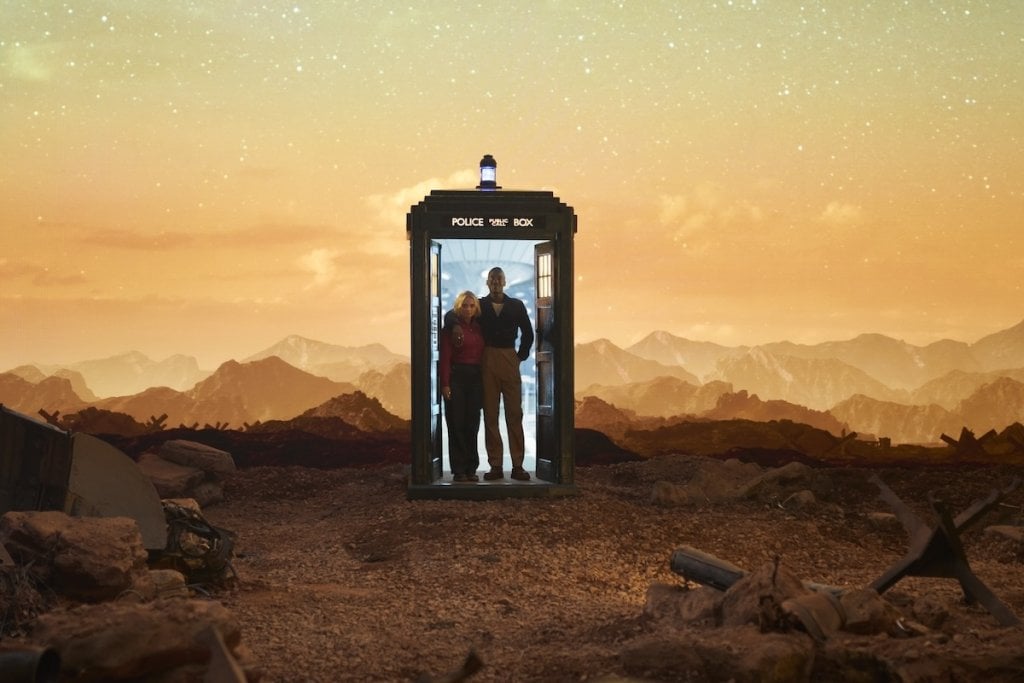
I can’t help myself. I’ve loved every moment of the rebooted Doctor Who on Disney+, but it appears to have hit a bit of a pause while Disney considers whether to renew its co-production. With its future unclear (although I’m certain it’s coming back before too long), I’ve been thinking about what I’d do if I was show-runner. (To be clear, I think about what I’d do if I was show-runner … a lot. Whovian first, everything else second. I make no apologies.)
Like I said, I loved every moment. But if I have any quibble at all with the last two seasons, with their extended budget provided by Disney, it’s that they used that budget to make the finales bombastic. Who is a show about people, first and foremost; as I wrote recently while justifying my opinion that it’s the best show ever made:
Doctor Who doesn’t promise us a perfect future — it promises us people who will fight for one. It shows us a universe where the best tool you can carry is your mind, your heart, and your ability to listen. Where change is baked into the story, and where survival requires transformation.
These are quiet, small, human ideas. The second episode of modern Who, back in 2005, was mostly spent in the far future examining the future of the human race, but ended on a normal British city street getting chips. That quiet moment was everything. The best Doctor Who stories are small in scale, terrifying in scope, and, like the Doctor themselves, work more with heart and intelligence than they do with the high-octane weaponry of special effects and epic monsters.
As a show, Doctor Who gets to play with the toolbox of time travel, but it rarely uses that power to investigate the past, present, and future of a single story. There’s so much power in this: history provides context to our present, while speculative fiction does the same in a different way, by taking ideas from our present and extrapolating them into possible futures that shed light on our lives in new ways.
My fantasy Doctor Who season would lean on this in a big way.
It would center around a single mystery — not as a slight thread that’s lightly mentioned, in the style of Buffy or Bad Wolf, but truly centered on it. Every story in the season would illuminate the mystery in a new way, like picking up an object and examining it from a new angle. You’ll think you’ll know the dynamics of the situation in the present, and then the next episode the Doctor will go back in time and you’ll see what led people to act the way they did in a whole new light.
So, just for fun, using the eight-story format of the Disney co-production, here’s what my fantasy Doctor Who season would look like.
I’m deliberately leaving the casting of the Doctor and their companion unspecified. In my head, I’m still imagining Ncuti Gatwa as the Doctor and Verada Sethu as Belinda Chandra, who were wonderful, but I’m leaving name and gender unfilled for both. That’s not because they don’t matter, but what matters most to the story is that the companion is contemporary and highly independent. The Doctor, of course, is always just a little bit alien: an outsider who doesn’t care how different they seem.
The Shadow and the Loom
The Doctor lands in 19th century Nottingham after detecting an anomalous signal on the TARDIS console. Textile workers are dying, murdered at the hands of an unseen force lurking in the dark of the factories. The Doctor and companion discover the missing workers are Luddites: textile artisans who’ve been smashing the new, wider looms because automation threatens to subjugate them to the factory owners. Scanning, the Doctor finds some weird dimensional phase harmonics, like there’s been a breach in the universe.
The factory owners have struck a secret deal with an unseen person known only as The Director to harness an alien force that will kill the perpetrators and preserve their profits. Ultimately, the Doctor destroys the control device for the alien force, tucking away a critical component in order to figure out where and why it was created. As the TARDIS dematerializes, the alien has been defeated, but the Luddites’ battle continues — and The Director is still out there, still unseen, and still up to something.
The Lovely City
The Doctor traces the component to a floating city in the 25th century, surrounded by pristine clouds. Here, everyone has everything they need, for which they pay almost nothing; each person is served by a personal magic mirror that promises to reveal the complete truth about everything, with no secrets left untold.
Again, the sonic screwdriver reveals weird dimensional phase harmonics. The Doctor’s companion notices that everyone is subservient to a higher class of people, the Best of Us, who treat them like underlings — and nobody has any inclination to do anything about it. One person who begins to resist is swarmed by the others and disappeared; when the companion asks what they did, they say they were a “threat to all of us”.
When the Doctor and companion try to get close to the Palace of the Best of Us at the center of the city, the mirrors begin to lie. The population turns on them, believing them to be murderers who will kill them if they aren’t killed first, and the quest to get to the Palace becomes a race to get out of the maze-like city alive.
While making their escape back to the TARDIS, they come across a vast loading bay that seems to be receiving bulk goods that are materializing from across time and space: clothing from the 19th century looms, crates of alien technology, and more, all unloaded to be sold at low cost. The episode ends on a cliffhanger reveal of who is overseeing them all: the Daleks.
The Cloud Machines
The Daleks nearly exterminate the Doctor and companion; to flee, they escape into an elevator that hurtles them onto the ground below.
Here, they find that the clouds are thicker: the ground is covered in a foggy haze. There are factories as far as the eye can see, their chimneys creating the clouds that surrounded the lovely city. Daleks patrol the streets, exterminating anyone who is not in their right place. Posters extol obedience, purity of purpose, and the glory of sacrifice: a grim echo of history’s worst ideologies. The outputs from the factories are loaded into crates and sent up to the city via transmat.
They find that the workers are just as docile as the people in the city above. “This is just our way of life,” one of them says. “We love to build and make.” But when questioned further, they add, “Mustn’t grumble. The Director is watching.” Every morning, they gather in the squares for the Daily Affirmation: a broadcast that reminds them they’re the backbone of progress, the heroes of production. Even in the fog, they cheer.
The Doctor encounters a small group that is planning a riot to disrupt the central power station, stop the factories, and clear the sky: a whole underground network that has been distributing pamphlets, putting up alternative posters, and finding ways to destroy the Daleks. “Even on the darkest day, there is always someone helping.” They theorize that that if the gleaming city above is revealed, the workers will realize their plight and rise up. The Doctor thinks that this will also force the Director to show themselves, and finds a way to help the group, ultimately reversing the polarity of the neutron flow (why not?) to bring back the sky. The clouds part, the workers look up, and begin to take to the streets to reassess their world.
And then the Daleks begin trying to exterminate them en masse — but it isn’t enough to quell the uprising. The Doctor and companion escape back up the elevator as the planet below coalesces into a full-blown riot.
There’s more to discover. Who is the Director? Why are the Daleks a part of this scheme? They’re never subservient — what do they want?
The Imagined Planet
Back in the TARDIS, the Doctor is troubled: someone is using time travel to build a network of exploitation across time and space, in conjunction with the Daleks. The cultures being exploited have no chance to rebel against the whole system because they don’t have time travel themselves.
The Doctor traces the artron energy from the crates of goods to a planet that seems to exist outside of time itself, tucked away in a corner of the time vortex. It seems impossible. And perhaps it is the home of the Director.
But as the Doctor and companion leave the TARDIS and explore, they discover a utopia: a gleaming city of stained glass surrounded by nature, where diverse people make art, play music, and are free to be themselves. It’s not what they expected at all.
The companion makes friends and discovers that this is a hiding place: the only way to escape from the Director’s web is to exist outside of time. But the Doctor is skeptical: why did the artron energy from the cloud city lead them here? The companion also begins to ask questions: is it truly a utopia if they know people are being exploited elsewhere? Shouldn’t they be helping? And why do some members of the community seem to have technology they shouldn’t?
As it becomes clear that key members of this utopian society have been not brainwashed but bribed by some unseen force, the truth begins to dawn. The artron energy was in the planet’s future, and the Director is just beginning to take hold here. The Doctor scans, and the unusual dimensional phase harmonics here are off the charts.
And then, in the lush green of the city, the Director materializes. In a TARDIS. Locked into the form of a police box. Just like the Doctor’s.
Because, somehow, the Director is the Doctor. Who begins directing the Daleks to subjugate the people of the planet while our Doctor looks on, horrified, terrified, shaken to their core.
Small Island
The Doctor is reeling and their companion doesn’t know who to trust. Some future of the Doctor — not a future regeneration but apparently this incarnation — is using the TARDIS to build a network of exploitation across time, in conjunction with their arch enemies the Daleks.
The companion demands to be taken home and the Doctor complies, landing in present day London. It seems safer here: life carries on as it always did. They make a cup of tea and sit down on the sofa to watch TV as the Doctor makes their way back to the TARDIS alone.
But the news broadcast on TV is not reassuring. The Prime Minister makes a statement outside Downing Street, but includes all of the phrases that hung on the walls of the buildings in The Cloud Machines. The companion realizes that all is not well, and rushes to get the Doctor before they dematerialize for good. “You have to fix this.”
The two of them materialize into Downing Street and demand an audience with the Prime Minister, who we find alone, sitting at a table signing papers. He explains that Britain has lost its way, and that he has chosen to enter into an agreement with the Director in order to secure its future. He’s not subjugated in any forceful sense: he’s willingly complicit. He sees it as a path to stability.
But Parliament must first agree via a vote. The Doctor and their companion meet with the Leader of the Opposition and frantically try to convince him that this is a dark bargain. Their pleas fall on deaf ears. When they appeal to individual Members of Parliament, they ask for things in return. Some agree to vote against the agreement. But then, finally, when the MPs line up one by one to vote, they all vote in favor of it, regardless of what they said.
As the final vote is made and the votes are tallied, the Daleks descend on Parliament. We zoom out and see that all the democratic countries in the world are passing similar votes, with the Daleks are descending. UNIT joins them to stand side by side with them. Everywhere. Worldwide.
Everywhere, that is, except for a small island nation in the middle of the Pacific.
Big Island
In a sweep across the capital city of the small island nation of Tuvati, we see that they’re a mutualistic society with a gift economy; children learn in circles from adults; music and art are practiced much as they were in The Imagined Planet; it feels like a fully-functioning society.
We zoom in on its leaders, who watch the world hand itself over to the Director in horror. They take a quick vote around the circle, each one raising their hand in turn, and switch on a defense system that raises a visible blue ring around the island. We see the Daleks attempt to descend, but they cannot.
The Doctor and companion dematerialize and announce themselves: “we’re here to help if we can.” But the leaders don’t want their help. They’re way ahead of them and see the Doctor’s interference in particular as paternalistic colonialism. They’ve been establishing a network of resistance across the globe — not led by them, but running in co-operation. They’re not a safe haven; they work in deep collaboration with resistance movements everywhere.
One member of the leadership council, however, is out for himself. He imagines a life where he reaps the benefits of enormous profit in collaboration with the Director as vanguard leaders, in contrast to feeling like his ideas are constantly thwarted by having to be approved by the council. The council’s slow decision-making once threatened the island itself as the waters rose around it. We see him build a small cadre of followers who seek to take down the protective ring and rat out the resistance movements across the world.
The companion sees this in action, and warns the Doctor. They plot to spring a trap and reveal the rebels to the council — but just as it’s almost sprung, it turns out that the council was already wise to it and had been using them to learn more about the Director. They are imprisoned.
The council is irritated at the Doctor and companion for getting involved despite their requests not to. “If you want to help,” they say, “go find the Director and confront him. Leave us be.”
Never Cruel
Now locking on to the dimensional phase harmonics, the time travelers land in a future version of the utopian city from The Imagined Planet. The beautiful stained glass towers are replaced with concrete, smoke once again fills the air, and the DirectorDoctor’s face hangs on great posters from the buildings. Daleks patrol the streets. The companion is horrified. She had friends here. She’s lost faith in the Doctor’s ability to help. “We came here to save them, and now … now it’s your face on the banners.”
Citizens murmur that “The Director is here,” and “They’ve given us order.” They love them because they gave them safety, just like the Doctor always tries to do. The Doctor is desperate to stop it. They must reach the central control tower, now repurposed as the Director’s fortress — which looks eerily similar to the Palace of the Best of Us.
Once there, the Director explains that they are, indeed, the Doctor. They realized the universe needed order to survive. Tired of patching holes in the universe over and over again, they decided to build something stable.
“Look at them,” the Director says, gesturing to the subjugated society. “They’re alive, aren’t they? They’re safe. They’re well. No Auton invasions. No Weeping Angels feeding on them in the dark. I gave them that. I made the hard choices you never would.”
The Director reveals their final plan: a “Final Affirmation” broadcast that will integrate all the planets in their network into a single locked timeline: no more wars, no more flux, but no more freedom either. A universe without chaos, but also without change. They have set up the broadcast technology, connected to every world across a single, unified timeline. Slowly, they begin to speak.
Affirmation
It’s weeks later. The affirmation has been broadcast. As we hear its words, we see every world — the 19th century, contemporary London, the Imagined Planet — subjugated to the Director’s rule. The same posters, the same patrolling Daleks, the same smoke and fog clouding the sky.
The Director has established a system where the people of the worlds are either engaged in making — down on the ground in the factories — or they’re using the products of the makers, buying with docile abandon, placated by their mirrors, sending resources back to the makers to continue the cycle.
The Doctor and companion are locked up in parallel temporal cells, unable to leave their solitary confinement. The Doctor knocks on the door again and again, seemingly out of boredom. As robot guards walk in from time to time to provide food and water, the Doctor whistles strange tunes.
The Director, meanwhile, is making deals with the Daleks. If they continue to enforce the norms of the Director’s network, the Director will allow them to rule. The Director makes it explicit that a “strong hand” is needed to keep it on track, to ensure everything sticks to the template.
The Doctor has been knocking on the door at its harmonic frequency. Finally, it gives in, and they walk out and free their companion. As they emerge, they have one question they’ve been pondering for all this time: “Doctor, if the Director is you, where’s the companion?”
The Doctor strides into the Director’s chamber alone. This — the Director’s whole plan, the subjugation of worlds in the name of stability — is not what the Doctor wants. It’s never what they want. As they spar, the penny drops: the Director is from another universe where the Doctor never had a companion. They’ve been alone the whole time, with no community, no friendship, no-one to teach them empathy and kindness. Ultimately, their world disintegrated, and they found their way through a crack in the universe to establish something better.
“It’s too late, Doctor,” the Director says, finally. “I own this universe. I have provided order. It bends to me.”
“I don’t know if everyone agrees,” the Doctor says.
“Correct,” a Dalek announces. “We do not need you. It bends to us. The Doctor is an enemy of the Daleks. The Director is an enemy of the Daleks.” They, of course, have been double-crossing him the whole time. They hold both Time Lords at gunpoint, ready to exterminate. The Director tried to make a partnership with extremists, and it did not work out. They’re both about to die.
But then we realize: the companion isn’t here. The Doctor hadn’t just been whistling at the robot guards; they were being slowly reprogrammed to carry a message. The companion has been using the TARDIS to amplify it and further it across time and space. Because everywhere, no matter how bad things get, “even on the darkest day, there is always someone helping.”
The Doctor has established strong communication channels that cross the stars — a network that even extends to the magic mirrors. We see networks of resistance everywhere, facilitated by the Tuvati people and the companion, making links across time and space. Those same networks of cargo that transmitted goods between their worlds and the Lovely City are used to transmit weapons, materials, pamphlets. They rise up.
We see them swarm the Director’s Palace. The Director’s lack of humanity also made them underestimate the power of people, together. The collaborative masses defeat the Daleks with explosives and baseball bats in the Palace, across the streets, across every world. The factories are halted and the skies clear of clouds. The Director themselves, however, seems to have vanished.
There’s no going back. As an epilogue, we discover that the formerly subjugated people now own the factories and the transport carriers together. They do the work in a way that works for them, and create a peaceful order through collaboration, taught by the Tuvati. They achieve everything the Director set out to do but without subjugation, without fear, without authority.
Finally, the Doctor and companion slip out unnoticed, off to get a well-earned cup of tea.
3 min read
I earn 5-10X what I did when I lived in the UK, but my quality of life is markedly worse. My whole thing boils down to: how can America have the same standard of living I grew up with?
For a lot of people, the idea of prosperity boils down to, “I can buy what I want,” not, “I can live how I want.” The latter is the one that matters: that’s what freedom actually is.
National healthcare works (or does when it’s not being dismantled for profit). Integrated public transit works. Welfare works. Gun control works. All of this stuff makes for a better life: one where you don’t need to worry about things going wrong because you’ll know you can get back on your feet. Where you can experiment with your life knowing it’s not catastrophic.
Here the base cost of living is dramatically higher. If something goes wrong, there’s nothing to catch you. People have weapons in their homes. They’re far more religious but much less likely to help each other. You need to own a car to do much of anything. There aren’t really nationalized services — particularly now — and the commercial ones don’t work together well, aren’t as good, and cost a fortune.
The only reason I can think of that people would accept this is that they’re taught to believe that this is the best country in the world. It’s like a religion in itself; there’s absolutely no basis for it. There are wonderful people here, many of whom are doing wonderful things, but there’s so much work to do to make the experience living here competitive with other developed nations. If you love having to get into your truck to go to the box store to get your expensive, homogenous groceries for the week, and if you love the extractive experience of your health insurance provider, you do you, but I think these things are a kind of hell.
And obviously this is particularly true now, under an increasingly fascist government that’s stripping away the few services we actually had. The people in charge want to return us to traditional gender roles, make people have more babies, and, for many of them, enforce a common religion. That, to me, is the opposite of prosperity. These things are disgusting, in a place that was already doing badly.
We’re going in the wrong direction. Can it be saved?
3 min read
A quick aside:
I now believe it’s going to get a lot worse before it gets better (if it gets better). I’m not going to enumerate what’s been going on; you’re either paying attention or you’re not, but we’re less than one hundred days in and the lurch towards real fascism has been notable.
24 years ago, we experienced a lurch towards a surveillance state in the wake of 9/11. George W Bush, through the PATRIOT Act among other instruments, didn’t just establish new ways for people on American soil to be tracked, imprisoned, and deported, his administration also created a new set of cultural norms based on distrust and insidious militarism that have lasted to this day.
That’s one of my biggest worries about the current administration. It will end, one way or another, although talk of an unconstitutional third term is certainly worrying in itself. But Trump is old; he can’t be President forever. It’s the lingering cultural shift that will be with us for generations, long after Trump himself has left us and Musk has found his way to some other segregationist power play. It’s the impact of DOGE; the concentration camps in El Salvador; the spirit of authoritarianism and apartheid that is now being set in motion. Potentially more; we’re less than two months in to a four year term even if he doesn’t get to take a third one. This will change the country for good, and in turn, it will change the world for good. It is a continuation of Jim Crow, of apartheid, and, yes, of Nazi Germany. It isn’t the same as those, but they’re all of a one, all part of a through line that must be continually defeated.
The incentives to not speak out are enormous. One voice doesn’t change a great deal, and over time the risks to dissent grow larger. But if there are many voices, and those voices translate into peaceful protest on the streets, and they translate into other actions that democratically resist, then there is hope. What doesn’t work is downplaying the risk, saying “let’s see what happens”, or sticking your head in the sand and waiting for it all to blow over. It may not blow over. And either way, future generations will ask where you were, what you did, how you showed up when the fascists came to town.
1 min read
Fp9ootron
ABCXXZXCFDSESW4ZXDAWEQ!QWZ
fwwqqqqwwQsxXSQWSASXC XDΩSXEDRTY7U8I9
Editor's note: does toddler input have sufficient entropy to be used as a random number generator?
1 min read
If you're in Austin, visiting Fediverse House at 412 Congress Ave today and tomorrow is what you need to be doing.
You don’t need a SXSW ticket - just show up and meet some of the key people building and thinking about the most important thing happening on the web right now.
Unfortunately, I’m preparing for a team summit in New York this week, so I’m unable to attend. The good news for me (and you, if you’re also not able to make it there) is that I hear the conversations are going to make it to the Dot Social podcast. I can’t wait to hear them.
3 min read
So, yes, hi, I have a Tesla. It’s a long range Model 3 which I bought in 2021.
After a career spent working on open source and mission-drive projects — right now I work for a non-profit newsroom; once upon a time I built a social networking platform for education — it might shock you to learn that I am not rich. I have never had a significant tech company equity package; I have never seen the benefit of a significant exit. I own my own home but needed to move far away from the Bay Area to do it. I’ve done okay and I’m grateful for the opportunities that I’ve had, but I am not very wealthy. It would be really meaningful for me to bolster my income by another $2K a month and I’ve been thinking a lot about how to do that lately.
The Tesla has put me in a bit of a weird situation. Even before Elon Musk threw three Hitler salutes on-stage, I couldn’t really afford to own it: the monthly cost is really high for a car that I maybe drive two to three times a week. But selling it is also hard: it’s depreciated really fast, and I’ll barely be able to pay off the loan I have on it. (A lease would have been a better deal.) It actually won’t be that easy for me to get a replacement car, even with a trade-in deal. I’d prefer to keep an electric car — they’re both better environmentally and just as a car to run and own — but we’ll see if that’s possible.
But I will sell it. Hopefully this month. I don’t want to even tacitly be associated with promoting that man or bolstering his wealth. Until then, I’ve become one of those people who has disclaimered his car, so anyone who sees it is under no impression that I am in favor of anything that’s happening in this country right now.
One sticker I don’t have: the one that says I bought this before Elon went crazy. There’s no such thing. The warning signs were always there; my car situation is a prime example of how ignoring these kinds of ethical red flags lead to real losses in the long run. I brought this on myself.
I know I’m not alone. Not everyone who owns one of these things is a wealthy Musk supporter. That doesn’t mean we should be absolved — we should have seen what we were getting into, and owning a Tesla does mean continuing to pay Musk, who is clearly a fascist, money through connectivity plans and so on — but it’s worth acknowledging that, for many people, it’s not a no-brainer to take this kind of financial hit.
Anyway, that’s the deal. I guess I’m posting this out of a sense of transparency, and a little bit out of a sense of exasperation at my own past purchasing decisions and the overwhelmingly bad present situation. Many of you will be judging me for this, and I both accept and deserve that. But here I am.
1 min read
It’s Oscars day! I haven’t seen very many of the nominees this year, but of the ones I have, I need to make this recommendation:
Soundtrack to a Coup d’Etat, nominated for best documentary picture, is brilliant. It’s an under-told part of American history, still highly relevant and ongoing today, told through the lens of its surprising intersection with the jazz musicians of the time. One of those films that I think everyone should see in order to educate themselves. It doesn’t make for a cheerful evening, but it’s all wonderfully done.
It’s available to rent on streaming services right now, and is worth it. If you don’t want to pay to rent, it will hopefully be a part of someone’s streaming library later on.
2 min read
Hint: if a party is heavily supported by people who throw Nazi salutes, it might not be up to much good.
Some voters for new right-wing parties are economically worried, but blame their issues on the influx of immigrants rather than the increasing divides between rich and poor that we're seeing globally. They're looking for right-wing answers to their economic worries - racism like anti-immigrant sentiment - rather than the equitable ones that would actually present lasting solutions.
I think that's partially because the left-wing parties haven't been good at prioritizing those economic issues. Some of the liberal (rather than truly left) parties have used their embrace of other social issues like affirming peoples' identities and supporting intersectional equity (which are good things that they should have been doing!) to mask their lack of action on real economic disparity (which they should also have been working on, but isn't always as palatable to wealthy donors).
Both are important. We can support peoples' identities and correct historic inequities while also providing real safety nets and taxing billionaires. I think you actually can't effectively do one without the other.
Of course, in addition to this, some voters are just fucking racist. Or they're anti-Islamic, transphobic, homophobic, or see the world through some other noxious hate-based lens. And, of course, you have to be at least a little bit xenophobic to be entranced by a policy based on "these people are not like us".
That's left room for the kinds of bottom-feeders who would like to see more racial stratification and believe in homogenous societies. The people who find integrated, cosmopolitan societies scary. Imagine what an underwhelming, insecure person you'd have to be to be afraid of more diversity or correcting for serious historic inequities. Widening the gene pool of ideas, of lived experiences, and, well, genes, strengthens any society.
The fact is, there's a possible, better alternative, where an equitable distribution of wealth is ensured so that nobody falls through the cracks, but I don't know that it's been offered effectively. I hope we can correct for that. I find results like today's to be deeply depressing.
1 min read
For the avoidance of doubt:
All empires are bad.
All empires have always been bad.
All empires always will be bad.
The concept of empire is bad.
The prerequisites for empire are bad.
And the people who like empires — any of them — are bad.
Do not have fondness for empires.
Do not have nostalgia for them.
Empires by definition colonize and rule space — physical, figurative, or both — that might otherwise be free.
Resist the urge to romanticize empire. It was never good, and it never will be.
1 min read
I was privileged to be interviewed for this week’s People and Blogs:
Hi! I’m Ben Werdmuller. I was born in the Netherlands, grew up and spent my twenties in the UK, and spent twelve years in the San Francisco Bay Area. Now I live in Greater Philadelphia in a creaky old house with my partner, our two year old son, and my father. At night the pipes clang and we sometimes wonder if they’re haunted.
I love the whole series, so it’s really exciting to be included. You can read my interview here.
2 min read
Inspired by Gina Trapani, Buster Benson, and others, I started to build my own Life in Weeks page from scratch. It looks pretty cool, and it’s interesting to see my life milestones presented on this scale.
But I’m not going to share it with you.
As I was building it, it became clear how much personal information I was sharing — and not just my own, but that of my parents, my sister, my partner, my child, other members of my extended family. It’s a privacy violation at best and an identity theft goldmine at worst. My life is mine, their lives are theirs, and these things don’t need to be published in public on the web.
This is, perhaps, an area of growth for me: Ben in his twenties would absolutely have published it. But our lives are like a fingerprint; unique to us. Not everything needs to be made available for free to everyone.
The code is pretty simple and the payload is lightweight (unlike Gina and Buster, I haven’t relied on Bootstrap, for example), so I’m going to find another use for it. Maybe a Life in Weeks for characters from my novel? For the web itself? I’ll think about it.
1 min read
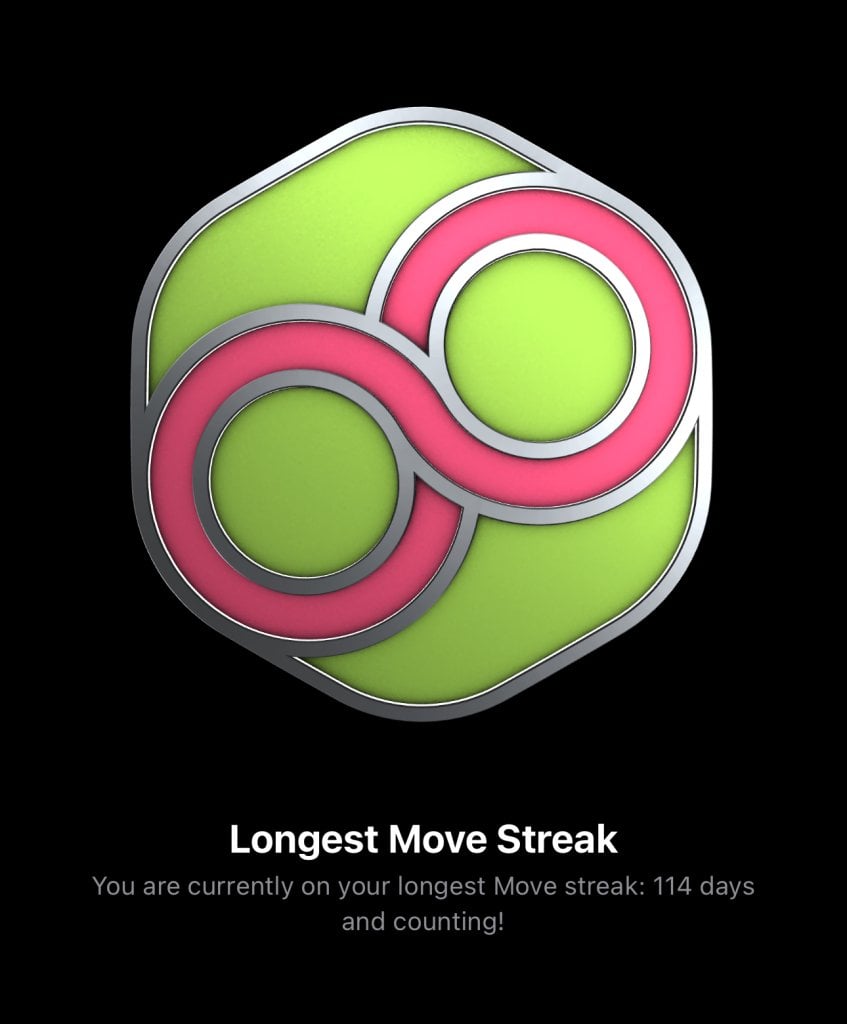
It’s a small thing, but I broke my Apple Fitness longest streak this week. That means my consecutive number of days that I’ve hit my fitness goals on my Apple Watch has been longer than it’s ever been.
Here’s why that’s meaningful: my previous longest streak was broken when my mother died, almost four years ago, after a ten-year terminal decline. For part of that time, I thought that my sister and I might have the illness too, and I’ve watched four other members of my family follow the same journey. It’s been a hard decade or two, and I haven’t been together enough to manage any kind of streak since that awful week in the hospital. Until now.
I’m not saying that nature is healing — grief is with me every single day — but it feels like, in the midst of genuine crises at home, in my family, and in the world, at least something is going right.
2 min read
From time to time, people ask me if they can use the content of my posts in another venue or another format. To make that possible, today I released all the text of all my posts under a Creative Commons Attribution-NonCommercial-ShareAlike 4.0 International license. You’ll see that declaration on the footer of every page of my site.
What does that mean?
Take a look at the full license text for the complete picture. In particular, note the following:
No warranties are given. The license may not give you all of the permissions necessary for your intended use. For example, other rights such as publicity, privacy, or moral rights may limit how you use the material.
Lastly: it’s optional, but if you do use the content, I’d love to hear about it. You can always email me at ben@werd.io.
3 min read
For a while now, I’ve been syndicating my posts to MSN. You can see Werd I/O’s profile over there. In some ways, this is my normiest network: whereas my Mastodon community is more technical, my Bluesky community is more political and my newsletter subscribers tend to be a mix of people from the tech and media worlds alongside people I otherwise know, MSN encompasses Windows users who the algorithm thinks should be sent my stuff.
The comments have long fascinated me: they’re incredibly right-wing. I’d initially dismissed them as being part of some influence campaign on the network, but I now see them as an important barometer of a cross-section of what the American public thinks. It’s not good news.
For example, here’s a selection of comments on the MSN version of my link blog post for The 19th’s article about USAID’s lifesaving reproductive healthcare. There’s a lot of this kind of thing:
“Women need to be responsible for their own behaviors. If they become pregnant then they need to seek and pay for their care to ensure the baby is born healthy. Just another waste of taxpayer money.”
And:
“It takes two to tango, where are all these dead beat dads? Why is the American taxpayer responsible for the entire planet? Have any of you women ever heard the word no? Not in your language? Then cross your legs. MSN doesn't like the truth. Communist sensors.”
And, bafflingly:
“How do contraceptives prevent STDs and HIV? They don’t.”
And the absolutely nihilistic but also inherently counterproductive:
“worlds overpopulated as it is.”
As well as the top-rated comment at the time of writing:
“USAID has only used a small portion of the funds for humanitarian purposes. The vast majority has been used for crazy liberal agendas that have nothing to do with humanitarian purposes. Corrupt Democrats have been caught red handed that's why they are trying to cover up what the taxpayers' funds have really been used for.”
My fear is that this is America. These comments are ill-informed, occasionally wildly racist, and light years away from the debate I’d expect to have in other forums. It’s easy to dismiss most of these people as being idiots (something I can’t easily avoid). There are almost no tolerant or left-wing voices in the mix; instead, we’re left with the kind of rhetoric you might otherwise expect to see in communities that have dismissed Fox News as being too soft.
If I’m right, which I’d prefer not to be, it doesn’t say great things about our prospects over the next four years, or for the future of the country. If this is where normie discourse is at, it’s going to be rough.
Anyway, I’ll leave you with two more comments, from other posts:
“Thank you President Trump for putting America and Americans first. When the far left crooks scream loud we know we are on target. FEAR !”
And:
“what maga when both parties just care more about a foreign country while democrats just engage in h ate speech toward the majority and republicans dont care and wont call them ra cists as they are being called that for everything.”
Oof.
1 min read
Imagine being so genuinely empty as a human being that you support a regime that conducts mass deportations and runs concentration camps because they support Bitcoin.
Imagine watching the rights, freedoms, and safety of trans people being torn down over the course of 72 hours and thinking, man, I'm really glad crypto is unencumbered now.
Just soulless, ghoulish people.
1 min read
The last time this man was in power we wound up with one of the largest civil rights movements ever conducted in the United States. There is so much light; so much bravery; so much fairness and equity and rebellion in so many. Those are the people I believe in. That's what I'm holding onto.
People who seek to strip the identities of vulnerable people, to deport people and break up families, to prevent people from loving another consenting adult, to reform the world in the name of their religion or their nationality — these people are small. They are ugly. They will not be here for long.
4 min read
I’ve written a few times about how blogging has been the single most important accelerant in my career. I mentioned this when I asked more of you to blog, in remarks about other peoples’ posts on blogging, and so on. But I’ve never actually explained how.
The arc of this journey is simple: I was a complete outsider with no money or connections, living in Scotland. Blogging allowed me to found two startups, build at least one enduring open source community, find multiple jobs, and enjoy career opportunities that otherwise would never have come my way. There is precisely zero chance that I would be doing my current job without it — or any job I’ve had since 2005.
I’ve been blogging since 1998. Because of that, I was familiar with the mechanics of what we’d later call social media very early on. I built a viral social site that was hitting millions of visits a day in my bedroom in 2001.
When I started to work in e-learning at the University of Edinburgh in 2003, I was able to immediately see the deficiencies in how people were learning and sharing online, and suggest a better alternative based on what was already happening. I collaborated with a PhD student who was studying education, and we wrote a white paper about what that might be. And then I published it on my blog, and he published it on his.
It was picked up by other bloggers in educational technology, who liked the idea. We offered it to the university, who declined (“blogging is for teenage girls crying in their bedrooms,” was the official response), so I quit my job and started building it full-time, narrating the whole journey on — you’ve guessed it — my blog. We built the platform into one that was used by universities, Fortune 500 companies, social movements, and NGOs around the world — all through word of mouth, driven by blogging.
When I left, it was my blogging that led me to be invited to speak at the Harvard Kennedy School’s Hauser School of Governance. After that talk, I met up with two of the attendees, who were journalists who saw the need for entrepreneurship to revive a flagging industry. I continued to collaborate with them, and together we built Latakoo, an enterprise video platform which continues to be the way NBC News and others gather footage and send it back to their newsrooms, in the format that each newsroom needs. Of course, I narrated the whole journey through blogging.
When I left Latakoo, it was to start Known, which could be described as a blogging platform. Because I’d been blogging heavily about an ongoing tech ethics issue at the time, it just so happened that I was quoted in the New York Times on the day that I was interviewing to be funded by Matter Ventures. It certainly didn’t hurt that Corey Ford, the General Partner, saw my name that day.
I blogged that journey too. Ultimately, Known had a small acquisition by Medium, and I continued to blog about indie web and tech ethics topics externally — and about things that Medium could be doing internally. That helped me build enduring relationships with people on the strategy team there. (“I don’t think Ben’s really an engineer,” someone accurately commented. “He could be running Medium,” they less-accurately added.)
One of the factors to Corey offering me a job at Matter was the writing I’d done around the dangers of Facebook as a single point of failure. In the wake of the 2016 election, that was significantly more clear to more people. So I joined the team, and used blogging to get the word out about what we wanted to fund.
When Matter stopped investing, I moved to Unlock Protocol — a company whose founder, Julien Genestoux, I had met through blogging and the indie web. After that, I worked at ForUsAll, which knew me through my work at Matter. I can’t draw a direct line between blogging and my work as CTO at The 19th, but there’s zero chance I would have gotten that job without everything that came before it. And then my current work as Senior Director of Technology at ProPublica came from that.
Without narrating my journey, my opinions, and things I’ve built, I might still be in my starter career. Which, by the way, there’s nothing wrong with at all! But my arc has definitely been blogging-informed.
2 min read
If ever there was a litmus test about who to avoid, it’s the people who see the language of the Equal Rights Amendment in the 21st Century and think, “oh, that’s problematic”.
Here is the full text:
SECTION 1. Equality of rights under the law shall not be denied or abridged by the United States or by any State on account of sex.
SEC. 2. The Congress shall have the power to enforce, by appropriate legislation, the provisions of this article.
SEC. 3. This amendment shall take effect two years after the date of ratification.
It’s that simple. If you or your community read this simple text — and as simple as it is, section 1’s 24-word sentence is the substance of it — and think “oh, we don’t want this,” congratulations, you are officially the baddies.
What happens next is unclear. The ERA should have been formalized as the 28th Amendment when Virginia ratified it in 2020. It should have been ratified by all the necessary states when Congress approved it in 1972, which in itself was far too late, given that it was written over a hundred years ago. It’s not the only glaring indictment of American society’s disdain for basic civil rights, not by a long shot, but it certainly is a big one.
America: just formally ratify the thing or come out and admit that you’re hoping for Gilead. There’s nothing else to say. It’s way past time.
2 min read
I realized some time ago that all the ways I want America to change just bring it closer to being Europe. Like, what if we had this can-do attitude and all the good parts without the guns and with universal healthcare, real education, unprocessed food without sugar in it, a real safety net, and integrated public transit instead of car culture.
Maybe the easier path is if we all, like, move to Amsterdam.
If I could change one thing it would actually be car culture. So much is related to that: what psychologically makes it more attractive to be in a little cocoon by yourself instead of in a tram or a bus with other people, even if it makes more traffic and more pollution? Fix that, fix so much else.
I think that’s maybe why I’m so drawn to cities like New York and San Francisco: there it’s much more common to rely on shared infrastructure, to be in the same spaces as other people. The New York subway is dirty and feels old, but it’s also a genuine marvel compared to public infrastructure in much of the country.
Those, to me, are the good places in America: every kind of person is living with every other kind of person, all relying on the same bedrock of infrastructure and norms, and generally, it works and results in a much richer culture and way of life. I wish it was all like that.
I make many multiples of what I used to make when I lived in Europe, but my quality of life is worse. So many of my political opinions about what needs to change in America really boil down to, “can I have the quality of life I had until my thirties back please?” And I’d like that for every American.
1 min read
When did you last look up?
What’s the best thing you’ve seen lately?
Who did you want to show it to?
Why?
1 min read
Hey, it’s 2025! Happy New Year. May it be better than we hope and fear.
Here are my technology predictions for the year.
Here are my resolutions / OKRs.
Ready or not, here we go!
4 min read
As a child, I freaking adored Tintin, the Belgian comic strip about a boy detective and his little white dog, Snowy. There was something intoxicating about the mix: international adventures, a growing cast of recurring characters, conspiracies, humor, hi jinx. Even the ligne claire style of drawing — cartoonish figures on more realistic, epic backgrounds — lent themselves to a feeling of scale. It heavily informed my childhood imagination, far more than other comics might have. I was into the French Asterix comics as well as American Marvel and DC offerings, but Tintin was the real deal.
Of course, it was also hyper-colonialist, and the early entries in particular are quite racist, although as a seven and eight year old, I didn’t really pick up on those threads. Tintin in the Congo goes exactly as you might expect a Belgian strip about the Democratic Republic of the Congo written in the 1930s (when it was fully under extraordinarily harsh Belgian colonial control) to go. The Shooting Star’s villain was originally an evil Jewish industrialist, and the story (written in 1941-2) even carries water for the Axis powers and originally contained a parody of the idea that fascism could be a threat to Europe. That, too, went completely over my head.
I hadn’t realized until recently that Tintin originated in a hyper conservative, pro-fascist Belgian newspaper, and continued in another conservative newspaper that freely published antisemitic opinions under Nazi occupation. The first story, which I’ve never read and wasn’t made as widely available, was a clumsy propaganda piece against the Soviet Union, and it carried on from there.
This isn’t a situation where the author’s views can be held as separate to the work. It’s all in there. Even though Tintin enters the public domain tomorrow (alongside Popeye, among others), I don’t think the right thing to do is to salvage the source material.
Which leaves a missing space. I loved those adventures, and I’d love my son to have something similar to cling to. Superhero stories aren’t it: although there’s some supernatural activity in Tintin (and aliens in one later story!), the threats and ideas are very tethered to reality. It sits in the same zone as James Bond — another colonialist relic — but unlike Bond, Tintin is just a kid. He doesn’t have the weight of the British intelligence establishment behind him. He’s got a dog and an alcoholic sea captain. There’s something infectious about that comedic, adventurous, dysfunctional dynamic.
I’d love to see new stories, with new characters, that share Hergé’s aptitude for compelling globe-trotting adventure but leave aside the outdated ties to colonialism and fascism. There are stories to be told that lean into international imbalances in a positive way: discoveries about how greedy businesses have exploited the global south, or mysteries that turn modern piracy on is head to reveal that it’s not exactly what we’ve been told it is, or the businesses and people that are profiting from climate change. Tintin had stories about oil stoppages in the advent of a war and a technological race to the moon: these sorts of themes aren’t off topic for children and can be made both exciting and factual. The global backdrop would gain so much from those ligne claire drawings and a sense of humor.
It’s not something Marvel or DC could do, with their heightened, muscle-bound heroes and newfound need to be ultra-mainstream. It’s also not something that I’ve seen in other graphic novels for children. But there’s a market there, left by the Tintin hole, and I’d love for someone to fill it.
3 min read
Okay, I know, but hear me out.
If you haven’t encountered it, Red Dwarf was an 80s / 90s science fiction comedy that has definitely aged interestingly, but still has a solid fanbase. Lister, a low-ranking engineer on the mining spaceship Red Dwarf is put into stasis as punishment for smuggling his pregnant cat aboard. In the meantime, a radiation leak kills everyone else on board, and the ship’s computer, Holly, keeps him in suspended animation until the radiation dies down. When Lister is eventually revived, he discovers that the computer is senile, the cat has led to a single, highly evolved but self-absorbed descendent, and everyone is dead. To his horror, his smarmy, overbearing, deeply insecure supervisor — who caused the leak to begin with — is resurrected as a hologram. Now lost in deep space, the rest of the series loosely revolves around finding their way back to Earth.
So, look. Some of the jokes are maybe a little out of date, and even the creators were a bit embarrassed by the first season. (It really comes into its own from Red Dwarf III onwards.) But the concept is really solid. It’s a different kind of story: if you squint a bit, it shares DNA with Alien, in the sense that it’s about the lowest-ranking member of a future crew (something that’s still really rare in commercial science fiction) whose life is subjected to the whims of corporate decision-making far above him. There are also parallels that indicate the need: at the time, Red Dwarf was an antidote to more earnest genre shows like Blake’s Seven and my beloved Doctor Who. A similar positioning has worked pretty well for Deadpool, which followed a long string of superhero movies. So, like, I guess what I’m saying is, an update could work.
Okay, so they’re actually still making the show, as well as a prequel. My controversial opinion is that the existing format needs to be radically updated, and just making more of the same show that they were making in the eighties isn’t quite right. Get some fresh creators in there, make the jokes more pointed and a bit less banter-down-the-pub, re-cast it while paying tribute to the existing characters, and I think there’s something really special there.
That’s all. Please carry on. More tech commentary etc to follow.
2 min read
This is a pretty great article about the decentralized social web, which quotes Christine Lemmer-Webber, Blaine Cook, and me.
It’s in Polish, but if you don’t speak the language, the “translate” button on your browser works pretty well.
Here are the full remarks I sent Michał “rysiek” Woźniak, the author of the piece:
Social media is where people learn about the world: they discover the news, connect with each other, share the things they love and what's happening around them. We learn about art and love; about current events; and sometimes, about injustice and war — all at a global scale.
The owners of these spaces have the power to influence the global conversation to fit their business needs. Business model changes at every centralized social media company have made it harder to reach your community, but it goes beyond that. We recently saw the owner of X heavily weigh in on the US election. Previously, lapses at Facebook helped lead to genocide in Myanmar. These spaces are too important to be privately owned or to be subject to any single owner's needs or whims.
Decentralized social media divests ownership back to the people. Federated social networks are co-operatives of small communities, each with their own ownership and their own rules. Fully decentralized social networks allow users to make their own choices about how their content is moderated and presented to them. There is never a single owner who can unilaterally change the conversation; the platform is owned by everybody, just as the web itself is owned by everybody.
In answer to a question about my employer, ProPublica, its involvement in the Fediverse, and advice I might have for other publishers, I wrote:
ProPublica was already on the fediverse before I got there. That's down to Chris Morran, a member of the audience team. But, of course, I've been a strong advocate.
My main advice is: be everywhere your audience is. That does mean Mastodon and Bluesky - and we've had strong engagement on both. Use your own domain to validate your accounts and encourage your staff to join individually. By using cutting edge social media platforms and not being afraid to experiment early, ProPublica has so far bucked the downward trends that have been seen at other publications.
4 min read
We’ve got a new takeaway in the neighborhood, occupying a small space that was previously taken up by a pizza joint. Their opening was a bit of a saga — it seemed like they were waiting an age for permits to be approved — so it’s exciting to have them finally open.
I was also really intrigued: the owner is an award-winning chef who spends significant time supporting abused children. At the same time, their Instagram feed seemed to just be stock images of food, while there didn’t seem to be rhyme or reason to the enormous menu. Cheesesteaks sat alongside gumbo and salmon with mango salsa. I couldn’t begin to tell you what the through line was: everything seemed to have been chosen in the spirit of, “maybe they’ll buy this?”
I walked in on opening day to buy two burgers as a test order. It was chaos: the room was filled with black smoke, every surface in the kitchen was covered in ingredients that ran the gamut from spices to ready-made Belgian waffle mix, and laundry baskets full of fruit and vegetables sat on the floor. I counted seven people working in a space the size of a corner store.
Every meal seemed to be cooked one at a time. My burgers took 25 minutes to cook; they were largely ungarnished and incredibly expensive for what they were. One of them had a hair in it. The fries were pretty good but had been over-salted. The woman at the counter made sure to ask me to come back with feedback as they were just getting started.
My review so far might seem unkind, but I really want them to succeed. It would be lovely to have some decent food just down the street; while Philadelphia is rightly known for excellent restaurants, my part of the suburbs is not. So I was dismayed to read Instagram updates from the restaurant that apologized for long wait times, as well as a confusing update that I think was about not being open on Veteran’s Day and offsetting their menu options by a day as a result — though there’s no daily rotation to adjust, as far as I could tell.
Today’s update was that they’d hired more staff to make things go faster, and I’ve never seen a software analogy write itself so neatly and so clearly before. If you’ve ever been on a project that’s been falling behind, you’ll know that adding more people is a great way to fall further behind. Hiring more people when a team is struggling is often like trying to untangle a knot by adding more hands: without clear roles, it only gets messier.
I really want to tell them to focus on a small number of menu items, aimed at a specific community that they want to serve, and only grow once they’ve hit menu / eater fit. Clean out the kitchen, retain a smaller but well-trained staff, and design processes to get that food made repeatedly well in an acceptable time, and at a price that makes sense. Launching with a “this is for everyone!” mentality practically ensures that you’re releasing something for nobody at all.
It’s not my place, of course, although I probably will send them some gentle feedback about the hair in the burger at the very least. I genuinely hope they do succeed; I would like to eat there regularly. I’m cheering for them. But for now, from afar.
Werd I/O © Ben Werdmuller. The text (without images) of this site is licensed under CC BY-NC-SA 4.0.

 Share this post