On the death of Lina Wertmüller

In the New York Times:

Lina Wertmüller, who combined sexual warfare and leftist politics in the provocative, genre-defying films “The Seduction of Mimi,” “Swept Away” and “Seven Beauties,” which established her as one of the most original directors of the 1970s, died overnight at her home in Rome, the Italian Culture Ministry and the news agency LaPresse said on Thursday. She was 93.

We’re distantly related - both Werdmüller von Elggs who colloquially dropped the “von Elgg” suffix for convenience - but I’m ashamed to say that I’ve never seen one of her movies. So tonight I plan to fix that.

Even if we weren’t on the same family tree, what an achievement: to be the first woman director to be nominated for an Academy Award. And I’ve got to admit, the combination of sexual warfare and leftist politics (the Guardian calls her films “outrageously subsersive”) really appeals to me.

Also, the New York Times again:

Ms. Wertmüller, an Italian despite the German-sounding last name,

Look, man, it’s never not going to be complicated.

· Posts · Share this post


Building ActivityPub into Known

ActivityPub is the protocol standard of the Fediverse: a set of interoperable, open source social networking platforms that notably includes Mastodon and Write.as. It’s the closest we have to a vibrant, distributed social networking ecosystem.

Known has supported Indieweb standards since the beginning, but Fediverse has been notably missing. I think that’s a big omission, but also not something I’ve had bandwidth to fix. I’d love to have more time and space to work on Known, but try as I might, I just don’t.

Today I added a substantial Gitcoin bounty to this work, which will be funded by the Known OpenCollective. My hope is that a developer can help us add this functionality. Today the bounty is funded in USD, but I’d be happy to exchange that for a proof of stake crypto bounty on request.

· Posts · Share this post


The naive founder

My first startup produced a product called Elgg: an open source social networking platform. It’s very long in the tooth now, but it’s still being maintained by its community.

When I graduated from university, I found that there weren’t many coding jobs in Edinburgh, so found myself back inside the institution, working at the Media and Learning Technology Service. I quickly learned that everyone hated the learning technology software we were providing: certainly the students (“learners”), but also the teachers and the administrators. It wasn’t obvious to me that the people writing the software didn’t hate it.

I was an early and avid blogger, and stuck up my hand to say that people were already learning from each other all over the web in an informal way - so surely we could use a similar mechanism to help people do that in an institution. I’d been forced to share a converted broom closet as an office with a PhD candidate in learning technology, Dave Tosh, who saw the formal implications of these communities. I built a prototype, stuck it on my Elgg.net domain (the Werdmullers come from Elgg, a village in Switzerland), and we showed it to the university.

The university said, verbatim: “blogging is for teenage girls crying in their bedrooms”. They were not interested in the prototype - so I quit my job, almost on the spot, and we co-founded a startup.

We had no idea what we were doing whatsoever. There was no startup ecosystem to speak of in Edinburgh at that time, so we were left to invent it all from scratch: learning from customers, figuring out what was worth making revenue from, building, marketing, you name it. Venture capital wasn’t on our radar so we didn’t bother trying to raise. We just pulled together a business and ran it for years, growing the community and platform with it. At one point, Elgg was translated into over eighty languages.

From time to time, I’ve caught myself wishing that we’d started it in Silicon Valley. Almost certainly, we would have found a more traditional venture path for it. But I don’t know that it would have worked that way - in a way, it succeeded because we worked it out from first principles. We built the team, processes, and culture that worked for us.

A lot of founders I see today are copying processes they’ve seen in other startups verbatim: perhaps they read about the way Amazon or Google works and thought to themselves, well, it worked for them. But I don’t think that’s right (and the same is true of templatized startup frameworks like The Lean Startup). When they worked, it was because they were a good fit for the organization - but their working in one place doesn’t in any way indicate that they’ll work in another.

These days, I find myself more often than not trying to reclaim that naïvety. How can I think about building a team, a culture, and a product from first principles? How can I forget all the startup hustle culture marketing and just figure out how to build something that works?

A lot of people are trying to play-act building a startup by copying what others do. I miss the days when I didn’t know; when everything was new. I’d love to find my way back there.

· Posts · Share this post


Fairness Friday: MADRE

Every Friday I highlight a new social justice organization, inspired by the VC Fred Wilson’s Funding Friday posts about crowdfunding projects.

This week I donated to MADRE, an organization dedicated to working “with women leaders who protect and provide for communities facing war and disaster. Together, we build skills, strengthen local organizations, advance progressive movements, and advocate for rights.”

Its work includes ending gender violence, advancing climate justice, building a just peace by supporting women, and advocating for a more equitable foreign policy.

If you have the means, please join me in donating here.

· Posts · Share this post


Fairness Friday: Jackson Women's Health Organization

I’m posting Fairness Fridays: a new community social justice organization each week. I donate to each featured organization. If you feel so inclined, please join me.

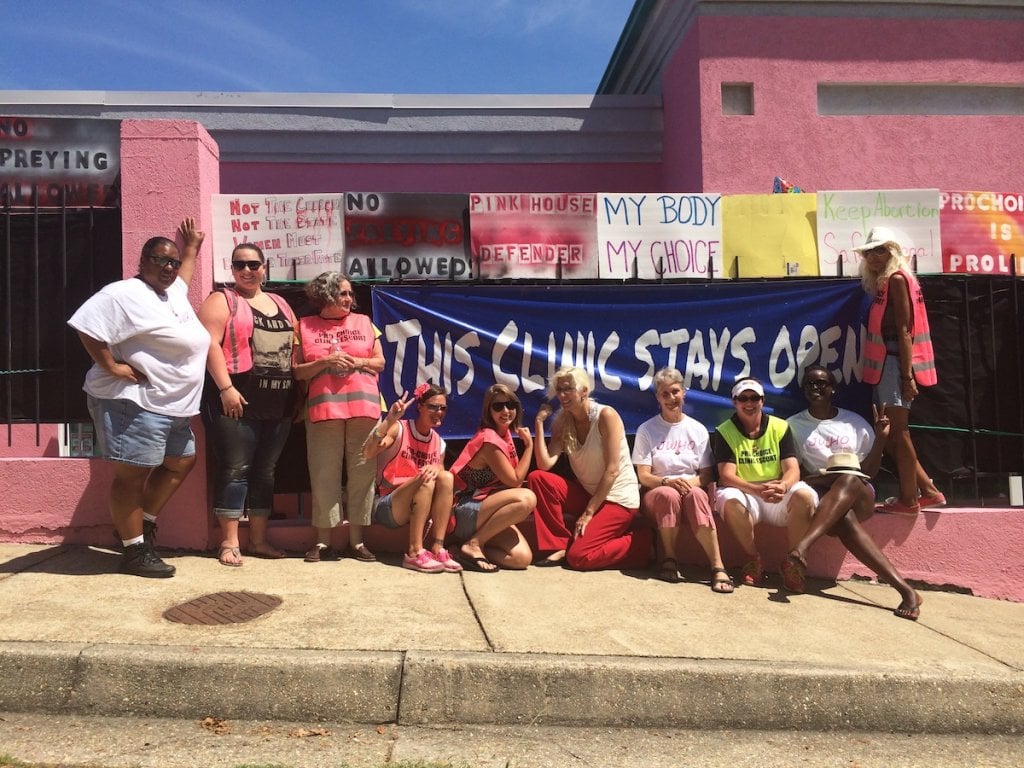
This week I’m donating to the Jackson Women’s Health Organization. Based in Jackson, Mississippi, JWHO provides important women’s health services to its community, including abortions. It is the clinic at the center of the current Supreme Court case that threatens to overturn Roe v Wade and rob 65 million women of their right to choose. It is also the only abortion clinic in the state of Mississippi.

It describes its mission as follows:

‌Jackson Women’s Health Organization (JWHO) offers affordable abortion care to women living in Mississippi and/or traveling to the state of Mississippi.

‌Our commitment is to provide confidential health care to women in a safe and professional environment. It is our conviction to respect a woman’s reproductive choices specifically regarding a woman’s right to control whether she wants to become a parent or not.

The clinic provides vital services for its community, and its fight will have a disproportionate effect on the human rights of women across America. There are few more important battles today.

I donated. If you have the means, please join me here.

· Posts · Share this post


Reading, watching, playing, using: November, 2021

This is my monthly roundup of the books, articles, and streaming media I found interesting. Here's my list for November, 2021. It’s a little shorter than normal because I spent a portion of the month offline.

Notable Articles

Business

Research: People prefer friendliness, trustworthiness in teammates over skill competency. “People who are friendly and trustworthy are more likely to be selected for teams than those who are known for just their skill competency and personal reputation, according to new research from Binghamton University, State University of New York.” File under “no shit, Sherlock”: if you’ve got to work with someone every day, you want them to be kind and trustworthy, regardless of how good they actually are at their job. Ideally, you want both; if you can only have one, the person who’s a better human will and should win out every time.

Remote work will break the US monopoly on global talent. “Tech companies based in San Francisco and Seattle have “innovation hubs” whose primary role is to create a place that talent that hasn’t been able to get a visa to the US. We’ve also started to see this in places like Lagos and Buenos Aires. Nigerian developers can work alongside startups in Berlin and London, while Argentinian developers work as consultants for companies based in the US. We’re going to be seeing a lot more of this now that remote work is more widely accepted by companies worldwide.” This is a really positive change.

Putting Post Growth Theory Into Practice. “The Post Growth Entrepreneurship Incubator helps founders break free from traditional business models and implement sustainable non-extractive practices. […] We promote cross-subsidizing charity with our businesses, and we’re trying to offer an alternative for startup founders who want to bring their activist, artistic, spiritual business ideas to life without selling out in the commercial startup ecosystem. Too much of the startup ecosystem uses the Silicon Valley model of ‘capital, scale, exit.’ Instead we’re promoting: bootstrapping, flat growth, and non-extraction.”

Theranos patient says blood test came back with false positive for HIV. “Erin Tompkins, who got her blood drawn from a Theranos device at a Walgreens in Arizona, said the test misdiagnosed her as having an HIV antibody, sending her into a panic.”

Crypto

The Token Disconnect. “Silicon Valley ran dry on large breakthroughs in software, so we decided to invent the “blockchain”, a simulacrum of innovation that organically fermented from the anti-institutional themes in the Western zeitgeist to spawn an absurdly large asset bubble with absolutely nothing at the center. There is no there there, and crypto morphed into a pure speculative mania which attracted a fanatic quasi-religious movement fueled by gambling addiction and the pseudo-intellectual narrative economics of the scheme. All conversation around crypto is now simply the sound and fury of post-hoc myth making to rationalize away the collective incoherence of the bubble in a near perfect exemplar of the motivated reasoning of economic determinism.” Sharing because it’s an interesting take; I don’t necessarily agree with everything here.

Culture

Appalling Monica Lewinsky Jokes—And the Comedians Who’ve Apologized. “But in the two-plus decades since those jokes were made, some comedians have taken responsibility for their cruel comedy. Ahead, a rundown of some of the hosts and comedy programs that targeted Lewinsky and Tripp—and the parties who have since publicly taken responsibility for their hurtful barbs over the years.”

Belgian gallery uses art after being turned down by artist. “The friendly stranger who clocked the familiar image asked the gallery about it, and a representative allegedly claimed they’d been in touch with Bateman and worked something out. Bateman searched her email and found a permission request from the gallery, dated in March—which she had politely declined and promptly forgotten about. Somehow, what the gallery had taken away from the exchange was that it could just use her work anyway.” I used to share an office with Hallie and have followed her journey. (My current Twitter avatar - a picture of me - was drawn by her.) This gallery’s actions were a very unfair devaluation of the value of her work and her rights as an artist.

Conservative MP Nick Fletcher Blames Crime On Female Doctor Who. Doesn’t he look tired?

Media

The global streaming boom is creating a severe translator shortage. “Training a new generation of translators to meet this supply issue in certain translation hot spots will take time, and most importantly, better compensation, said Lee, whose company Iyuno-SDI operates in over 100 languages and routinely clocks in over 600,000 episodes of translations every year. Lee said that roughly one in 50 applicants are able to pass Iyuno-SDI’s translator qualification exam. “I don’t think we’re happy with even 10% or 15% of who we work with,” he said. “We just have no other options because there’s just not enough professional translators.””

Danny Fenster, U.S. Journalist in Myanmar, Gets 11 Years in Jail. “The sentence seemed to be the latest signal that Myanmar’s military, which seized power in February, would not bow to pressure, including sanctions, from the United States and other countries. The State Department has repeatedly called for Mr. Fenster’s release.” Imprisoned by a despotic regime and failed comprehensively by the US.

How Facebook and Google fund global misinformation. “An MIT Technology Review investigation, based on expert interviews, data analyses, and documents that were not included in the Facebook Papers, has found that Facebook and Google are paying millions of ad dollars to bankroll clickbait actors, fueling the deterioration of information ecosystems around the world.”

Politics

Secret recordings of NRA officials after Columbine school shooting show strategy. “In addition to mapping out their national strategy, NRA leaders can also be heard describing the organization’s more activist members in surprisingly harsh terms, deriding them as “hillbillies” and “fruitcakes” who might go off script after Columbine and embarrass them.”

It’s not ‘polarization.’ We suffer from Republican radicalization. “The polarization argument too often treats both sides as equally worthy of blame, characterizing the problem as a sort of free-floating affliction (e.g., “lack of trust”). This blurs the distinction between a Democratic Party that is marginally more progressive in policy positions than it was a decade ago, and a Republican Party that routinely lies, courts violence and seeks to define America as a White Christian nation.”

Spotsylvania School Board orders libraries to remove 'sexually explicit' books. Here’s why this is of note: ”“I think we should throw those books in a fire,” Abuismail said, and Twigg said he wants to “see the books before we burn them so we can identify within our community that we are eradicating this bad stuff.”” Holy shit.

Science

Octopuses, crabs and lobsters to be recognised as sentient beings under UK law following LSE report findings. “Octopuses, crabs and lobsters will receive greater welfare protection in UK law following an LSE report which demonstrates that there is strong scientific evidence that these animals have the capacity to experience pain, distress or harm.”

What would health experts do? 28 share their holiday plans amid Covid-19. “To try to gauge where things stand, we asked a number of infectious diseases experts about the risks they are willing to take now, figuring that their answers might give us a sense of whether we’re making our way out of the woods.”

Society

Gresham High students speak out against school resource officers. “Group member Stasia recalled being accused of carrying drugs by a staff member. “I was told that I would end up like Breonna Taylor if I had a substance on me that I shouldn’t have had,” Stasia said, referencing a Black woman killed by police in Louisville, Kentucky.” Police officers and guns don’t belong in schools. Period.

38% of US adults believe government is faking COVID-19 death toll. “The finding is likely unsettling to the surviving loved ones of the nearly 756,000 Americans who have already died of COVID-19. It also squares with previous survey results from KFF showing that personally knowing someone who became severely ill or died of COVID-19 was one of the strongest motivators for convincing unvaccinated people to get vaccinated.”

Experience: I taught two dogs to fly a plane. “I have trained a 190kg boar to pretend to attack an actor, a cat to plunge shoulder-deep into water as if catching a fish and a cockatoo to winch up a bucket, take out a coin and drop it into a piggy bank. But when a TV company asked if I could teach a dog to fly a plane, I faced the toughest challenge of my career.”

Work is no longer the meaning of life for some Americans. “Before the coronavirus pandemic, nearly one quarter of all Americans said that they find meaning and purpose in their lives because of their work and their jobs. Now, that number has declined by more 9% in a new Pew research study, affirming anecdotal stories about the American population’s increasing disinterest in participating in the labor market.” To be honest: good.

ICU is full of the unvaccinated – my patience with them is wearing thin. “Translating this to the choice not to take the vaccine, however, I find my patience wearing thin. I think this is for a number of reasons. Even if you are not worried about your own risk from Covid, you cannot know the risk of the people into whose faces you may cough; there is a dangerous and selfish element to this that I find hard to stomach.”

The abolitionist history of pumpkin pie and Thanksgiving. “The Northern farmer, just by existing, was a natural-born abolitionist, she argued. Pumpkin pie and Thanksgiving were celebrations of a better, more godly way of agriculture without the institution of slavery.”

Since the Thanksgiving Tale Is a Myth, Celebrate It This Way. “It was the Wampanoag in 1621 who helped the first wave of Puritans arriving on our shores, showing them how to plant crops, forage for wild foods and basically survive. The first official mention of a “Thanksgiving” celebration occurs in 1637, after the colonists brutally massacre an entire Pequot village, then subsequently celebrate their barbaric victory.”

Why overly kind and moral people can rub you up the wrong way. “All this means that altruistic behaviour can make us walk a metaphorical tightrope. We need to balance our generosity perfectly, so that we are seen as cooperative and good, without arousing the suspicion that we are acting solely for the status.”

Hanukkah’s darker origins feel more relevant in time of rising antisemitism, intense interest in identity. ““The old message of 15 or 20 years ago was: It’s all about unity. Now it’s all about identity and difference. The Jewish story is in conflict between sameness and difference. On the one hand, our grandparents fought so hard for us to fit in, to pass, quote-unquote. We want that, but we’re conflicted. Now someone views me as ‘White,’ and it’s like: ‘No, I’m Jewish.’”” Lots to think about here, including with respect to my own identity.

The English turned Barbados into a slave society. Now, after 396 years, we’re free. “Prof Hilary Beckles, a Barbadian historian, the current vice-chancellor of the University of the West Indies and a leading figure in the push by Caribbean islands to secure reparations, sums it up best. “Barbados was the birthplace of British slave society and the most ruthlessly colonised by Britain’s ruling elites,” he writes. “They made their fortunes from sugar produced by an enslaved, ‘disposable’ workforce, and this great wealth secured Britain’s place as an imperial superpower and caused untold suffering.””

Technology

Tracy Chou's life as a tech activist: abuse, and optimism. “As an Asian-American woman who has spent much of her career calling out the gender inequities and racism embedded in Silicon Valley, Chou is all too familiar with this sort of abuse and harassment. Since 2013, when she famously urged tech companies to share data on women in technical roles, the 34-year-old software engineer has been a key figure in the industry’s prolonged reckoning with its culture of exclusion. But whatever progress she’s made has come at great personal cost—especially as her Twitter following has ballooned to more than 100,000 accounts. “In doing this diversity and inclusion activism work,” she says, “I built more of a profile that then exposed me to more harassment.””

Why you should prioritise quality over speed in design systems. “Speed for the sake of speed means nothing. If our design systems don’t ultimately lead to better quality experiences, we’re doing it wrong.” Not just design systems.

U.S. Treasury Is Buying Private App Data to Target People. “Two contracts obtained via a Freedom of Information Act request and shared with The Intercept by Tech Inquiry, a research and advocacy group, show that over the past four months, the Treasury acquired two powerful new data feeds from Babel Street: one for its sanctions enforcement branch, and one for the Internal Revenue Service. Both feeds enable government use of sensitive data collected by private corporations not subject to due process restrictions. Critics were particularly alarmed that the Treasury acquired access to location and other data harvested from smartphone apps; users are often unaware of how widely apps share such information.”

'Dog phone' could help lonely pooches call owners. ““Whatever form that takes, we’ve taken another step towards developing some kind of ‘dog internet’, which gives pets more autonomy and control over their interaction with technology,” she added.”

· Posts · Share this post


Thoughts and actions for the week of November 29, 2021

Thoughts

  1. Jack Dorsey is stepping down as CEO of Twitter. Wow. Whichever origin story you’ve heard, he had a huge part of its beginnings, as well as (obviously) its current direction.
  2. Under Jack, Twitter has consistently added crypto functionality and strategies, from Bitcoin tipping to Project Bluesky, and a new team led by Tess Rinearson. I wonder if that will persist, or if his interest in the space will be limited to Square (where he’s still CEO).
  3. I hold a modest amount of Twitter stock - purchased in the open market - and the news made the value jump. I wonder how that feels for Jack as a person.
  4. I think decentralization (but not cryptocurrencies) holds the future for Twitter. If it can be the place both facilitating and surfacing conversations on the web, that’s Google-level powerful. I’m not sure being a social network in itself is quite as valuable, both in the social and financial senses.
  5. I continue to appreciate how the discourse around decentralization has changed as a result of the rise of crypto. It’s important to understand that they’re not the same thing: crypto is a subset of decentralization. (Also, not all cryptocurrencies are truly decentralized.) Conflating the two is a problem. Whatever you think about crypto, it’s a technical and organizational approach, not a catch-all tool that can fix everything.
  6. Regardless of what happens to it next, Twitter is my favorite social network. I have interesting conversations there; I’ve met new people at a scale I haven’t met elsewhere; I have a lot of exposure to new ideas. There’s a lot of vitriol, too, but I’ve found it easier to filter out over time.
  7. That doesn’t mean that controlling the vitriol on the platform generally isn’t important - and it could even be the most important thing for the future of the company, given the effect community health has had on growth.
  8. How does controlling for community health work in a decentralized environment? It’s a much harder problem, but still one that affects Twitter’s bottom line, regardless of its underlying architecture. Legally it may have different requirements depending on that architecture, but the user experience requirements are always a vital part of the growth of any ecosystem.
  9. If Twitter is doubling down on decentralization, this makes providing community health tools in the decentralization space one of the most valuable problems to solve right now.
  10. If Twitter isn’t going to continue moving in this direction, I'm not sure where it’s going to go.

Actions

  1. After some travel and some extended time on the east coast, I’m hunkering down and thinking about the future. There’s a lot on the table. Somehow it’s now only a few weeks to Christmas (and zero days to Hanukkah), which makes planning for 2022 imperative.
  2. I’ve really got to get back on the health train. My loss this summer is no longer an excuse, and my mother would not want me to be unhealthy on her account.

· Posts · Share this post


Over 40

Every so often I see a thread from an engineer worried about their career prospects now that they’re over 40. It’s always confronting to me: it forces me to remember that I’m over 40, for one thing. But I also don’t feel old; objectively speaking, I don’t think it is particularly old. It’s all a matter of perspective.

In January, I’ll be 43. It’s been a particularly strange decade: ten years ago I moved to California, not to work on a fancy startup or engage in the tech industry, but to be with my mother because I thought she was going to die. In the end, she had a double lung transplant, and we had many bonus years with her. As tumultuous as they were, I’m very grateful for that time.

We also figured out a lot more about her disease during that time, and I was able to take a DNA test to determine that I didn’t have the same genetic variant. The science isn’t completely settled, and I plan to take regular telomere length tests to make sure I’m as healthy as I hope I am. (I haven’t because, honestly, I’m a bit scared to, but I’ve decided that’s not a good enough reason.)

At the same time, I was the cofounder of an open source startup, worked at a heavily-funded VC-backed company, was a mission-driven investor, and worked in crypto. I went to the pub with Chelsea Manning and got to teach journalists from all over the world. I’ve met so many people who I feel lucky are part of my life.

But the decade was always about the health of my immediate family more than it was about any of those things, as grateful as I am for them. Perhaps that’s why I feel so confronted by these over-40 threads: the last time I really felt in control of my time and my destiny, I was 30. And I still feel like I have a huge amount of my life ahead of me. Hopefully, I do. Hopefully, so does everyone who posts those kinds of thoughts.

The biggest thing to have changed for me is that I’m much more comfortable with my position in my working life. I don’t feel the need to make millions of dollars; I don’t feel the need to prove my worth to anyone. I created a bunch of value and discovered it didn’t really matter. I built platforms used by formidable organizations and discovered it didn’t really matter. I’m lucky to be comfortable.

These days, I just want to do meaningful, ethical work and enjoy the journey as I building a good life. That’s it. That’s all there needs to be. And that’s great.

May everyone worrying about their age with so much ahead of them find the same peace.

· Posts · Share this post


Fairness Friday: Native American Food Sovereignty Alliance

I’m posting Fairness Fridays: a new community social justice organization each week. I donate to each featured organization. If you feel so inclined, please join me.

This week, I’m donating to the Native American Food Sovereignty Alliance. Based in Scandia, MN, NAFSA supports Native communities nationally with advocacy, education, and networking as they revitalize their indigenous food systems.

It describes its mission as follows:

Through our efforts and programs, we bring stakeholders and communities together to advocate and support best practices and policies that enhance dynamic Native food systems, sustainable economic development, education, trade routes, stewardship, and multi-generational empowerment.

We work to put the farmers, wild-crafters, fishers, hunters, ranchers, and eaters at the center of decision-making on policies, strategies and natural resource management.

Its work includes collecting, growing, and sharing heirloom seeds and plants (vital work when many seeds are protected by intellectual property legislation that favors corporations) and culinary mentorship.

I donated. If you have the means, please join me here.

· Posts · Share this post


Thanksgiving 2021

As an adult in the UK whose immediate family lived thousands of miles away in California, I sometimes threw Thanksgiving dinner parties. I think my friends were confused about why I did this on a Thursday night, but whatever; we had fun.

When I joined my parents in California, we had a traditional meal: turkey and its vegetarian equivalent, the various sides, and most importantly, us being together. Like many families, we went around the table, taking turns to explain what we were thankful for. My mother, who depending on the year was in various states of supplementary oxygen use, post-transplant care, tube-feeding, and overall discomfort, would always tear up and say she was thankful for us. We’d all come together - my sister and I both uprooting and moving to California - because she was sick, and we were a unit, getting through this together.

This is the first year we’re doing it without her. Today is the first major holiday without her. Next week will mark six months without her.

Like most holidays, Thanksgiving is complicated. The traditional story, of course, is based on a harmful lie. Even the post-Lincoln history of its celebration in the US is complicated, although a story I can get much more behind. But I choose to think of it as a time to reflect and be thankful, and hopefully be in the company of people I’m thankful for.

This has been the worst year of my life, bar none. I’m grieving; I still have regular nightmares about that last week in the hospital; the pandemic still rages; even outside of the black hole at the center of my life, it was hard in other ways that in any other year would have been challenging by themselves. And all of this makes gratitude that much more important.

I’m thankful for my family: immediate, extended, and found. I get to have so many incredible people in my life. Community and connectedness are what make life meaningful, and I couldn’t have made it through this year without any of them. So many people have gone out of their way to help us.

This has been an exceptionally tough year for my immediate family, and I’m particularly thankful for them. My mother: everything she was, everything she taught us, everything she still is through us. My sister: the smartest, funniest, best person I know. My father: who gave so much of himself, and gives so much of himself, and cares so deeply about fairness.

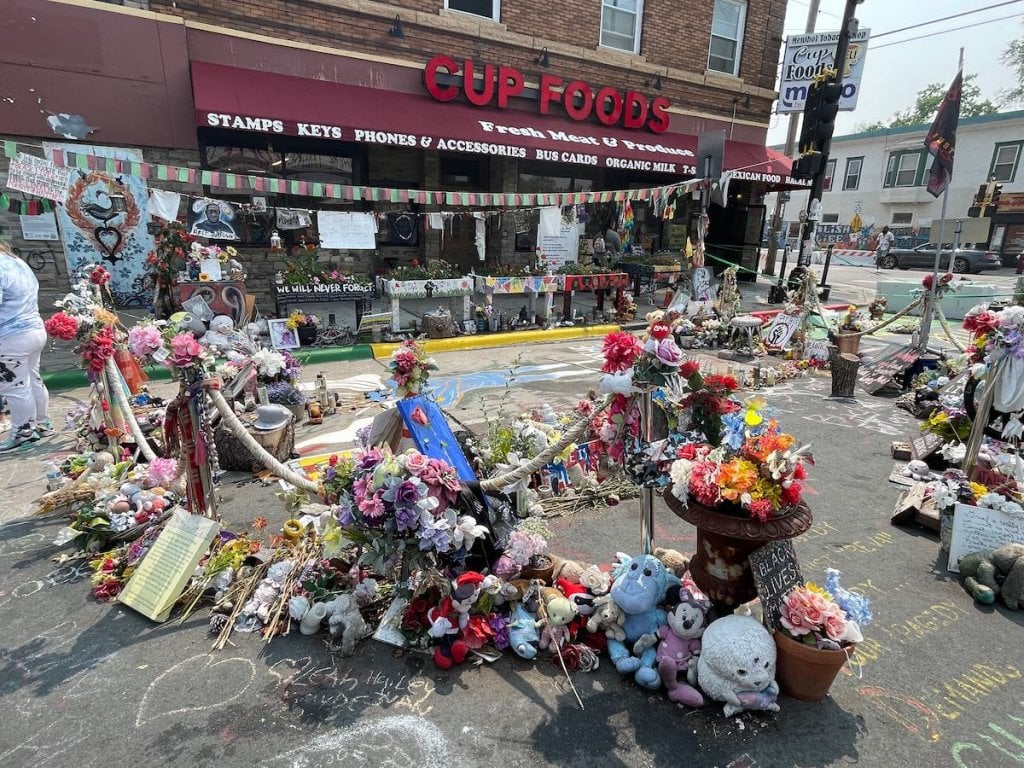
This year I’ve also driven across the full breadth of the United States - twice. I visited 38 states. I saw how racist monuments were still enshrined. I saw the proprietors of a Black-owned restaurant in New Orleans (we deliberately only ate at Black-owned establishments in the South) be racially abused by a visitor. I paid my respects at the Greenwood District in Tulsa, the site of the Tulsa Race Massacre, and learned about the difficulties the community still endured. I paid my respects at George Floyd Square in Minneapolis. I saw entire neighborhoods condemned by racist city planning.

There’s a lot of work to do, and across the country, the hardest work of building a future that supports all of us seems to be mostly done by the most oppressed. I’m thankful for these communities, activists, neighborhood groups, and families who, despite it all, and often despite the rest of us, are doing the most to overcome this country’s violent nature and brutal past. They are who will make America great, and the world great. Building a world with systems that support inclusion, equality, and a better life for everyone is the work of building the future.

Finally, we’re still in this pandemic. Like many of us, I’ve known people who died, and I’ve known people who came close to it. I’ve also had cause to know people who refused vaccinations, fought against the simple, kind act of wearing a mask in public, and mocked the idea of coming together collectively for the better good. While traveling around the country, I saw many signs imploring store visitors to not assault people who asked them to wear a mask or social distance. I’m thankful for all the people who did the right thing, and who were decent in the face of a global catastrophe.

I hope you’re safe and well. I’m grateful that I am. Today will be hard, but I’m glad to be with my family. On we go.

· Posts · Share this post


Fairness Friday: Justice for Greenwood

I’m posting Fairness Fridays: a new community social justice organization each week. I donate to each featured organization. If you feel so inclined, please join me.

This week I’m donating to Justice for Greenwood. Based in Tulsa, OK, Justice for Greenwood “aims to revitalize the Greenwood Community and Diaspora through education, advocacy and direct services to lift the community out of poverty and to address the major areas of inequality and injustice directly caused by the Massacre such as: Health, Education, Real Estate, and Generational Wealth.”

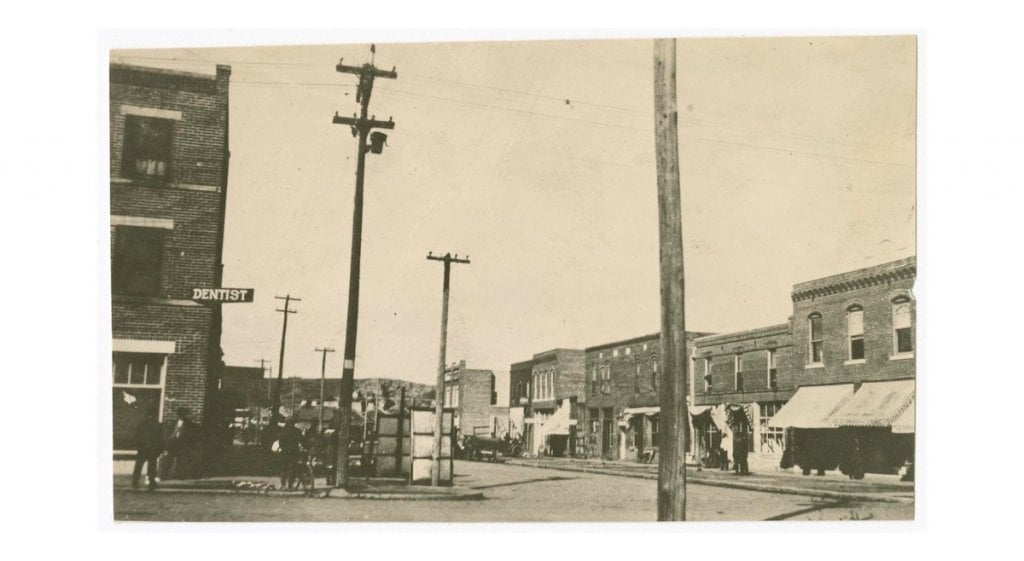
I had the privilege of visiting the Greenwood District in Tulsa yesterday, including its historical center, Greenwood Rising. It was a profoundly affecting experience. The Tulsa Race Massacre was an act of violence against the Black community and Black success in 1921, but the violence continues today. The community rebounded after the massacre, but the city actively sought to destroy it through deliberate planning and eminent domain. Even today, the Black businesses present in the neighborhood are forced to rent from the city.

Justice for Greenwood’s work includes direct legal advocacy and support for descendants of the massacre, as well as the important work of capturing the oral history and genealogy. Mass graves have been uncovered around the city, and the known death toll keeps rising. Documenting this history is important, and the city resisted any effort here for decades. It wouldn’t have happened without strong advocacy.

I donated. If you have the means, please join me here.

I also donated to Greenwood Rising. It's an incredibly well-executed exercise in telling an important story that ends with a powerful call to action. You should visit if you can.

· Posts · Share this post


Thoughts and actions for the week of November 8, 2021

Thoughts

  1. There is no reason for a startup to be in the San Francisco Bay Area anymore, and lots of reasons to not.
  2. That’s not to say that the Bay Area isn’t great. For me, it’s one of the places in the US with saner politics, better weather, and despite soaring prices, a really beautiful independent culture of artists, writers, and musicians.
  3. But it’s incredibly, prohibitively expensive.
  4. A small two bedroom home will easily set you back over a million dollars to buy. To rent a two bedroom apartment, you’re likely talking three or four thousand dollars a month.
  5. The “low income” threshold for a family of four in San Francisco is an annual take-home of $117,400.
  6. The result is that even though tech salaries are so high as to be a cause of inequality throughout the area, it’s non-trivial for someone earning a quarter of a million dollars a year to own their own home.
  7. Which means families either need to earn astronomically more, or move out to somewhere cheaper.
  8. It also means that creative technologists who aren’t independently wealthy and don’t want to work for a larger company need to move out somewhere cheaper.
  9. Which also means that if you want to hire people who have families or have built a non-traditional career, you probably need to cast your net further afield.
  10. The good news is that investors are casting their nets further afield. There’s no need to live in San Francisco or Silicon Valley to raise money anymore.
  11. The Silicon Valley community is becoming more diffuse. I know of people moving all over the country. It’s no longer about being where everyone else is, because there is no one place.
  12. Everyone’s used to remote working after the pandemic.
  13. Paying Silicon Valley salaries to everyone at your company, regardless of location, is the right thing to do - but a startup can still reduce costs in other ways, like office space, and hire a greater diversity of people.
  14. So why not live in a place where you can afford a home with a garden, and give your company a greater chance of success in the process?

Actions

  1. I’ve been helping to clean out the house we’ve been staying in since the summer. There’s a lot still to do, but we’ve made good progress. I’ve got a lot of scrubbing and packing ahead of me.
  2. I’ve been working on a huge project, and the social aspects are proving harder than the technical ones. I need to spend time consciously researching tactics to make some of these interactions more productive.
  3. On a similar note, I want to do more internal blogging this week. I find it to be a really good way to asynchronously share thinking.

· Posts · Share this post


Fairness Friday: Trans Rights in the UK

I’m posting Fairness Fridays: a new community social justice organization each week. I donate to each featured organization. If you feel so inclined, please join me.

This Friday, I’ve chosen to donate to two organizations that support trans rights in the UK, where I grew up.


Gendered intelligence is “a registered charity that exists to increase understandings of gender diversity and improve trans people's quality of life.”.

Based in London, it describes its mission as follows:

Gendered Intelligence, established in 2008, is a registered charity that works to increase understandings of gender diversity and improve the lives of trans people.

Our vision is of a world where diverse gender expressions are visible and valued and where trans, non-binary, gender diverse and gender questioning people live healthy, safe and fulfilled lives.

We are a trans-led and trans-involving grass roots organisation with a wealth of lived experience, community connections of many kinds, and a depth and breadth of trans community knowledge that is second to none. The team has a variety of professional and academic specialisms and qualifications including training and facilitation, youth work, policy, the arts, and doctorates in trans related studies.

Its work includes professional services (including staff training work to help counsellors), youth and community support (including mentorship and therapy), and public engagement (providing much-needed trans perspectives).

I donated. If you have the means, please join me here.


Mermaids “has been supporting transgender, nonbinary and gender-diverse children, young people, and their families since 1995.”

Based in Leeds, it describes its mission as follows:

Mermaids supports transgender, nonbinary and gender-diverse children and young people until their 20th birthday, as well as their families and professionals involved in their care. We also currently offer web chat support to students up to the age of 25.

Transgender, nonbinary and gender-diverse children and teens need support and understanding, as well as the freedom to explore their gender identity. Whatever the outcome, Mermaids is committed to helping families navigate the challenges they may face.

Its services include a helpline, training on LGBTQIA+ inclusivity, local support groups, and equality and human rights law.

I donated. If you have the means, please join me here.

· Posts · Share this post


On COP26

As world leaders leave the COP26 climate summit and negotiations begin, I’m not feeling hopeful.

I’d love to think that this is a problem we can solve using incremental changes within the existing system, but the evidence so far is scant. Headlines about lack of aid to the global south and a dependence on pledges made by the financial industry leave me worried that nothing will really change. We don’t need big words wielded in service of elevating share prices; we need urgent action.

We need to treat the climate crisis like a world war: it’s something we all need to work on together like our lives depend on it. As individuals, we need to radically change the way we live and work. As companies, communities, and nations, we need to prioritize our ongoing survival.

I also think there isn’t a technology innovation solution that can take center stage here. Yes, we should divest ourselves of fossil fuels, but electric transport isn’t yet within reach of most people. Yes, we should use renewable energy, but a lot of people are stuck on the grid. Yes, we should eat less meat, but have you met America (and its food supply chains for people on lower incomes)? I’m not in any way saying that these individual actions don’t have a place, but they’re the preserve of the wealthy. We can’t base our future on the whims of rich people or the business models of corporations. The right choices may well not be profitable or in the immediate interests of the people who control the most resources.

Social solutions - mass transit, better energy solutions for all, ways to make the most sustainable solution the cheapest and most convenient at the point of purchase - are vital. I believe only a collective, community-orientated approach can achieve this. Markets cannot save civilization.

And that’s important. It’s not about profit, or making it work within the bounds of business. It’s about saving human civilization. Let’s act like it.

· Posts · Share this post


Reading, watching, playing, using: October, 2021

This is my monthly roundup of the books, articles, and streaming media I found interesting. Here's my list for October, 2021.

Books

The Girl with All the Gifts, by M. R. Carey. I wasn’t prepared for the visceral gore, but beyond the zombie shenanigans, this is a complex tale of comparative morality. It definitely hits differently after the pandemic - there are obvious parallels that the author couldn’t have foreseen. I found it relevant and gripping in equal measure; the first time in a long time that I’ve wanted to hide behind the sofa from a book.

Reparations Now!, by Ashley M. Jones. Honest, direct poetry that bursts from the page and speaks out loud with a distinctive voice that demands to be heard. This is truly great writing - truly great art - that intimately illuminates a particular lived experience while cutting to the core of what America is.

Notable Articles

Business

The New Anti-Remote Propaganda Wants To Gaslight You Back To The Office. “This is the next front of this fight - the executive sect has realized that simply telling people that remote work is terrible using the flimsiest arguments possible won’t work. Thus they’ve moved on to scaring the workers themselves. Remote workers are “short-changed,” and too much remote work is “bad for your career.” It’s bad for younger employees, and will have you “leaning out of your career.” The Wall Street Journal worries that jobs won’t be able to keep things fair, and researchers say that it’s bad for most employees.” And remote workers - the Times worries - may get left behind in the hybrid office.”

Paying influencers? The FTC has a warning for you. “While both the existence and use of social media “influencers” are a relatively recent phenomenon, the FTC said it found previously that such actions violate the prohibition on “unfair or deceptive acts or practices.” A company that knows about these determinations and flouts them can face fines under the Federal Trade Commission Act — hence the notices warning these firms.” I will not cry if influencer culture has to endure a crackdown.

Amazon copied products and rigged search results, documents show. “A trove of internal Amazon documents reveals how the e-commerce giant ran a systematic campaign of creating knockoff goods and manipulating search results to boost its own product lines in India - practices it has denied engaging in. And at least two top Amazon executives reviewed the strategy.” It’s almost as if all-encompassing global monopolies are always harmful?

How Slack and Discord became tools for tech worker organizing. “Many companies are not willing to talk about how workers are using their tools to accumulate power. Slack, Discord and Reddit are all open about their platform’s ability to bring people closer together, particularly those with similar interests, or those who want to vent about work. These kinds of interactions can be important first steps in building a larger movement in the workplace.” Unions are a force for good and the push for unionization in tech is a positive, progressive change.

My employee wasn't respectful enough after the company messed up her paycheck. “I’m getting tired of the respect gap I’m seeing with younger staff. I think Jane would be better suited in a different department. I’m not comfortable having her on my team since it’s obvious she doesn’t understand she’s entry-level and not in charge. Should I wait a while before suggesting she transfer to a different department?”

Why introverts excelled at working from home. “While the transition to remote work in early 2020 was abrupt for everyone, some found themselves thriving more than others – in many cases, thanks to their personality type. Many introverted workers found working from a distraction-free environment preferable. Client needs also changed in ways that benefited introverts’ skillsets, while virtual communication offered introverts more opportunities to share their thoughts. For ‘quiet deliverers’ who may once have flown under the radar, remote work offered not only a less taxing day-to-day, but also an opportunity to combine that extra energy with new ways of working – and really stand out.”

Tesla's market value tops $1T after Hertz orders 100K cars. “Hertz said in its announcement that it will complete its purchases of the Tesla Model 3 small cars by the end of 2022. It also said it will establish its own electric vehicle charging network as it strives to produce the largest rental fleet of electric vehicles in North America.” Most importantly, this is a major step towards mainstreaming electric cars in the US.

Crypto

Cryptocurrency's Carbon Footprint Underestimated. “This could mean that in the worst case the top 5 cryptocurrencies had a carbon footprint of between 1100 and 2770 MtCO2/yr, or between Japan (~1074) and the EU (~2637).”

Culture

I'm Fine I'm Fine Just Understand, by ND Stevenson. Just beautiful. What a wonderful use of the newsletter form.

Hannah Gadsby Calls Out Netflix Over Its Defense of Dave Chappelle. ″“Hey Ted Sarandos!” Ms. Gadsby wrote. “Just a quick note to let you know that I would prefer if you didn’t drag my name into your mess. Now I have to deal with even more of the hate and anger that Dave Chappelle’s fans like to unleash on me every time Dave gets 20 million dollars to process his emotionally stunted partial world view.””

Netflix just fired the organizer of the trans employee walkout. “The employee was terminated on suspicion of leaking metrics to the press related to the Dave Chappelle special. Those metrics — about how much Netflix paid for The Closer and how many people it reached — subsequently ended up in a report on Bloomberg. While the employee had shared the metrics internally, they spoke out against the leaks to colleagues, worried they might hurt the walkout movement.”

Superman Drops 'American Way': 'Truth, Justice and a Better Tomorrow'. I don’t really care for Superman these days, but this seems like a much better motto.

What I Learned About My Writing By Seeing Only The Punctuation. A lovely little web tool for revealing the hidden, underlying structure in your writing.

The Power of Dave Chappelle’s Comedy. “Onstage, he refers to himself as the man who walked away from fifty million dollars, but the credibility he derived from that act sixteen years ago is now being deployed defensively and cynically, as if to place above suspicion any possible motive for telling denigrating jokes about trans people. He is also the man who walked into a reported sixty-million-dollar Netflix deal.”

James Bond and Doctor Who got smaller as they become fantasy. I really feel this. I’d prefer to feel like these stories are happening in another layer to the world; spooky goings-on just out of eyeshot.

Media

The Taliban are using private messaging apps to threaten Afghan journalists. “Journalists who spoke to Rest of World also said the Taliban often use apps like WhatsApp and Telegram because they know journalists typically turn off DMs on Twitter and change Facebook Messenger settings to avoid this type of harassment.”

New Report Shows Black Media's Critical Role in Covering Issues Affecting Black Communities. “The report, “Why Black Media Matters Now,” analyzed the coverage of nearly 100 Black-owned news outlets over 15 momentous months between March 2020 and May 2021. In general, it found that Black media publishes as much as six times more coverage than mainstream outlets on issues of importance to Black communities, including racism, health disparities, and voting access.”

Netflix suspends trans employee who tweeted about Dave Chappelle special. “The tweet thread went viral, quickly spiraling into a conversation about free speech and cancel culture. Netflix then suspended Field along with two other employees for trying to attend a director-level meeting they weren’t invited to. Another trans employee is quitting the company over how the special — and Field’s comments — were handled.”

Alden Global Capital, the Hedge Fund Killing Newspapers. ″“They call Alden a vulture hedge fund, and I think that’s honestly a misnomer,” Johnson said. “A vulture doesn’t hold a wounded animal’s head underwater. This is predatory.””

Behind SmartNews, the $2 billion unicorn trying to fix the news algorithm. ″“I don’t know what you can do to convince an audience member to challenge their own political beliefs through news consumption. I don’t think that conversion happens easily or quickly,” said Jeremy Gilbert, a professor of digital media strategy at Northwestern’s Medill School of Journalism, to Rest of World. He gave SmartNews credit for building its app with these social issues in mind, but asked, “But what does it mean to tell ‘real news,’ if it doesn’t fit what their notion of that already is?””

Spotify and Pandora lead US in audio listeners. “Additionally, Spotify will overtake Apple in podcast listeners for the first time to become the new leader in the category. We expect Apple podcast listeners to plateau and Spotify listeners to keep increasing throughout our forecast period.” Spotify is fast becoming the Facebook of audio.

These competitors joined forces to allow readers to use a single login across their news sites. “The founding media partners all agreed, however, that having more first-party data and increasing the share of registered visitors would allow them to build better relationships with readers and more relevant news products. Their collective first step has been OneLog, a single sign-on system being used across a variety of news sites owned by Swiss Digital Alliance members TX Group and Ringier.” Now imagine if authentication was built into the browser.

Medill Launches Groundbreaking Subscriber Engagement Tool. ″“The benchmarking data is one of the things that makes the index so valuable,” Franklin said. “It’s not just ‘How am I doing?’ It’s ‘How am I doing compared to other similarly sized news organizations across companies around the country?’ Several publishers have mentioned how valuable the benchmarking data is to them.”” Seems like a useful way to let small newsrooms collaborate to share data that affects their bottom line. I’d love to see more projects along these lines.

Prominent PR firm spreading disinformation ahead of Honduran elections. “The political group is using a network of Facebook pages and websites made to appear as legitimate news outlets.”

Politics

Jan. 6 Protest Organizers Say They Participated in ‘Dozens’ of Planning Meetings With Members of Congress and White House Staff. “Rolling Stone separately confirmed a third person involved in the main Jan. 6 rally in D.C. has communicated with the committee. This is the first report that the committee is hearing major new allegations from potential cooperating witnesses. While there have been prior indications that members of Congress were involved, this is also the first account detailing their purported role and its scope. The two sources also claim they interacted with members of Trump’s team, including former White House Chief of Staff Mark Meadows, who they describe as having had an opportunity to prevent the violence.”

Science

First Malaria Vaccine Approved by W.H.O. “Malaria kills about half a million people each year, nearly all of them in sub-Saharan Africa — including 260,000 children under 5. The new vaccine, made by GlaxoSmithKline, rouses a child’s immune system to thwart Plasmodium falciparum, the deadliest of five malaria pathogens and the most prevalent in Africa.”

When You Go to the Loo, a Bat Might Go Boo. ″“I’ve had the soft, leathery caress of a bat’s wing against my buttocks while having a poo,” said Leejiah Dorward, a postdoctoral researcher at Bangor University in Wales.”

Pfizer/BioNTech COVID-19 vaccine effectiveness drops after 6 months, study shows. “The effectiveness of the Pfizer vaccine in preventing infection by the coronavirus dropped to 47% from 88% six months after the second dose, according to data published on Monday that U.S. health agencies considered when deciding on the need for booster shots.” Man :(

Costs of IQ Loss from Leaded Aviation Gasoline Emissions. It turns out small aircraft can still use leaded fuel, and the impact of the resulting IQ loss in these highly-trafficked routes is significant. “We find that aircraft-attributable lead contributes to $1.06 billion 2006 USD ($0.01–$11.6) in annual damages from lifetime earnings reductions, and that dynamic economy-wide methods result in damage estimates that are 54% larger.”

Elephants have evolved to be tuskless because of ivory poaching, a study finds. ““When we think about natural selection, we think about it happening over hundreds, or thousands, of years,” said Samuel Wasser, a conservation biologist at the University of Washington, who was not involved in the research. “The fact that this dramatic selection for tusklessness happened over 15 years is one of the most astonishing findings.””

Our hearts and brains are so tightly connected, studies have found, that when we hear the same story, our heart rates sync up. “The novel find­ing is that heart rate cor­re­la­tion be­tween sub­jects does not re­quire them to ac­tu­ally be in­ter­act­ing, or even be in the same place. They can be lis­ten­ing to sto­ries all alone at home, and their heart rate fluc­tu­a­tions will align with the story, and thus cor­re­late with other lis­ten­ers. It’s not the in­ter­ac­tion be­tween peo­ple but the story it­self that does the trick.”

Are We on the Verge of Chatting with Whales? “If Bronstein’s idea works, it is quite realistic to develop a system analogous to human language models that generates grammatically correct whale utterances. The next step would be an interactive chatbot that tries to engage in a dialogue with free-living whales. Of course, no one can say today whether the animals would accept it as a conversational partner. “Maybe they would just reply, ‘Stop talking such garbage!’” says Bronstein.”

Society

Pandora Papers: An offshore data tsunami. “The Pandora Papers investigation is the world’s largest-ever journalistic collaboration, involving more than 600 journalists from 150 media outlets in 117 countries. The investigation is based on a leak of confidential records of 14 offshore service providers that give professional services to wealthy individuals and corporations seeking to incorporate shell companies, trusts, foundations and other entities in low- or no-tax jurisdictions. The entities enable owners to conceal their identities from the public and sometimes from regulators. Often, the providers help them open bank accounts in countries with light financial regulation.”

The New Deal devalued home care workers. Advocates hope new legislation can undo that. “The low pay and lack of benefits is a legacy of racism baked into President Franklin D. Roosevelt’s New Deal, which left farm and domestic workers — many of them women, many people of color — out of the job and financial protections it offered. As Congress debates President Joe Biden’s proposed $3.5 trillion Build Back Better legislation, which includes funds for home care and provisions that would make it easier for care workers to organize, advocates for caregivers say it’s a chance for the country to show new respect for their work and move toward compensating it fairly.”

Black Children Were Jailed for a Crime That Doesn’t Exist. Almost Nothing Happened to the Adults in Charge. “They would eventually estimate that kids had been wrongly arrested 500 times. And that was just for kids arrested by the sheriff’s office. This estimate didn’t account for other law enforcement agencies in the county that followed Davenport’s “process.” As for how many times the juvenile detention center had improperly locked up kids through its “filter system,” the lawyers estimated that number at 1,500.” A completely horrifying story that is entirely representative of America.

Indigenous Peoples' Day, as explained by Native Americans. “Indigenous Peoples’ Day advocates say the recognition helps correct a “whitewashed” American history that has glorified Europeans like Italian explorer Christopher Columbus who have committed violence against Indigenous communities. Native Americans have long criticized the inaccuracies and harmful narratives of Columbus’ legacy that credited him with his “discovery” of the Americas when Indigenous people were there first.” This is the first time the President has recognized it: a significant change.

Southlake school leader tells teachers to balance Holocaust books with 'opposing' views. “A top administrator with the Carroll Independent School District in Southlake advised teachers last week that if they have a book about the Holocaust in their classroom, they should also offer students access to a book from an “opposing” perspective, according to an audio recording obtained by NBC News.” The opposing perspective being ...?

The “Phone Disaster”. “For young Uyghurs like Qeyser, at first it seemed as though the People’s War would have nothing to do with him. But in the fall of 2014, administrators in Qeyser’s school called a general assembly and asked all the students to turn over their phones. Since he had shared a news article on WeChat about Ilham Tohti, a Uyghur intellectual who was sentenced to life in prison because he had published policy recommendations critical of the Chinese colonization of the Uyghur homeland, Qeyser was terrified. “I just pretended to be so calm. But my heart was beating through my chest. Fortunately the teacher who checked my WeChat did not look closely. But another friend was detained. He spent nine months in a detention center.””

Holiday Shopping 2021: Poorer Americans Plan Not to Spend This Season. “The survey, released Wednesday, shows that 11.5% of U.S. holiday shoppers say they plan not to spend anything on gifts and services this holiday. That’s up from 4.9% in 2020 and 2.9% the previous year. It’s the highest in at least 10 years.” Reflective of a giant, terrifying gap between rich and poor.

In-N-Out Burger isn't only opposed to vaccine mandates. It also supports anti-LGBTQ politics. “But for anyone who’s paid attention to the ins and outs of In-N-Out over the years, news that the fast-food chain refused to do the vaccine checks required by both counties should not have been a shock. Nor should its petulant response: “We refuse to become the vaccination police for any government.” The LGBTQ community has long been wary of the company, and with good reason.” I’ve been to In N Out for the last time.

Lawyer Who Won $9.5 Billion Settlement Against Chevron Reports to Prison. “In July, Judge Preska found Mr. Donziger guilty of all charges. On Oct. 1, Mr. Donziger was sentenced to six months in prison, a day after he asked the court to consider an opinion by independent United Nations experts that found his court-ordered home confinement of more than two years a violation of international human rights law.” This is a pretty outrageous sentence, and the details about the case are almost - but sadly not quite - unbelievable.

A C-Shaped Recovery? “This seems to me like a very important and very under-appreciated fact about the past two years. This is not just the first recession in which household income didn’t fall. It’s the first recession — in modern times, if not ever — that hit higher income families harder than low-income ones. So far, it looks less like a K-shaped recovery than a C-shaped one.”

Technology

Facebook released (and criticized) its research on how teens experience Instagram . “Antigone Davis, Facebook’s global head of safety, is scheduled to testify in front of the Senate Commerce Subcommittee on Thursday. The company is clearly worried about how it’s going to go. Worried enough, in fact, that it published two slide decks showing internal research on how teens experience Instagram, some of which informed the Wall Street Journal’s Facebook Files investigation.”

Being a tech whistleblower is dangerous and expensive. Now there’s a guide to the risks. “Pinterest whistleblower Ifeoma Ozoma, alongside whistleblower support agencies including Lioness, the Signals Network, Elite Strategy Global and the Whistleblowing International Network, launched a website intended to serve as a guide to helping workers across the tech industry decide if they want to speak publicly about an issue or story, and, if they do, plan strategies like Haugen’s.”

Banks and fintechs agree: It’s time for screen scraping to go. So what’s next? “Banks have complained that startups were essentially hacking into their systems to grab their customers’ data through screen scraping, while fintechs accused banks of selfishly restricting access to information that legally belongs to account holders.” The tech underlying the US financial system is absurd, and if it doesn’t terrify you, it should. It’s an accident waiting to happen. Stronger standards will lead to stronger security and a much better consumer experience.

Facebook banned me for life because I created the tool Unfollow Everything. “I still remember the feeling of unfollowing everything for the first time. It was near-miraculous. I had lost nothing, since I could still see my favorite friends and groups by going to them directly. But I had gained a staggering amount of control. I was no longer tempted to scroll down an infinite feed of content. The time I spent on Facebook decreased dramatically. Overnight, my Facebook addiction became manageable.”

How Facebook Hides How Terrible It Is With Hate Speech. “In public, Facebook seems to claim that it removes more than 90 percent of hate speech on its platform, but in private internal communications the company says the figure is only an atrocious 3 to 5 percent. Facebook wants us to believe that almost all hate speech is taken down, when in reality almost all of it remains on the platform.”

UX design has a dirty secret. “This confusion over the breadth and scope of user experience design can be seen in the misapplication of concepts and methodologies like Design Thinking. Design Thinking was developed as a consulting tool to help management take a more deliberate approach in innovating on new services and products. The model includes five steps: Empathize, Define, Ideate, Prototype, Test. At face value, this seems like a robust approach, however Design Thinking is often adopted as a substitute for actual user-centered design, with activities being led internally and without users, ultimately resulting in UX Theatre.”

Software developers have stopped caring about reliability. “It’s hard to overstate just how much software developers have given the finger to reliability in the past 10 years or so. It’s for the simplest, silliest reasons, too, like those web forms. My web browser has been perfectly competent at submitting HTML forms for the past 28 years, but for some stupid reason some asshole developer decided to reimplement all of the form semantics in JavaScript, and now I can’t pay my electricity bill without opening up the dev tools. Imagine what it’s like to not know how to do that. Imagine if you were blind.”

City worker saw homeless people lined up to get $5 gift card for face scan uploaded to Google. “A new photo obtained by the Daily News shows another view of the line of homeless people who gathered in an Atlanta park last May to get $5 gift cards in exchange for 3-D facial scans uploaded to Google.” Article is from a couple of years ago, but is notable because this is part of the dataset being used to improve photography and recognition of people of color on the new Pixel devices.

What we can learn from "_why" the long lost open source developer. “Perhaps most importantly, he taught countless people the joy of programming. _why showed veteran coders and n00bs alike a curious, adventurous, and creative side of programming. He demonstrated that code could be more than just a form of technical problem solving: it could be a form of self-expression and of art.”

Trump’s site Truth Social broke software rules, says copyleft group. It turns out they forked Mastodon but are lying about it and aren’t complying with the AGPL: “Truth Social doesn’t comply with that license and, in fact, refers to its service as “proprietary.” Its developers apparently attempted to scrub references that would make the Mastodon connection clear — at one point listing a “sighting” of the Mastodon logo as a bug — but included direct references to Mastodon in the site’s underlying HTML alongside obvious visual similarities.”

Photoshop's journey to the web. “Over the last three years, Chrome has been working to empower web applications that want to push the boundaries of what’s possible in the browser. One such web application has been Photoshop. The idea of running software as complex as Photoshop directly in the browser would have been hard to imagine just a few years ago. However, by using various new standardized web technologies, Adobe has now brought a public beta of Photoshop to the web.” It’s amazing to me that this is possible - and I honestly question whether it’s really necessary. But I get that it makes a ton of sense for Chrome OS users in particular.

Facebook Papers: ‘History Will Not Judge Us Kindly’. “Facebook employees have long understood that their company undermines democratic norms and restraints in America and across the globe. Facebook’s hypocrisies, and its hunger for power and market domination, are not secret. Nor is the company’s conflation of free speech and algorithmic amplification. But the events of January 6 proved for many people—including many in Facebook’s workforce—to be a breaking point.”

Facebook prioritized ‘angry’ emoji reaction posts in news feeds. “Behind the scenes, Facebook programmed the algorithm that decides what people see in their news feeds to use the reaction emoji as signals to push more emotional and provocative content — including content likely to make them angry. Starting in 2017, Facebook’s ranking algorithm treated emoji reactions as five times more valuable than “likes,” internal documents reveal. The theory was simple: Posts that prompted lots of reaction emoji tended to keep users more engaged, and keeping users engaged was the key to Facebook’s business.” Much later, they turned the value of angry responses to zero - with no effect on Facebook’s engagement.


· Posts · Share this post


Introducing Untitled

This year, in conjunction with National Novel Writing Month, I’m kicking off my own writing project, Untitled.

Untitled is a serial novel that will be written to coincide with NaNoWriMo’s goals, but is likely to carry on beyond that limit. It’s also designed in such a way that it’s not the end of the world if I don’t hit 50,000 words in November. I’d rather explore ideas than chug frantically towards an arbitrary word goal.

I designed a simple site around it. I can write new chapters in markdown, and they’ll be rendered in the website with full navigation, as well as added to an RSS feed. Additionally, the RSS feed powers a mailing list, in case anyone wants to follow along via email.

The site framework is written in Next.js, which allows you to easily write server-side React-based sites. That also allowed me to use Node projects like marked and feed to easily spin up site components. You can check out how I’ve strung it together over on GitHub.

The site is hosted on Vercel’s free tier, which will rebuild and deploy the site every time I merge a commit to the main branch. So once I start writing, all I need to do is commit and save (which I could even do using GitHub’s web interface), and the new chapters will be public. In common with my blog, I use iA Writer to write all my markdown pieces.

Finally, as always, my feed-to-email pipeline is powered by ConvertKit. Unlike my blog, entries will be emailed to subscribers 30 minutes after publication.

And that’s it. What is the story? How will it progress? You’ll just have to follow along and see.

· Posts · Share this post


Fairness Friday: Rogue Retreat

I’m posting Fairness Fridays: a new community social justice organization each week. I donate to each featured organization. If you feel so inclined, please join me.

This week I’m donating to Rogue Retreat. Based in Medford, OR, Rogue Retreat offers support and housing for the homeless in its local area, including a pioneering community of local homes. It describes its mission as follows:

Rogue Retreat provides affordable housing/shelter and case management to homeless individuals and families in Jackson and Josephine Counties, Oregon, to teach them the skills they need to live independently.

I was struck and moved to donate by this piece on police criticism of its facilities on NPR last year:

"It is just another enabling mechanism for the homeless, the transients and the displaced people here," [Police Chief] Johnson told the board in February 2019. "When you create something and enable people, you're going to attract more."

Johnson goes on to say that there’s another solution for people who are struggling with mental health and drug addiction: incarceration. I can’t imagine a more counter-productive, harmful attitude for someone in his position to have (color me disappointed but not surprised), which makes me even more appreciative of the work being done.

I donated. If you have the means, I encourage you to do the same.

· Posts · Share this post


What is the metaverse?

Facebook is reportedly betting the future of the company on the metaverse, changing the name of its umbrella company in the process. Meanwhile, supposedly NFTs are the revenue model for the metaverse, making $2.6bn in sales in the first six months of 2021 alone.

This is all well and good, but what the hell is the metaverse?

The complicated answer is: it depends on who you're talking to.

The metaverse as most people are talking about it right now is something to do with an interconnected set of virtual worlds, which may or may not be accessible via virtual reality (hence Facebook’s interest: after all, they own Oculus). The idea is that they’d be interoperable to the point where these worlds can lead to each other, and where you can bring objects from space to space - theoretically represented via NFTs.

This particular vision of the metaverse is probably not accurate. It depends on a few different important prerequisites: virtual reality becoming not just mainstream but near-ubiquitous for more than just games (when this is far from true even for games today), NFTs evolving to become truly powerful object primitives for interoperability rather than cartoon pictures of apes that are sometimes used for money laundering, and enough people buying into this new version of the internet that they build worlds, objects, and applications with wild abandon.

Another version of the metaverse is a “digital overlay for our reality” - or as I’ve often described social media, a backchannel for real life. Here, rather than interconnected worlds, we’re maybe talking about something closer to digital platforms that add value to reality. This fits a little closer to Facebook, which could already be thought of in this way.

The thing is, none of these platforms exist. It’s a wishful, top-down version of a future internet that is little more than vaporware today. Moreover, although some of the technologies in play this time round are novel, the overall vision has been around for a long time. It’s a bit like a flying car: something we’ve been promised forever but has never quite come to fruition.

Which isn’t to say that it’s a completely fruitless endeavor. There are lots of good things that could come out of a push for the metaverse. The most obvious of them is interoperability: while internet platforms have operated as silos to date, an interconnected metaverse depends on true interoperability. Those worlds have to work together, and those objects have to be moveable from place to place. The financial incentives also have to be aligned with keeping the platform open. That means building real, open technologies to allow those things to happen, which may well enable other kinds of applications that we haven’t conceived of yet.

Still, when people talk about the metaverse online right now, it’s important to remember that it doesn’t exist. Unlike the web, say, it’s not a thing. Facebook is clearly serious about it, and lots of money has been thrown at projects like Decentraland. But it’s highly likely that if you ask twelve people to define what the metaverse is, you’ll get twelve different definitions. In that sense, the metaverse is science fiction: the stuff of aspiration.

I’d put money on the actual future of the internet being something that nobody really predicted, emerging from an unexpected place. That’s part of why the internet is such an empowering platform to work on. But again - there’s a lot of value in plugging away at a mission, even if it turns out that most of that value is in the journey rather than the end result. I don’t think the metaverse is a real outcome - frankly, it just smells too much of BS to me - but the protocols, communities, and business models it leads to may be.

I’m fascinated to find out what Facebook’s definition of the metaverse is. I’m also interested to see which challengers enter into the market with a strong, competing vision. Most of all, of course, I’m interested to see what actually happens, and what the future of the platform we all use turns out to be.

· Posts · Share this post


Driving the M1

I got mine well before the new batch of redesigned MacBook Pros, but my 13” M1 machine is by far the best computer I’ve ever owned. It’s responsive, the keyboard is great, and the battery life is long enough that I sometimes forget the thing has a battery at all.

As an engineer, I wish it leaned a little heavier on the Pro side. In particular, the lack of adequate virtualization means it’s not a suitable device for some kinds of development. That’s a real bummer!

I’m sure it’s not a permanent situation: the stacks we used virtualization to test and code on will be replaced by something that’s more ARM-compatible. For now, though, it’s a blocker. There are times when I can’t test directly in the cloud - right now, for example, I’m publishing this on in-flight WiFi - and spinning up a local environment is the only real choice.

Still, it’s generally superb, and I’m looking forward to using mine for many years to come. (I’m not even that jealous of the new machines with a selection of actual ports.) Highly recommended and worth the money.

· Posts · Share this post


Thoughts and actions for the week of October 18, 2021

Thoughts

  1. I remember on my very first startup, my co-founder (the CEO) worried that we weren’t cool enough. We were building a white label community platform that was beginning to be used inside large organizations to share information: what would become a multi-billion dollar business. And we were doing it in a way that would allow companies to keep their internal information secure. But at the time, consumer social web startups were cool, and we lost focus by trying to chase that dream. The worry was more about the image of being a startup than creating something financially viable and doing it the right way.
  2. The startup community is absolutely chock full of posturing bullshit. A lot of this is the fault of VC hustle porn: raising money is celebrated. Having a great launch on Product Hunt seems awesome. Being able to tell regular people about your startup and having them recognize your brand is a milestone.
  3. But none of these things are the same as building an actually-successful business. Marketing and sales are important, of course, but if your entire effort is blustering and creating the right kind of external-facing energy, you’ll lose. There are plenty of those kinds of companies, but they’re not real: instead they’re sort of play-acting being a startup.
  4. You’ve got to ship. That means knowing how to build software that solves real problems and doing it, again and again and again, without losing focus.
  5. Another symptom of play-acting is just talking about what you’ll do instead of doing it, as if brainstorming or strategizing is as valuable a task as the act of making.
  6. Brainstorming and strategizing set the stage for the real work. They are not the real work.
  7. If you’re more worried about how you appear than the substance of what you do, you’ll want to spend most of your time on talk. Often founders like this will outsource the act of making as an afterthought, devaluing the skill and action of making in the culture of their organization. They want to be the ones who dictate what gets done without doing any of it.
  8. And of course, the people who make are on the hook for actually producing in this environment, and will receive the flak when it doesn’t happen, with little of the kudos when it does.
  9. This is what we call an abusive relationship.
  10. Not every maker can be a founder, but every founder should have a maker’s mindset.

Actions

  1. I’m in the process of shutting down a bunch of my cloud services (or at least, reducing them to their free tiers) and replacing them with home-spun alternatives. I used csvskit to take my large AirTable databases and turn them into local tables, saving me hundreds of dollars a month. More of this to come.
  2. I’m heading back to the west coast for a wedding. The trip is going to be a bit complicated, and I’m still trying to figure out the logistics.
  3. I’m also closing out my time in Cape Cod at the end of the month. I’ve been here since early August, in the house my great grandparents built. It’s been cathartic and wonderful to be here, but real life calls. I need to start packing up and preparing.
  4. We got here by road-tripping east; while my dad is going to fly back, my sister and I are planning to road-trip west. It’ll be a completely different kind of trip, and I can’t wait. Exactly when we do this, I’m still not sure, so there’s planning to be done. But it will happen.

· Posts · Share this post


How I think about giving

I was asked to go into a little more detail around how I think about my Fairness Fridays posts.

They were originally inspired by Fred Wilson’s Funding Fridays, which highlights a new crowdfunding campaign. I actually really like those: it’s a fun way to discover new projects that are getting off the ground. But while there’s a lot of focus on new businesses in my circles, and particularly new startups, there’s much less on groups on the ground who are working hard for equal rights and the dignity of vulnerable people. Although I’m not rich, I’ve been lucky enough to earn an above average technology sector salary. So this is a small thing I can do: contribute weekly to organizations in a way that’s within my means, and compound that by encouraging others to do the same.

My mission in work is to build things that have the potential to make the world more equal. That’s my philosophy towards giving, too. Most of the organizations I highlight are providing services that should really be provided by government but aren’t: I’m a strong believer in social safety nets as infrastructure. In a perfect world, giving and philanthropy of any kind wouldn’t need to exist, and the well-being of vulnerable people wouldn’t depend on the whims and attention of people who are wealthier. But here we are, and the people who do this advocacy and support work are hugely unsung heroes.

I typically don’t give to religious organizations, because I’m not religious, and I think any kind of proselytizing in the course of providing community services is immoral. (It should go without saying that I’m also not interested in conservative-leaning organizations: supporting the vulnerable means supporting an identity-positive, pro-choice future with a focus on distributing equity.) That said, I know that not every religious organization does this, and they do provide vital work in many communities, so I’ve made exceptions (particularly at the border). I also prefer to give to smaller, community organizations rather than larger nationwide endeavors, on the grounds that the former are likely more in need of funds - but again, I’ve sometimes made exceptions.

I often privately ask for recommendations, and I’d love any recommendations that you’re willing to share. If you know of a great local community organization that has the potential to help vulnerable people gain equity through advocacy and direct support, I’d love to hear about them.

These posts aren’t the only giving I do. I also donate on a monthly basis to many of the organizations you would expect, including the ACLU and the Southern Poverty Law Center. These nationwide organizations do deeply important work, and my omission in this series does not imply a lack of support.

· Posts · Share this post


Fairness Friday: the Coalition to Stop Violence Against Native Women

I’m posting Fairness Fridays: a new community social justice organization each week. I donate to each featured organization. If you feel so inclined, please join me.

This week I’m donating to the Coalition to Stop Violence Against Native Women. Based in Albuquerque, CSVANW advocates for social change in the communities it supports to prevent violence against Native women and children.

It describes its mission as follows:

Organized in 1996 by three founding Native women, Peggy Bird (Kewa), Darlene Correa (Laguna Pueblo) and Genne James (Navajo), the Coalition to Stop Violence Against Native Women (CSVANW) was created to provide support to other Native advocates working in domestic violence, sexual assault, dating violence, stalking and sex trafficking in New Mexico’s tribal communities. Their single goal: to eliminate violence against Native women and children.

[…] CSVANW is an award winning organization at the forefront to a dynamic approach to the tribal domestic and sexual violence fields that is demonstrating the most effective, creative and innovative ways to address and prevent the cycle of violence within tribal communities.

Its activities include training, technical assistance, advocacy, and direct support. It also sits on statewide taskforces in order to further its justice objectives.

I donated. If you have the means, I encourage you to join me here.

· Posts · Share this post


The twin sadnesses

As Ben Werdmuller awoke one morning from uneasy dreams he found himself transformed in his bed into …

Stress has been a major part of my life this year, for obvious reasons. I’m no longer at the point in the year where I can claim to be ruled by grief with any real conviction, but it’s always there. Call me a high-functioning griever.

But the unhappiness I feel isn’t entirely the effect of losing my mother. It’s hard to compare, because it’s not fair to say there’s something deeper - that grief is already as deep as it gets, a sinkhole to oblivion just behind my eyes. It’s more that there’s another sadness that sits alongside it. They’re two different flavors, or two different entities that sit in two different universes with two different laws of physics. One is grief; the other is depression.

The manifestation of both of these sadnesses is that the world feels fundamentally wrong. In my grief, this is because my universe has lost its most important character, who I continue to reach for, make jokes with, and ask for advice like a kind of phantom limb until I remember. In my depression, it’s because I feel dissatisfied with the rhythms and timbre of my life. I can’t point to anything and say “this is wrong”, but in totality, wrongness pervades everything. There’s nothing to be fixed in either case because, in the case of grief, I can’t bring her back from the dead; in the case of depression, it’s hard to know where to begin.

My dissatisfactions go something like this:

One: my mother is gone, stolen by a terrible illness, which is an unfairness in the universe so profound that nothing is redeemable.

Two: I’ve been forced to play a game that I don’t particularly care for, knowing that the alternative is worse. The templated pattern of participating in regular society feels empty to me. Maybe this is because I was lucky (or unlucky) enough to be raised in a household that didn’t follow these norms. My parents didn’t have regular jobs; we didn’t settle in a single place; one year we traveled so much that I attended less than two thirds of the school year. We didn’t have money, and that was in part by my parents’ choice: my mother came from an upper middle-class family and my dad had a PhD in economics, and a comfortable life would have been easy for them. They opted out of the regular patterns and chose life experiences over wealth and stability, and knowing that there was an abundance of comfort and happiness in this, I don’t know that I can be content doing anything else. I honestly don’t know whether I’ve been ruined or freed.

Wealth is an empty goal. The people who chase it spend their lives gardening a number. What’s meaningful is choosing life: finding the things that spark and inspire you and following them. People talk about there not being reward without risk, but usually they mean in the sense of financial investments. Fine, but it works for life too: to be truly happy and truly yourself, you need to slip off the rails that have been set out for you. By definition, they’re not your rails. They’re someone else’s route: an aspiration that someone else has for the direction of your life.

I quietly admire the people who can feel comfortable following the regular path. Find a stable job, buy a house, start a family, get a dog, etc etc. And don’t get me wrong: I’d love to have a house, a family, a dog, and everything the etc etc implies. I want to do those things. And I think describing them in this way does them a disservice: starting a family, for example, is much more about - or at least, should be much more about - establishing a deep, mutually supportive partnership that becomes the emotional and practical bedrock of your life. I’ve always seen partnerships as being akin to being allies in an adverse world, and there’s nothing superficial about that. (A dog is just a dog, but dogs are great, so.) Still, something is missing, and I admire the people who don’t have that niggling dissatisfaction eating away at the core of them. They can just get on with it.

I wonder if it’s partially this: the traditional path is a deal that asks you to normalize yourself to a mainstream ideal in exchange for financial reward. You are asked to become a piece of a larger machine (both in terms of a business and mainstream society). The extent to which your natural self deviates from the shape of that piece, combined with the proportion of your life spent playing this part, is inversely proportional to your satisfaction in doing so. The more integral the piece you’re willing to play the part of is considered to be by the people who control the reward, the higher that reward will be, but your deviance from that norm remains the biggest deciding factor in how satisfied you are to play it, and therefore how sustainable playing it is for you in the long term.

Only the very lucky can find a place for themselves in the larger machine that is close to their actual shape. Everyone else must contort themselves into the available gaps.

And here’s where grief comes back into play: stress and sadness make you less malleable, less able to contort into the shape you need to be. Breathing requires exhalation into your full form. If you’re hurting, you’ve got to be yourself, whether that full self is considered to be valuable or not (financially and emotionally).

Everyone has expectations for me, in work and in life. The weight of fulfilling those feels heavier than it otherwise might. Mostly this is grief, but my dissatisfaction pre-dates this year’s crisis. I don’t enjoy disappointing people, but if their conception of me is of a high-earning engineer who is eager to follow the mainstream path, it’s wrong. I want to build a life from first principles following my ideals for what’s meaningful and good - fairness, equality, expression of one’s inner self and identity. It’s not clear to me that this is even possible, let alone desirable. (It’s desirable to me, but you’ve got to keep a roof over your head and food on the table. How do you do that well while deviating from the established path? Do I have anything of value to offer?)

And therein lies the true dissatisfaction. It’s inconvenient to other people for me to grieve, but too bad: I’m grieving. It’s inconvenient for me to not be the person other people want me to be, but too bad: that’s who I am. If I can’t have the space to be myself and to breathe in the way I need to, particularly in this moment, give everything that’s happened, then it’s the wrong life. But it’s not clear that I can provide enough value with who I actually am in order to make life sustainable. Am I valuable?

It becomes clear that community is the most important thing. Finding people who value you for you - not financially, but emotionally, and in the context of mutual respect and support. People in startup-land talk about finding smart, successful people to spend your time around, but that isn’t it at all. It’s not about cynically using people to gain points as part of some game. It’s about finding comfort and care. The goal isn’t to be rich. The goal is to find your people in a mutualistic way where you’re their people, too. Finding your place not in a machine but in a group where your true self is valued and welcomed.

These are the things I’ve been thinking about lately, while nurturing my sadnesses, and waking up from vivid dreams.

· Posts · Share this post


Thoughts and actions for the week of October 11, 2021

Thoughts

  1. I recognize today as Indigenous Peoples’ Day rather than Columbus Day: it’s a marker of the importance of the people who were here before Europeans arrived, and their resilience in the face of genocide and generations of oppression. For the first time, the President recognized it too: a major progressive step. I’ve heard some people of European descent make fun of it, which is nothing but ugly.
  2. One of America’s biggest exports these days is technology. The actual hardware we use is largely made in China, but most of the software that connects us is made Stateside. Apple is based in Cupertino; Facebook is based in Menlo Park; Microsoft is based in Redmond. Yes, they have offices all over the world, but the core of their strategy is defined in these places.
  3. The way we build the software that connects us matters. If it’s largely built by affluent white dudes in expensive neighborhoods, no matter the intentions of those people, it will disproportionately reflect their worldview. The lens through which they see the world becomes a self-fulfilling prophecy.
  4. There are methodologies which attempt to correct for this worldview. Design thinking, for example, can be seen as a way to de-risk your product idea by testing with the people who you want to build it for. The lean startup process is a way of doing this that leans more heavily on quantitative, rather than qualitative, analysis.
  5. Notice the conceptual separation between the people you want to build it for and the people doing the building? These methodologies sit somewhere between a colonialist mindset and white saviordom. If you’re experimenting on communities in order to sell something to them more effectively and those communities are not themselves the owners of both the process and solution, you’re strip-mining them of value.
  6. You can most obviously see this in Facebook’s global outreach, including a disastrously self-serving attempt to provide free internet in India that just happened to shape local connectivity around its own services, and its use to promote genocide in Myanmar. These were headline-grabbing stories, but for every one of these, there are likely hundreds more that didn’t receive global scrutiny.
  7. The same goes for American foreign policy, which seeks to export US values without truly working with local communities. It’s nothing short of imperialism that strip-mines other nations of useful value. Companies like Facebook are an example of this ideology, not its limit.
  8. Whether you’re building software or global diplomacy, the only way to ethically build for a community is to build with them in every possible sense. They must be keepers of the platform, the ownership, the process, and the proceeds.

Actions

  1. As always, there’s a lot to do at work - mostly on the process side.
  2. I’m determined to hit my exercise goals every day this week. It’s crazy to me that I hit them for five months in a row at the beginning of this year and that I then let them drop so precipitously. I mean, it’s also easily been the worst year of my life, so it’s not that crazy, but I’d like to get back on the wagon to round out the year.
  3. I ordered a Dyer Dhow a few months ago, and it still hasn’t shown up. Where is it? I need to chase it down and maybe postpone the order until next year. I’m still on Cape Cod, but I won’t be here forever.
  4. As the year comes to a close, I need to do a little financial planning and trimming. Sadly, services like AirTable, which I used to depend on, probably won’t make the cut.

· Posts · Share this post


ForUsAll is hiring

Just a quick note: we're hiring Ruby on Rails engineers, Product Managers, a Head of Marketing ... all working for a mission-driven startup working to help more people reach financial safety in retirement.

Check out all our vacancies here.

· Posts · Share this post

Email me: ben@werd.io

Signal me: benwerd.01

Werd I/O © Ben Werdmuller. The text (without images) of this site is licensed under CC BY-NC-SA 4.0.