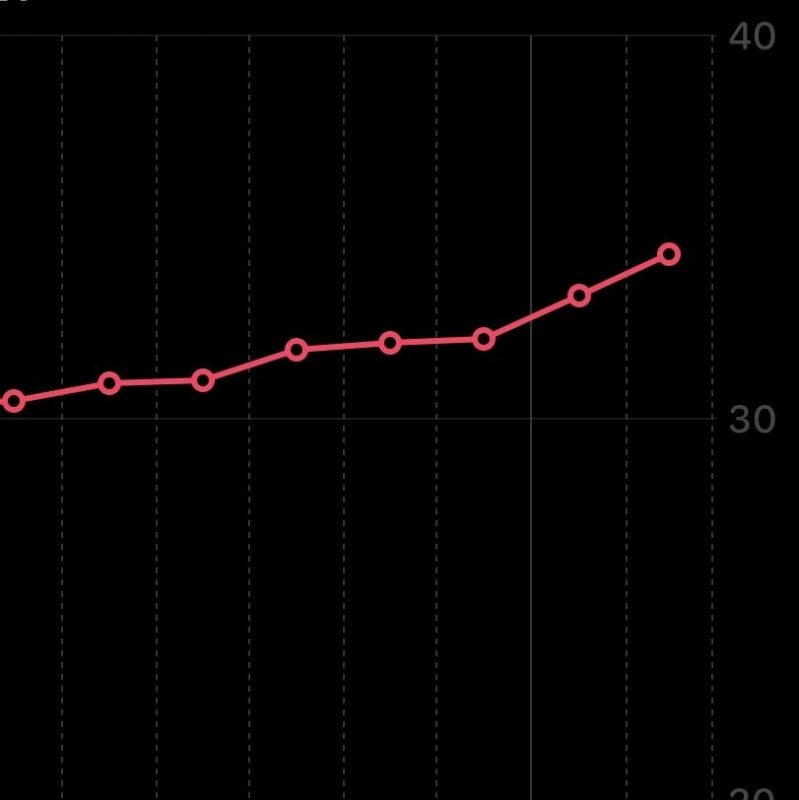

Four straight weeks of whole30. I have two days left but: I’ve lost 12+ pounds, my blood pressure dropped to a healthier level, and in combination with daily exercise, my fitness is much better. This worked shockingly well for me.
Unpopular opinion: gas transactions of any kind force blockchains out of platform-land and squarely into speculative currency-land.
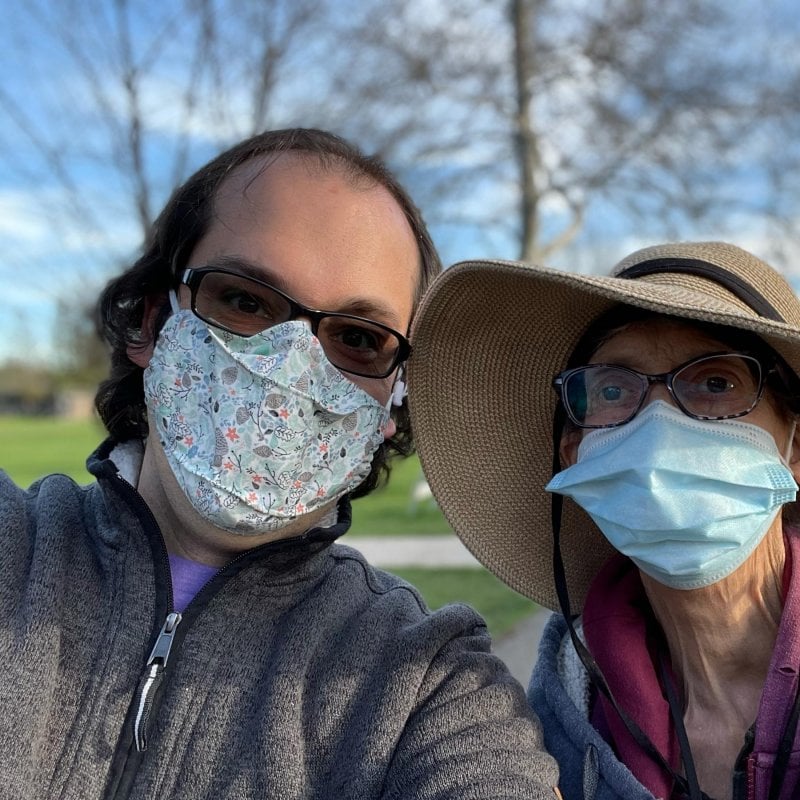
Not sure what else is going on today, but I’m taking my mother out for a walk.
I’m working my way through Discovery season 3, and I found Adira and Gray’s story really affecting. It’s quite lovely to see trans and non binary stories explored in this way. Context: https://
Current status: Googling “is sambal oelek whole30 compliant?” (It is.)
I don’t know who needs to hear this, but you should never, ever use your work computer as your personal computer.
Tidying the next sprint on a Friday night, as one does. The laptop is closing now.
How might I build a front end only Disqus-like comments section (i.e., add one line of JS, get comments on a page) with no centralized components, no blockchain, and no required authentication? Is there a decentralized key value store I'm missing?
I just got notice that my mother received her first COVID-19 vaccine shot. Pretty excited about this, tbqh.
A company is little more than a community of people pulling together in an organized way to achieve the same mission and vision. Like many communities, there are leaders who adjudicate and set direction, and there are norms to follow. Underlying it all, there is the culture of the community: the cues that dictate how it behaves, what its true goals are, and which norms are adhered to as the community grows.
In startups, there's often a cultural belief that if you're not burning the candle at both ends - if you're not pulling 18 hour days and working on the weekends - you're not trying hard enough. "All the high performers here work late," someone once told me in my first week at one startup. It was the reddest of red flags.
Most knowledge workers can muster up to 4 to 6 hours of really productive work a day. After that, you get into make-work; the going through the motions, non-reflective phoning-it-in work that isn't going to rock anybody's world. Likewise, constant interruptions, eg on Slack, through random calls, or half hour meetings sprinkled throughout the day, interrupt flow state and dramatically drop productivity and well-being.
With more free time between working hours and more room for reaching a flow state when they're at work, these workers have more time for reflection, introspection, and rest. We all do better work when we have more time to think about it; we all do better work when we're well-rested.
Beyond these matters of productivity, it's important to consider what kind of community culture you're building: one focused on building the right things and moving forward, or one focused on performatively keeping seats warm. Even more importantly: it's worth asking what kind of person you're optimizing for.
Remote working during the pandemic has amplified biases against working mothers. Only 8% of companies have revised their productivity expectations to account for the challenges of parenting at home during lockdown. Women still tend to carry the heaviest load of parenting; women are more likely to be carers; women are judged more harshly on their productivity. As the Brookings Institution concisely described the problem, "COVID-19 is hard on women because the U.S. economy is hard on women, and this virus excels at taking existing tensions and ratcheting them up.."
Zebra co-founder Mara Zepeda observed this effect in the startup communities she's a part of:
In the last year, it's men that magically have the time to keep showing up for the meetings, working late on that proposal. The selection bias of who has the time, and how easy it is to just shrug this new reality off...I see how easy it is to become blind to who's being left out.
Setting a norm of longer working hours isn't just bad management: it's a literal dick move, ensuring that your startup and your community will be dominated by mostly younger, predominantly white dudes with few personal ties outside of work.
If you're still wondering why that matters - if the advantages aren't obvious - you don't have a company or a community that I'm interested in taking part in. But, sure, if you need to have the benefits of being welcoming to 51% of the global population, let's spell them out: more gender-diverse companies are more profitable, more collaborative, and better at employee retention. And it's easier to hire if you're welcoming to more people.
Women need to be well-represented at all levels, but it's still relatively rare to have a gender-diverse board of directors, or even C-suite. Which is exactly why we still see people making the mistake of focusing on performative productivity instead of creating a culture to support the collaborative work that really matters.
As a manager, I want to see the work get done - collaboratively, in a non-toxic environment that supports people in doing their best work. I want there to be room for creativity and reflection. I want a diversity of contexts to be well-represented. I want people who will push back on each other's blind spots. And I want to share ownership. It's not just the right thing to do; it's also the path to success.
·
Posts
·
 Share this post
For better or worse, these changes will be a major accelerant for decentralization. Protocols don't host. https://
On reflection, using space lasers to build high speed rail would actually be pretty cool.
I intentionally didn’t hand in my writing homework this week. It’s just been too rough a week. Hoping to get back into it from tomorrow. I’m a little bit disappointed in myself - but also giving myself permission to make space.
This is really great: an indie website that lets you figure out where to get a vaccine and whether you're eligible. https://
Trying out Celestial Seasonings Energy Tea, which I guess is the anti-Sleepytime? I wasn't expecting green tea to smell of peaches, that's for sure.
Had a Zoom call with someone whose fancy office background looked real - until it BLEW AWAY IN THE WIND to reveal his kitchen.
I've spent over half my career at the intersection of technology and media. I believe journalism is the bedrock of a well-functioning democracy. Given the choice between tech companies and news organizations, I'll support the latter every time. I'm well-documented as being an advocate for antitrust reform and an opponent of Facebook's policies. And yet, I don't at all get the lawsuits from local media against Facebook and Google. Help me out here.
There have been attempts at legislation all over the world to force sites like Google News to pay publications for the right to link to them. Not only does that fundamentally undermine the web, but consider the effect of extrapolation - should science journals have to pay for the right to cite other papers, for example?
The latest lawsuit alleges that Facebook and Google engaged in anti-competitive activity in order to fix advertising prices. Which seems plausible - but it wouldn't have affected local news in itself. It would affect the entire internet. That doesn't and shouldn't prevent news organizations from filing suit, but the surrounding rhetoric is bizarre - as if the rise of the internet is something that these companies inflicted on the news industry.
I've got bad news for these organizations: the internet was going to happen anyway. There is no lawsuit that will prevent its continued growth. It's like yelling at the rise of television; the only way to respond is to actually engage with it.
Newspaper is a technology, in the same way the web is a technology. It does not have an inherent right to survive. What's important is keeping journalism alive: speaking truth to power and empowering voters with the information they need to make well-informed decisions. The form that takes will change over time, and news organizations need to be able to experiment and innovate to adapt to a changing context.
In fact, the internet presents an immense opportunity for local news: a way to transform from a broadcast model, where information is conveyed from an ivory tower, to a conversational model, where news organizations curate an informed conversation with their communities. Companies like Hearken can help news organizations facilitate these conversations, and enact the internal culture change needed to maintain them.
The choice really is: adapt or die. It's certainly true that organizations need help if they're going to adapt. It's not a slam dunk; it's a difficult climb. But some seem to want to try and claw back the past instead of building the future, and that's a real shame.
·
Posts
·
Share this post
Achievement unlocked: can now wear a ponytail for the first time in my life.
Also, as soon as I feel like I can get a haircut, I’m cutting it down, bleaching it, and dying it some bright color.
Werd I/O © Ben Werdmuller. The text (without images) of this site is licensed under CC BY-NC-SA 4.0.