
 

Three years of The 19th: 30 cities, 54 employees and news that represents

“In the last year alone, we’ve grown at an astronomical pace: from 32 employees to 54, from a news organization that pledged to be the most representative in the nation to one where 65 percent of our staff is non-White, 30 percent are LGBTQ+ and 19 percent are living with disabilities. We’re now on the ground in more than 30 U.S. cities.” I’m so proud to be a part of this team.

[Link]

· Links · Share this post


Elon Musk’s Twitter hit with holocaust denial hate speech lawsuit in Germany

“Current studies prove that 84% of posts containing antisemitic hate speech were not reviewed by social media platforms, as shown in a study by the Center for Countering Digital Hate. Which means that Twitter knows Jews are being publicly attacked on the platform every day and that antisemitism is becoming a normality in our society. And that the platform’s response is by no means adequate.”

[Link]

· Links · Share this post


It's only a podcast if it's open

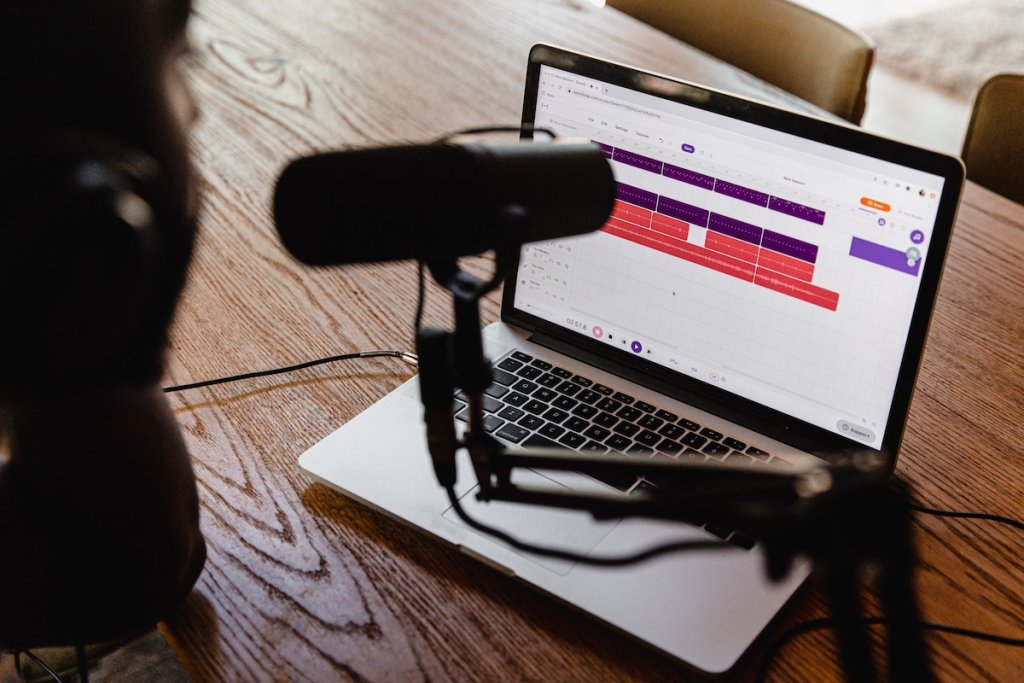
A podcasting setup with a microphone and a laptop

Quick PSA:

A podcast is only a podcast if you can listen to it anywhere.

Just like a newsletter isn’t a newsletter if you can’t subscribe using any email address, the point of a podcast is that you can listen to it in any podcast app. It just works.

If your podcast only works in Spotify or Apple Podcasts or another proprietary app, perhaps because of an exclusivity arrangement, it’s just serial audio. The content may be wonderful, but you’re missing out on the complete set of potential listeners in order to focus on one app’s existing username.

In some ways that’s fine - after all, you can’t watch a Netflix show in any app but Netflix’s - but it’s not a podcast. It’s something else. It’s just a show on someone’s channel.

The way podcasts work is by releasing episodes as attachments on an RSS feed. You don’t need to know that this is how it happens - all you need to know is that it doesn’t matter which podcast app you prefer, just as it doesn’t matter which browser you use to access your favorite website. The point of these platforms is that you have the choice.

That’s important for listeners, but it’s also important for producers. Tech companies are notoriously fickle, and signing an exclusivity deal with one inexorably ties your future into their evolving business strategies.

It might make sense to make an exclusive deal with a streaming platform if they’re going to give you $200 million like Joe Rogan. (I tend to think this is win-win: Spotify thinks it has something unique, while the rest of us aren’t bothered with Rogan’s show.) But if you’re making a deal for a fraction of that money, know that you’re losing out on reaching out to a whole ecosystem in exchange for tying yourself to the business model of a startup that might change business model on a dime and leave your show - or even your whole production company - in the dirt.

The media industry is littered with the graves of companies that tied themselves to onerous distribution contracts. There’s no need. Podcasts are open, available everywhere, and easily monetizable once you’ve got a subscribed audience. You don’t need to prostrate yourself for a company that, ultimately, doesn’t care about your future.
· Posts · Share this post


Adam Schiff to run against Porter for Feinstein’s California Senate seat

“Lee is an old-school, anti-establishment liberal with widespread name recognition in the Bay Area. Khanna has built more of a name for himself as a technocrat and wonk in the tech, antitrust, and economic realm, and co-chaired Bernie Sanders’s 2020 presidential campaign. Porter comes from the Elizabeth Warren lane of the party. But Schiff’s congressional identity has been shaped by his establishment ties.”

[Link]

· Links · Share this post


Election workers could see expanded protections as threats continue

“While election workers mostly powered through a smooth process in November, the threat of political violence continues, according to election officials and voting rights advocates. Ramping up protections for election workers will be critical this year for legislatures.”

[Link]

· Links · Share this post


Introducing WerdStore

I wanted to understand what’s involved in setting up an online store, so I’ve created an Etsy store to accompany my website. Everything is made and fulfilled by Printful, which seems to work pretty well.

Anyway, this is my favorite item in the store right now:

Holmes & Musk & Neumann & Bankman-Fried T-shirt

I’ll add new stuff from time to time. This is mostly for fun, but also, like I said, a bit for my own education.

· Posts · Share this post


· Photos · Share this post


Americans are increasingly disgruntled at work

“Of note: Workers who were in jobs that could be done remotely, but were forced to work on-site saw an increase of 7 points in active disengagement.”

[Link]

· Links · Share this post


Finding that the cognitive load of plugging into Mastodon is approaching the cognitive load of being plugged into Twitter. It's not the content of the conversations; it's the river of content itself. I'm going to give myself a break today and see how it feels.

· Statuses · Share this post


Layoff Brain

“Layoffs are the worst for the people who lose their job, but there’s a ripple effect on those who keep them — particularly if they keep them over the course of multiple layoffs. It’s a curious mix of guilt, relief, trepidation, and anger. Are you supposed to be grateful to the company whose primary leadership strategy seems to be keeping its workers trapped in fear? How do you trust your manager’s assurances of security further than the end of the next pay period?”

[Link]

· Links · Share this post


Macroeconomic Changes Have Made It Impossible for Me to Want to Pay You

“There’s no easy way to say this: I have made the difficult decision to lay off over six thousand of you. In the past two years, we have achieved huge wins together. But unfortunately, the macroeconomic environment has shifted in ways none of us could have foreseen, from an economy in which I did feel like paying you, to one in which I’d rather not.”

[Link]

· Links · Share this post


Why Elon Musk and the billionaire space bros want to put people in space cages forever

“That said, I disagree with Mr. Wanjek: it requires much more than libertarian naiveté to colonize space. Parking humans in containment shelters, on Mars or elsewhere, so as to breed them and select them like cattle — that requires malice.”

[Link]

· Links · Share this post


U.S. sues Google for allegedly breaking antitrust laws with its ad business

“"For 15 years, Google has pursued a course of anticompetitive conduct that has allowed it to halt the rise of rival technologies, manipulate auction mechanics, to insulate itself from competition, and force advertisers and publishers to use its tools," said Attorney General Merrick Garland at a press conference announcing the lawsuit.”

[Link]

· Links · Share this post


I think it's a fair question to ask why the Washington Post is laying off journalists right now. Other orgs have activist investors or fragile bottom lines; it has Jeff Bezos. Given that layoffs don't really work, what's the point beyond optics?

· Statuses · Share this post


Organizing my blog

I’ve been wondering about adding more organization to my site. As of right now, the homepage is a mix of long-form posts, short thoughts, and links I consider interesting, presented as a stream. It’s a genuine representation of what I’m reading and thinking about, and each post’s permalink page looks fine to me, but it doesn’t quite hold together as a whole. If you look at my homepage with fresh eyes, my stream is a hodgepodge. There’s no through line.

One way to get around this might be to split my homepage into columns: one big column for latest long-form pieces, and a smaller column for links. Andy Baio’s site does this pretty well, for example.

On the other hand, sites like The Verge present notes, links, and articles in one stream. I find it a little confusing to read, but there’s at least precedent for my approach. Of course, my site is more or less monochrome, while they clearly have a visual design team on-staff. One thing I really like is that (as befits a tech publication rather than a single-author blog) they don’t just display the latest long-form post on the homepage; you’ve got to click through. This is similar to the WordPress setup we use at my day job at The 19th.

I think I’m just sick of my design and need to try something else out. What do you think? Drop me a line if there’s a blog design you particularly like, or if you’d like to see me organize my stuff in a particular way.

· Posts · Share this post


Warning: Do not “other” me because of my age

“But I hate this new attention lavished on aging. Why? Because it “others” me. It puts me in a separate category from the rest of the world, and that is not how I think, feel, act, or want to be seen. All of a sudden I am not smart, pretty, successful, talented, or part of the family. I am “old.” I am somebody’s responsibility. I have to be told when to stop driving, and my checkbook can be taken away. I am a candidate for Senior Living (banishment to a place full of other old people).”

[Link]

· Links · Share this post


2023 'Doomsday Clock' moved 10 seconds closer to catastrophe

“Scientists revealed on Tuesday that the "Doomsday Clock" has been moved up to 90 seconds before midnight -- the closest humanity has ever been to armageddon.” But everything else is going so well.

[Link]

· Links · Share this post


SEO Spammers Are Absolutely Thrilled Google Isn't Cracking Down on CNET's AI-Generated Articles

“The implication was clear: that tools like ChatGPT will now allow scofflaws to pollute the internet with near-infinite quantities of bot-generated garbage, and that CNET have now paved the way. In a way, it served as a perfect illustration of a recent warning by Stanford and Georgetown academics that AI tech could rapidly start to fill the internet with endless quantities of misinformation and profiteering.”

[Link]

· Links · Share this post


How our microbiome is shaped by family, friends and even neighbours

“People living in the same household share more than just a roof. Be they family or flatmate, housemates tend to have the same microbes colonizing their bodies, and the longer the cohabitation, the more similar these microbiomes become. The conclusion raises the possibility that diseases linked to microbiome dysfunction, including cancer, diabetes and obesity, could be partly transmissible.”

[Link]

· Links · Share this post


Trump Looks to Abandon Truth Social, His Own Social Media Platform

“Since late last year, former President Trump has informed several people close to him that he doesn’t want to re-up the exclusivity agreement with his social media company, Truth Social, two sources familiar with the matter tell Rolling Stone. “There’s not going to be a need for that,” is how one of the sources recalls Trump describing his soon-to-expire contractual obligation. […] Trump and some of his close allies have already brainstormed about him tweeting that, even though Big Tech tried to “silence” him over his lies about a “rigged election,” he was now back to make “the Left” miserable.”

[Link]

· Links · Share this post


I'm not sure how "centrist" became equated with "reasonable". In a place where the entire political spectrum (and Overton window) is shifted to the right, the center is still right. Is that truly reasonable and equitable? Or is it just comfortable to powers that be?

· Statuses · Share this post


Speaking loudly about ethics in tech and media is more important than it's ever been. And it'll only become more important as time goes on. Use your voice - please.

· Statuses · Share this post


The contagious visual blandness of Netflix

“There are more green screens and sound stages, more CGI, more fixing-it-in-post. As these production tools have gotten slicker and cheaper and thus more widely abused, it’s not that everything looks obviously shitty or too good to feel true, it’s actually that most things look mid in the exact same way. The ubiquity of the look is making it harder to spot, and the overall result is weightless and uncanny. An endless stream of glossy vehicles that are easy to watch and easier to forget.”

[Link]

· Links · Share this post


Looking beyond copaganda

American TV is saturated with copaganda: media intended to sway public perception in favor of the police. Even in a world where it’s become clear that the police disproportionately kill people of color and otherwise enforce adverse power dynamics for oppressed communities, we see show after show after show where the police are unambiguously the good guys. Often those maverick cops get their good guy jobs done by flaunting the rules - because, after all, what possible good could those rules possibly do?

As Aaron Rahsaan Thomas, the co-creator of S.W.A.T., put it:

Traditionally, the domain of TV police procedurals has been as morality plays, where clear lines are drawn. The past 60 years have seen shows like Dragnet, The Untouchables, and Adam 12 establish a formula where, within an hour of story, good lawmen, also known as square-jawed white cops, defeat bad guys, often known as poor people of color. This stark clarity, indulging the idea of the hero cop, often provides a sense of satisfaction for some viewers in an otherwise complicated world.

It’s worth considering which viewers. His whole piece is an important read, particularly on white voice even in the face of diverse casting.

I’d love to see more shows - any shows, actually - about law enforcement that move beyond this narrative and are willing to discuss the complicated power differentials that underpin oppression. There’s so much to talk about here, so much great drama that speaks to peoples’ lived experiences, yet I wonder if it would even be possible to put it on the air.

Copaganda is part of the culture. Some of it was certainly produced with the explicit intention of swaying the public towards law enforcement. But it’s a trope now: these are established categories of drama that perpetuate themselves because we’ve come to expect them. Just as the CIA funded Iowa Writer’s Workshop and shaped modern American literature as a result, police PR has shaped television.

As that last linked piece puts it:

Maybe it's just a reminder that we need to be wary of the sandboxes we’re building our castles in, of the institutions that define our creative thought so wholly that we often forget (or never bother to ask) how and why they were established in the first place.

British TV does a slightly better job, perhaps partially because Britain tends to hold a bit less reverence for its institutions (at least if you squint a bit and don’t ask too many questions about the enduring legacy of its empire). I enjoyed both seasons of Slow Horses, a British drama about dysfunctional MI5 agents who find themselves working against establishment corruption that is at least as formidable as any outside force. Back in the nineties, the BBC show Between the Lines dealt directly with police corruption. They’re both great TV, but while the protagonists in both cases are from a semi-ostracized branch of the powers that be, they’re still formally a part of that established order. I would love to see drama fully drawn from the perspective of people who wind up on the wrong side of it.

The Wire might come the closest, at least in intention. Its star, Wendell Pierce, speaking to Yahoo Entertainment last year:

Sure, you're recognizing the individuals that were lost in a system that perpetuated this sort of misconduct, and maybe you had empathy for some of the individuals in that system. But in no way did we celebrate the moral ambiguity, the moral inconsistencies and the failures of the police — quite the opposite. We showed the dysfunction of the police and hopefully awakened people to why it needs to be changed.

But the real answer is going to lead from more diversity at the highest levels of television. You’re not going to get an authentic story about communities who have been oppressed unless you greenlight shows written by people from those communities, again and again and again. There’s a lot of work to do.

Aaron Rahsaan Thomas again:

I often hear platitudes about hiring more diversity at the lowest levels and tolerating new points of view from “cooler” white writers, but rarely hear how any writer of color can manage a career to get to a point where their voice drives a show and impacts the worldwide narrative on these stories.

Please, let’s get on it. I want to watch some TV.

· Posts · Share this post


A web-based science fiction literary journal

I had an idea for an online science fiction literary journal.

First: it’s on the web and free to access on beautiful, standards-based, responsive, blazing-fast web pages. Nobody ever needs to pay to read its content. It’s all out there, paywall-free, and anyone can link to it and share it. That means that authors can share links to their work without worrying that someone can’t see it, which in particular will allow emerging authors to find audiences frictionlessly. The website publishes roughly one story per week.

Second: you can subscribe via email, RSS, and ActivityPub. However you get your content is a-ok. Every new story is shared on social media, there’s a Flipboard publication, and so on - if you want the content to come to you, it will. Every piece is illustrated by a real, human illustrator, in part so that they show up beautifully on every platform.

Third: the journal is patronage-supported. Anyone can put money in and will be acknowledged on the supporters page, in the order of the amount of money you’ve paid in your contribution history. Above a threshold, these acknowledgments have a full referrer link to a contributor’s website. Every payment is always acknowledged.

Fourth: everyone is paid fairly. Authors and illustrators both get a one-off fair, flat rate payment, as well as a portion of the patronage contributions. Payouts are proportional to views in the month of the payout, and are above and beyond the original fair payout - so they’re kind of a bonus rather than forcing their full earnings for their work to be based on attention. But if a particular short story continues to be popular for a year or two, the author sees compensation for that.

Fifth: there is an annual compendium of short stories, published as a real, hardbound book. Authors and illustrators see royalties from this, too. No further rights are sought aside from the website and the book, so authors and artists are free to bring their work elsewhere and secure further rights however they wish.

Sixth: it’s not going to be profitable. But it would be a fun labor of love that also hopefully provides both monetary and career support for artists.

Probably don’t let me actually do this right now. But it’s fun to think about.

· Posts · Share this post

Email me: ben@werd.io

Signal me: benwerd.01

Werd I/O © Ben Werdmuller. The text (without images) of this site is licensed under CC BY-NC-SA 4.0.