
 

'We're Winning': Apple Formally Endorses Right to Repair Legislation After Spending Millions Fighting It

I'm a little bit suspicious that Apple is suddenly into right-to-repair, but broadly this is good. I just wish it was a nationwide law instead of one that is limited to California. Hopefully the idea can expand to the federal level.

[Link]

· Links · Share this post


Homesick

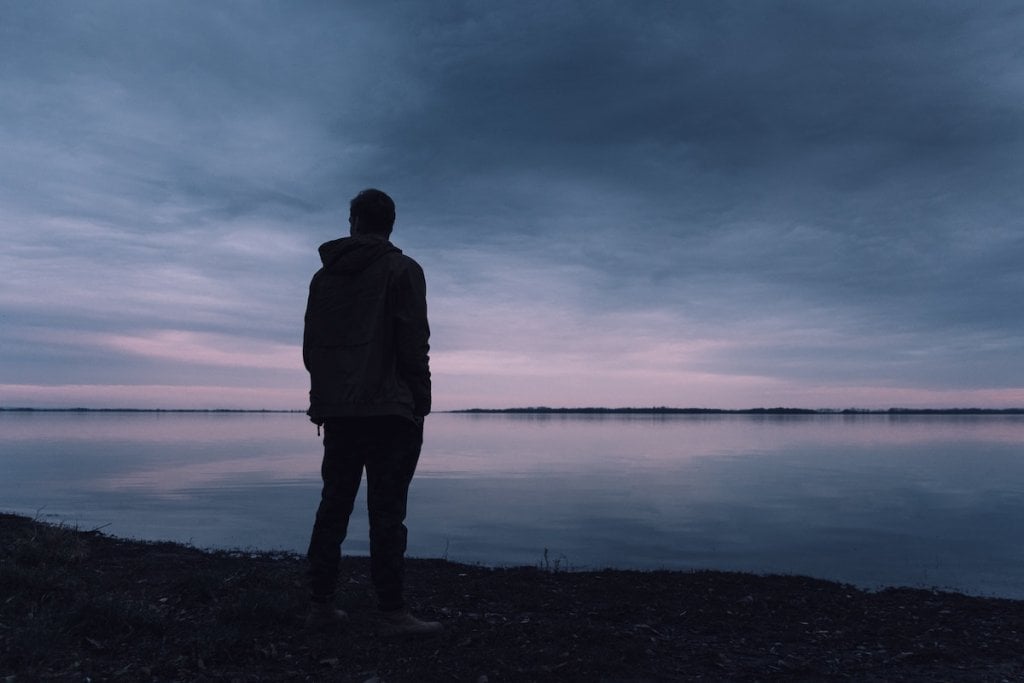
Silhouette of a man looking over a dusk horizon

Lately I’ve found myself feeling profoundly homesick. It’s come and gone for the twelve years I’ve lived in the US full-time, but this week I’ve been feeling it pretty much as intensely as I ever have.

But perhaps homesickness isn’t quite the right word. If you pushed me, I’d have to admit that it’s not the place that I’m homesick for. There are trappings it that I certainly miss: specific old haunts and routines that used to mean something to me when they were more than just echoes in the back of my long-term memory. I’d go back and smell the hoppy Edinburgh air as I emerge from the train at Waverley, or take in the centuries-old stink of stalls in Oxford’s Covered Market, in a heartbeat. Still, what I really miss is a feeling: a place and time in my life when the way I felt about the world was radically different.

I was speaking to a friend this morning about trauma. He put it to me that seismic life events tend to split life into two parts: the BC and AD. This resonates with me; I’ve always thought of it as if the laws of physics have subtly shifted, as if I’ve fallen into a parallel universe. Everything looks more or less the same, but the underlying rules of the universe have changed just enough that the meaning of everything is different. The old routines and patterns of life feel like going through the motions, like you’re play-acting an echo of who you were before. You have to figure out who you are in this new universe; figure out what you need. All the while, the cognitive load of just existing has gone way up, and you’re flooded. Basic functions like empathy don’t come as easy as they did before. And you’re over the threshold: there’s no way to get back to the universe you came from, as much as you might want to claw yourself there.

I will never get my mother back. I will never be that person again. I will never have that life again.

I miss the feeling of existing in the pre-trauma universe; the one I lived in back before I’d moved continents because my mother was dying, and certainly back before her condition developed more fully. I have no regrets about moving or being on that journey with her, or about the wonderful people I have in my life today that I otherwise wouldn’t have met. (Our son!) But I miss the feeling of living in that other world where I felt like I had more agency over my decisions, and where the stakes of those decisions were far lower.

Some of those contextual reasons are obvious. We spent over ten years caring for Ma, and medical issues, surgeries, and new problems to solve often came out of the blue. I was very glad to be there, but by necessity, life had to be reactive and flexible. You never knew what was going to happen next. One moment things were fine; the next, I was getting kicked out of the ICU because I refused to leave her side.

My mother fought to live with gusto and energy and intelligence and heart. She told us, again and again, that she wasn’t ready to say goodbye. And yet, on a Sunday night in a hospital room with big, picture frame windows that looked over San Francisco, we had to.

Perhaps less obviously, the whole American context is also a weight. Whereas the National Health Service took care of me without so much as a co-pay at the point of use, the American healthcare system forces you into finding a salaried position if you want to have decent coverage that isn’t ruinously expensive. Whereas I was used to buses that came every 5 minutes and went wherever I wanted to go, now I had to own and maintain a car. Whereas I felt safe everywhere I went, now I was concerned about people carrying guns, animals carrying rabies, poisonous spiders, religious fanatics, free-market libertarians, and so on. Whereas I could exist on a relatively low budget, the cost of rent, owning a cellphone, and having a fast internet connection all quadrupled. Even buying decent, healthy food at the supermarket was more expensive than I was used to (but I could buy as much poor-quality bread with sugar in it as I wanted).

Then, one year, on my mother’s birthday, someone walked into Erin’s work with a 9mm semi-automatic pistol and started shooting. I picked her up from the hotel down the street where she and a few other people had barricaded themselves in. This isn’t something that happens in most places. This isn’t something we should have to live with at all.

In the midst of all of this, it became easier to make bad decisions, to feel flooded, and to pass the trauma forward.

All of those things are pieces of a trap. It’s hard to maintain control of your life if you’re constantly trying to make ends meet; particularly if basic human rights like healthcare also come with a hefty price tag or a de facto requirement to work for someone else. Contrary to expectations, I’ve felt the least freedom of my life in America.

That’s what I’m homesick for: freedom. That’s not something that’s got anything to do with a specific place. The country I grew up in has declined so rapidly that you’d be forgiven for thinking it was run by Elon Musk. I don’t actually have a desire to go back and live in Britain again (although I’d love to visit often); I do have a desire to be in a headspace where I feel like I can go anywhere, have the space to be creative and live how I want to live, proactively plan my life based on my values, and be safe and supported in doing so. Post-Brexit Britain isn’t a place I can feel homesickness for. It’s not a feeling to me; it’s just a place. The feeling is what matters.

Post-covid, I think most of us are reconsidering the shape and meaning of our lives. In Ling Ma’s excellent book Severance, presciently written before the pandemic, a fungal plague finds people mindlessly repeating old habits, unable to break the spell of nostalgia. It’s the severed universe again: trauma has split all of our lives into pre and post. We can call for people to go back to the office or shed their masks all we want, but it’ll never be anything more than the mindless rote repetition of prior routine. There is no “back to normal”; the laws underlying the universe have changed. We’ve moved over the threshold and can’t get back. Nostalgia is a vice, not an answer.

So how can I create the conditions to reproduce the feelings I’m homesick for? The honest truth is, I don’t know that it’s possible, or even healthy. Even those feelings may be a nostalgic crutch. I think it’s important to think about how the context I’m in could be better, both proximally (here in the house, in the direct patterns of my life) and more widely (in American societies, in the industries I work in). I don’t think there’s much good to be gained from just trying to accept life as it is; there’s a lot of learning and growth inherent in even the act of trying.

Four friends, hugging on the beach

As part of my managerial work, I think a lot about how people burn out as part of a team. Usually it comes down to a lack of ability to influence the conditions that affect the work you do: the culture of your company, the processes that dictate how you do your work, the goals of the team or the company as a whole. If you feel like your concerns or priorities aren’t being heard, or if they’re not being taken seriously, the friction can create an emotional overhead that makes it hard to get any work done. I wonder if that’s true in life too: if part of the way we burn out in our lives is if we feel like our values and ideas aren’t being heard or understood.

I think shared understanding is most likely to be found in communities of like-minded people. (Maybe that’s a tautology: people with shared values have shared values.) Part of the stress of American life is knowing that there are so many people who don’t share your concerns about what constitutes a problem. Not just in small, little ways — those don’t really matter, and are probably good — but in radically divergent ways that can make you wonder if you’re out of alignment with the rest of the world. There are people out there who think it’s fine that everyone drives everywhere, or that it’s okay for poor people to not have healthcare, or that unions are bad, or that a six-week abortion ban is great even if it kills women, or that it’s a completely fine and reasonable thing for people to just carry guns around.

Differences of opinion are part of the foundation of democracy. At the same time, every society has basic, fundamental agreements: murder is bad, and so on. Some societies agree that a feeling of security through social support is important. I wish this one did too.

Failing that, sometimes you also need to feel heard and understood, and feel enough kinship to not have to litigate the basics. I think it’s healthy for people to argue about the role of unionization in society, for example; I just don’t always want to be arguing about it whenever it comes up. I think it’s reasonable to discuss the role of guns in a country where they’re mentioned in the national Constitution; I also don’t want to always have to worry about being in proximity to them. I think we can talk about how to pay for high-speed rail; I also just want to spend time with people who think it’s as awesome as I do.

The most important version of this, for me, is identity. I’m a third culture kid with no well-defined national identity. Some of my ancestors were Ukrainian Jews. Some were Indonesians. I’m descended from concentration camp survivors and people who fought in the resistance. I don’t ever want to be in a place where people question my right to exist, or the right of my relatives to exist. I don’t want to have to explain that there are many valid ways to live a life. I don’t want to be exposed to xenophobia, nationalism, parochialism, or the petty racism of small-minded people who don’t like to hear people with foreign accents at the other end of a phone. I have no need to expose myself to peoples’ distrust of people who are different. Those things make me feel less safe; less accepted.

I think the feeling I’m homesick for is community and a sense of belonging. I want to spend more time around people who share my values, and I want to share more of myself with them. That felt easier in the country I grew up in because I’d had these close friendships for all of my life; we were comfortable around each other. Because my time in America has mostly been tethered to traumatic events in my life, I haven’t had the chance to properly nurture and develop the friendships with the truly amazing people that I’ve met since I’ve been here.

So maybe there’s a way to cross the threshold after all. Maybe the main thing to find is real connection: to prioritize nurturing friendships and reaching out to people who make me feel like I belong. To advocate for change, yes, but also to find the other people who advocate for those same values.

When all is said and done, perhaps the real problem to solve is how to feel less alone. And to that end, perhaps part of the solution is to reach out and embrace the people and relationships of all sorts that I already have in my life, wherever they are in the world.

· Posts · Share this post


The State of Seed Stage Funding to Underrepresented Founders

“White women founded companies comprise 79% of reported early-stage VC dollars going to underrepresented founders and 64% of investments made into companies with underrepresented founders by deal count. Ecosystem-wide, we need to up our game by investing seed money into a broader spectrum of founders of color.”

[Link]

· Links · Share this post


Center for News, Technology & Innovation

Terrible website, very good idea. I would love to contribute to something like this.

[Link]

· Links · Share this post


404 Media

A new, independent, worker-owned venture by ex-Motherboard journalists. I'm a subscriber.

[Link]

· Links · Share this post


Actually writing

I’m over halfway through writing my book. It’s not, technically speaking, my first — I published a technical guide to the browser geolocation API a long time ago, and self-published a short novel I wrote during NaNoWriMo — but it is my first really serious attempt at a novel. As I’ve mentioned before, while I believe there’s a market for it, I don’t have representation or publishing lined up, and I don’t know how it will be received. It’s a shot in the dark in the same way a startup is a shot in the dark.

Just as a startup can be de-risked, I believe aspects of a novel can be de-risked. So much is involved in the quality of execution — whether it’s writing words or building software — but there are ways to know if you’re on the right track. In startups, the worst thing is to spend a long time creating something and then release it to the world without ever doing any research. In writing, the journey is also valuable: the process is important in itself. And because it’s unlikely that anyone’s sunk $1.5M into your writing venture (at least for your first time out), you haven’t really lost anything if it doesn’t work out. That gives you freedom to creatively experiment.

Still, it’s very much worth knowing who you’re writing for, and whether you’re creating something they’d actually like to read. Part of that is in the craft of writing itself and the vibrancy of your imagination. Part of it is just in doing some research and understanding what people like. And part of it is in speaking to experts and getting their feedback.

I’m trying to do all three, while making sure my center of gravity is firmly on the act of actually writing. I’m lucky enough to be chatting with a mentor in science fiction publishing; I’m doing audience research; I’m working on every aspect of the craft of fiction writing.

Some days that comes easily. Some days, not so much. My daily word count varies between around 250 and 1500 words, depending on how much sleep I’ve had and whatever else is going on. Our son is about to be a year old, and has all the energy and inquisitiveness of a toddler. This week, for example, childcare fell apart, so the time I have to do anything — writing, working, taking a shower — has diminished. (Not that I’m complaining: these are hours, weeks, and years with him that I’ll never get back.)

This work also represents an interesting break for me. Normally I write and publish blog posts very quickly, or post on social media almost reflexively. I’ve rarely seen an online text box I didn’t like. On the other hand, this is a long-form story with a very long gestational period — and I’m *terrified* to eventually share it. That’s another reason to make sure it goes through rounds of editing, refinement, and feedback before a larger group gets to see it. There’s something so raw and vulnerable about this that I’m simply not used to. Perhaps that’s one reason why I’ve never got this far before. But I’ve come too far now to not see what’s on the other side.

· Posts · Share this post


Neoclassical economists are the last people to listen to on climate change

Interesting commentary on "economic theories that have led to government by markets, fuelling financial and other shocks, and the rise of authoritarian, and even neo-fascist regimes promising citizens ‘protection’ from ‘globalised’ markets.”

[Link]

· Links · Share this post


The Secret Weapon Hackers Can Use to Dox Nearly Anyone in America for $15

It costs $15 to uncover an American's personally identifiable information illegally for potentially violent purposes. But also consider the number of entities that have access to this information legally, without any oversight. None of it should be allowable.

[Link]

· Links · Share this post


This AI Watches Millions Of Cars And Tells Cops If You’re Driving Like A Criminal

A good rule of thumb is that if technology makes something feasible, someone will do it regardless of the ethics. Here, AI makes it easy to perform warrantless surveillance at scale - so someone has turned it into a product and police are buying it.

[Link]

· Links · Share this post


RSS Zero isn’t the path to RSS Joy

“RSS is not email. You don’t have to get to inbox zero!” is a correct take, in my opinion; that’s certainly how I approach my feed reader. But also, I’ve got bad news about my email inbox.

[Link]

· Links · Share this post


Reconsidering my website and newsletter

I’m thinking about diverging my website and newsletter.

Today, if you sign up to the newsletter, you get every blog post via email (although sometimes I wait until there have been several small blog posts and send them together as a digest). That means you can follow along on the web, using a feed reader, or via email, depending on what’s best for you.

These are different media, even if I don’t treat them as such. I don’t think short posts work well via email, and I’m not always convinced that longer posts work well on the blog. I think splitting them might also help with my own incentives to write: the newsletter would become more of a focused publication, whereas my website has always been a stream of consciousness of what I’m thinking about and reading right now.

What do you think?

· Posts · Share this post


Most students haven’t learned about LGBTQ+ issues in school, survey shows

Why the internet - as well as more traditional media like books - are a lifeline for kids hungry to learn about queer history. Of course, I'm sure the usual suspects will come for those too.

[Link]

· Links · Share this post


International Chess Org: Trans Women Have "No Right To Participate" In Women's Chess

This stance by the International Chess Federation is so transparently bigoted that it helps clarify other anti-trans measures happening across competitive sports. There's nothing here about fairness; it's all to do with conservative division and hatred.

[Link]

· Links · Share this post


Publishers on social media are between a rock and a hard place

Publishers are between a rock and a hard place as they try and figure out where to devote their time and energy. The options are:

Mastodon: My favorite network to use, but not a good fit for publishers’ existing audience models. Mastodon has no effective cross-network search and blocks browser referral data, which means audience teams have no idea how many of their readers are coming from the network. It’s big and thriving, but opaque. And the nature of the way the network software work means that if you do go viral, your servers may effectively be DDoSed.

Threads: Meta’s soon-to-be-Mastodon-compatible Twitter-a-like. There are a lot of non-technical users on the network, but again, there are problems. Referrals show up as Instagram, which once again means nobody knows how many people are clicking through. At the time of writing, Threads has no API and no web or desktop version, which means audience teams have to manually post using their phones and hope for the best.

Bluesky and ‌T2: Still invitation only and very, very small.

Post and ‌Nostr: not invitation only, but also very, very small. Post is incredibly insular to publishing folks and Nostr is largely Bitcoiners at this point.

Reddit: Not to be discounted, but there’s no way for a publisher to own a Reddit page or community. Instead, they can be active participants, helping to shepherd conversations this way and that way. Self-promoting your own posts is frowned upon.

Twitter / X: In a rapid decline and full of far-right hate speech, but still a contender. For now, its referral traffic still outweighs all of the above by an order of magnitude (potentially except for Reddit), which means publishers are having trouble giving it up despite the hate speech.

Facebook: Obviously huge and ubiquitous but pay to play if you want any volume of readers to actually see your posts.

Instagram: Heavily used but links are dependent on the Uber-awkward “link in bio” design pattern. There’s no good way to just let people click through to a story on your own website.

TikTok: Celebrated as the way Gen Z is getting its news and content. I’m skeptical — because TikTok also needs to use a “link in bio” pattern, users rarely leave the app, and publishers must rely on TikTok’s own statistics for engagement. We’ve seen this play out before.

YouTube: Heavily used and near-ubiquitous, but requires a lot of up-front investment to produce content for. Publishers effectively have to create broadcast-level TV studios to participate. It’s not an option for most smaller organizations.

This is a far more fragmented landscape than publishers had to deal with a year ago. Save perhaps for X (a situation I can’t say I’m happy about), Mastodon and Threads represent the networks with the highest ROI, but in their current incarnations provide serious barriers for most publishers.

There are, of course, two more options:

Newsletters: A newsletter, in effect, is a direct relationship between a publisher and a reader. Newsletters have the advantage that no other platform is trying to arbitrate that relationship (although a third party platform like Mailchimp may be involved). They also allow publishers to know exactly who is reading, which may allow them to build a deeper relationship over time. For example, active newsletter readers may be more likely to convert into donors to a non-profit newsroom.

RSS: It’s not dead! Lots of people use RSS, whether through stand-alone feed readers or services like Flipboard and Substack Reader. Publishers will never know exactly how many people are reading, but users tend to have a newsletter-like loyalty to their feeds. It’s also usually a free, default part of a CMS.

Finally, perhaps obviously but also for some publishers not obviously enough, a publisher should always prioritize its own website as a destination. When you own your own website, there’s never a middleman. Newsletters and RSS can both help; social media can be an on-ramp for readers to discover your site. Establishing direct relationships that can’t be destabilized by, say, some billionaire deciding to slow access to links he doesn’t like is a business imperative — and has never been more so than this year.

Syndicated to IndieNews.

· Posts · Share this post


My Taylor Swift eras

It’s fun to think of the work I’ve done in terms of Taylor Swift style eras. Hey, I might not have the musical talent, good looks, or legions of fans, but the work I’ve done has required a series of overlapping re-inventions.

So, why not. In roughly reverse-chronological order, here are my Taylor Swift eras; what are yours?

Super-serious journalism supporter.

Ben Werdmuller in his super-serious journalism eraDistinctive look: open button-down shirt
Distinctive food: Austin-style breakfast taco
Distinctive activity: karaoke

I got into media through a lucky encounter with the founders of what became Latakoo, who attended a talk I gave about user-centered social network design at Harvard’s Kennedy School in 2009. We collectively designed Latakoo to be an easy way for broadcast journalists to get their footage back to their newsrooms using commodity internet connections, in the video format the newsroom needed. It’s the way organizations like NBC News send much of their recorded video today.

I was the first CTO at The 19th, a non-profit newsroom reporting on gender, politics, and policy, and was an active participant in its Senior Leadership Team across all areas of organizational strategy. I’ve also contracted with other non-profit newsrooms to provide tech leadership support.

At Matter, I invested in media startups — but the cool thing about Matter’s fund structure was that the LPs were all media organizations like PRX, KQED, the Knight Foundation, the New York Times, the Associated Press, McClatchy, Tamedia, CNHI, and, yes, tronc. I got to regularly meet with teams from those organizations and (as part of the Matter team) help them through innovation problems they were encountering using a design thinking led approach. I also got to participate in their own internal innovation processes, like giving feedback as part of the KQED Lab internal accelerator.

Startup bro.

Ben Werdmuller in his startup bro eraDistinctive look: branded hoodie over a t-shirt that was also branded; socks were also often branded; third wave coffee mug also featured logo
Distinctive food: kombucha on tap and espresso using the imported Italian machine
Distinctive activity: offsites

I was the Head of Engineering at ForUsAll, which was my only foray into fintech. I was drawn to it because of its original mission to help increase access to retirement savings for more people. There was a lot of pressure to raise subsequent rounds of funding, and a major culture shift as the in-person company moved to a remote-first company during the pandemic. This allowed me to hire people I ordinarily never could have, in every US timezone.

I was also a Senior Engineer at Medium on its publications team. It was my first experience working at a company that had, frankly, so much money, sometimes alongside people I’d been following for years. I got to work alongside people who had previously built fundamental tools like Gmail as well as core pieces of web technology. The change in context meant I started off terrified: everyone was so completely on top of their respective games, and I had the biggest imposter syndrome of my life. It was also, for reasons I still don’t completely understand, the most fashionably stylish team I’d ever worked with.

Open source utopian.

Distinctive look: the jeans-tshirt-and-blazer look, because we were trying to look fancy and legitimate
Distinctive food: poké, for some reason
Distinctive activity: long, long walks, sometimes to save money on transit fares

I worked with Julien Genestoux on his Unlock Protocol: a way to help independent creators make money on their own terms without a middleman. Fully open source and decentralized, the protocol has taken advantage of various blockchains as they’ve become available, allowing the protocol to become as fast and cost effective as possible. Julien and I are both open-web-first evangelists, and this attitude shows through in the project.

With Erin Richey, I built Known: a kind of social news feed that you host yourself. Any number of people can publish to a Known feed (my site is a news feed of one, but some have had hundreds or thousands). We built an award-winning site with KQED and people around the world are still using it to power their websites. For a while, Known allowed you to directly syndicate your content to third-party websites, which saw us get coverage in Wired, among other places.

With Dave Tosh, I built Elgg: an open source social networking platform that was used by the Canadian national government, Fortune 500 companies, and organizations like Greenpeace and Oxfam. It was, in retrospect, one of the first private social networks and social intranets. We built the first social network ever run at a university, and I’m particularly proud of the social movements that used it. For example, the Spanish Movimiento 15-M anti-austerity movement used Elgg to organize. We also built the first open data definition for social networks, which helped inform the subsequent design of ActivityPub.

Institutional web developer.

Distinctive look: ironed shirt and trousers
Distinctive food: university canteen food (I was kicked out of the Edinburgh MALTS canteen after hacking the menu)
Distinctive activity: inventing acronyms for things

I ran the web properties at Oxford University’s Saïd Business School. The coolest thing about this job was getting to know the faculty and students; it wasn’t long before they realized that I knew a lot more about startups and web tech than a random guy in an IT department probably should. I ended up meeting visiting dignitaries and participating in MBA round-tables. They were very kind to me, and in turn, I believe I pushed the IT department forward in its relationship to the web.

And first, perhaps most improbably, I ran the web properties for what is now the St Leonard’s Land Pool at the University of Edinburgh: an Olympic-sized swimming pool set up with underwater cameras to analyze and improve the strokes and techniques of elite athletes. I started being loaned out to the Edinburgh University Media and Learning Technology Service, which is where I met Dave and started cooking up Elgg.

Proto-nerd.

Distinctive look: baggy sweatshirt, jeans, oversized glasses, leather jacket for some reason
Distinctive food: chips
Distinctive activity: putting 486 computers together

I helped build the first website for Daily Information, a local one-sheet newspaper for Oxford that included classified ads (it was possibly the first classified ad website in the world, pre-dating Craigslist) and reviews for local restaurants, movies, gigs, and theater. Before it became a website, I came on as its first BBS SysOp — my first ever job.

I ran a hypertext magazine called Spire, which I built in Windows Help Format because its capabilities at the time outstripped HTML. (We did move to the web later on.) I got to interview celebrities-to-me like Roger Ebert and Nicholas Negroponte. Distribution was via BBS initially, and then we started to be carried on the cover CDs of more professional print computer magazines (something I achieved by faxing them all in turn with a proposal, which blows my mind now). I was 15.

And I ran Rum and Monkey, a website that regularly got millions of pageviews a day and taught me all about social virality (this was 2002). I’ve written extensively about that over here.

· Posts · Share this post


Yellowface, by R. F. Kuang

This tale from a deeply unreliable, envy-driven narrator is more of a sharp satire of liberal racism than its publishing industry setting. It's at its least compelling when discussing Twitter drama, but there's ample snark just underneath each turn of phrase, and more than enough ratcheting tension to have kept me turning the pages.

[Link]

· Links · Share this post


Removing my home information from the internet

I’ve used DeleteMe to remove my personal information from search engines and information hubs, but it hadn’t occurred to me until recently that I needed to also remove information about my home from listings sites. It turns out there are full photos, including video walkthroughs, just about everywhere. Particularly with a baby in the house, we felt uneasy about leaving these up.

USA Today has a quick guide to removing your home photos on the most popular sites, but it turns out there’s no public way to remove listing photos from MLS, the listings database that realtors use behind the scenes. You have to ask your agent nicely to do it on your behalf, which I didn’t know to do when I bought the house.

The selling agent also uploaded videos to YouTube — and there’s no defined process to remove those. I’ve had to send a nice email and hope that he has the time and inclination to remove. It would be nice if there was an automated way to remove my information there, too. (Updated to add: he very kindly removed it incredibly quickly.)

I post a lot, but keeping your personal data footprint on the internet clean is really difficult even if you don’t keep a blog or post to social media. Although other people shouldn’t post your personal information — it’s not legal, for a start — there’s no unified way to prevent them from doing so. There’s the threat of data leaks, of course, but there’s also the threat of intentional disclosure by someone who thinks what they’re doing is benign. In that way, it’s somewhere between an arms race and a losing battle: you can’t ever be sure that someone you’re dealing with in some capacity isn’t sharing more than they should about you on the web.

Searching for yourself and your other identifying information is a good way to figure out what’s out there, although the act of searching leaves its own insecure footprint. Zuckerberg was morally wrong when he said that the era of privacy is dead, but I wonder if he was, on a very practical level, correct.

I’m not a particularly vulnerable person. In contrast, for some people, these disclosures are life and death. Revealing an address or a home walkthrough has real implications for a journalist reporting on political corruption or someone fleeing their abusive partner.

We can build all the tools we want, but as I mentioned, it’s an arms race: there will always be more disclosures. Eventually this all comes down to establishing strong legal protections, and more importantly social norms, around privacy. The design of our internet tools and social networks, our standard patterns of use, and the way we think about organizing the data underlying the ways we search and share online are all organized around the principle of public-by-default. What if that all changed? How might it? And are the collateral losses — less sharing on the internet overall, fewer services around certain kinds of personal data — worth it?

· Posts · Share this post


Thousands of scientists are cutting back on Twitter, seeding angst and uncertainty

Scientists are fleeing X for Mastodon, citing far-right science denialism - and far-right hate in general. I don't exactly know what Musk thinks he's going to be left with after all this.

[Link]

· Links · Share this post


Datasette Cloud

Simon Willison's Datasette now has a SaaS version that saves you having to install or set anything up. This is perfect for smaller newsrooms and orgs that are technically stretched but want to analyze data. I'm excited to see where he goes with it.

[Link]

· Links · Share this post


New York Times considers legal action against OpenAI as copyright tensions swirl

Whether this comes to fruition with the NYT vs OpenAI or another publisher vs another LLM vendor, there will be a court case like this, and it will set important precedent for the industry. My money's on the publishers.

[Link]

· Links · Share this post


StreetPass for Mastodon

Genuinely brilliant. StreetPass finds the Mastodon accounts of people whose websites you browse, allowing you to check out their accounts and follow if you're interested. I love it.

[Link]

· Links · Share this post


Don't personally guarantee your startup

One of the newsletters I subscribe to ran a sponsored post for Paintbrush, a firm that gives idea-stage founders a $50,000 loan to prove out their idea. The pitch on the front page is, “No rich aunt or uncle? No worries.”

My initial reaction was positive: I do think access to capital for founders from non-wealthy backgrounds is important. We’re missing out on so many important businesses by perpetuating an ecosystem that works best for people with deep pockets (who, in turn, tend to come from a narrow set of demographics). But the more I dug in, the more I think this is a bad deal, and I wanted to talk about why.

Based on their literature, Paintbrush provides a $50,000 loan with a very low-friction application and a fast decision. But the total repayment amount can be as much as $75,000, tied to a personal founder guarantee. That means that if your startup doesn’t work, you as a founder are required to pay that amount back at an amount pegged at 15% of your pre-tax income. For example, if your total income was $150,000, you would pay back $22,500 a year. That amounts to around 22% of what your post-tax takehome pay would be before payments like health insurance and rent.

Investor and founder Erik Severinghaus, in a piece entitled Never, Ever Personally Guarantee Your Startup:

Remember that 75 percent of even venture backed startups fail. Behind every one of those failures is a story of heartbroken entrepreneurs trying valiantly to extricate themselves from a challenging situation while retaining some modicum of dignity. Putting the money aside, that emotional hell is one that you don't want to live through, and it's exponentially worse if your creditors can come after your personal assets in addition to the corporate ones.

Not only that, but if you want to follow the VC path — or, for example, take part in an accelerator — you should know that investors take a close look at debt that you might have on the books. At an earlier stage startup, debt is a higher percentage of a startup’s total value, so early investors may take a particularly unkind view of it.

I expect that the founders of Paintbrush are trying to do the right thing. And in some cases, it may well still be a good solution! But I’d warn entrepreneurs to think about it very carefully before plunging in. Even if they provide a quick answer about your “funding”, you need to take your time and consider your options — and particularly the consequences if, like 90% of startups, yours fails. A fast process can lead to emotional decision-making where you’re all signed up before you consider the consequences. There may be better routes forward.

· Posts · Share this post


Why the Hollywood strike matters to all of us

On the wage threat of AI: “Hollywood is showing us how best to take that stand: by unionizing our workplaces, and fighting for strong contracts. Now’s the time to form a union with your coworkers, and discuss what protections you’ll need to face this moment.”

[Link]

· Links · Share this post


An Opinionated Guide To Alt-text

A great, short guide to writing alt text to support data visualization from Jasmine Mithani.

[Link]

· Links · Share this post


Elon Musk's Twitter throttles links to Threads, Blue Sky and New York Times

Really, truly: there is no good reason for any media company or publisher to still be posting on X.

[Link]

· Links · Share this post

Email me: ben@werd.io

Signal me: benwerd.01

Werd I/O © Ben Werdmuller. The text (without images) of this site is licensed under CC BY-NC-SA 4.0.