 

Migrants tracked with GPS tags say UK feels like ‘an outside prison’

I had no idea Britain was fitting migrants and asylum seekers with ankle bracelets and surveilling them to this level. It seems impossible that this is something people would think is right and just. The dystopian cruelty is mind-boggling.

[Link]

· Links · Share this post


A (more) Modern CSS Reset

I particularly valued the explanations here. I spend less time coding these days - I can go weeks without writing a line - and I’m determined to keep my skills up.

[Link]

· Links · Share this post


The Berkeley Hotel hostage

I know people who worked with Douglas Adams and I'm incredibly envious of them. He seems like someone I would have really enjoyed meeting - and his books (all of them) were a huge part of my developing psyche. This story seems so human, so relatable. Trapped by his success, in a way.

[Link]

· Links · Share this post


A New Low: Just 46% Of U.S. Households Subscribe To Traditional Cable TV

I've lived in the US for twelve years, and at no point have I even been tempted by traditional cable. Every time I encounter it, I wonder why people want it. It's a substandard, obsolete product. So this is no surprise.

[Link]

· Links · Share this post


19th News/SurveyMonkey poll: The State of Our Nation

Lots of interesting insights in this poll, including on nationwide attitudes to gender-affirming care (only 29% of Republicans think their party should focus on it) and gun control (82% of Americans want to restrict access in domestic abuse cases).

[Link]

· Links · Share this post


Nobody Will Tell You the Ugly Reason Apple Acquired a Classical Music Label

Makes complete sense: if you're charging a monthly subscription to access music, directing users to royalty-free music instead of other recordings will improve your margins. It doesn't say great things for classical music revenue in the future, though.

[Link]

· Links · Share this post


David Golumbia, 1963–2023

Sad to hear that David Golumbia died. If you’re unfamiliar with The Politics of Bitcoin and you’re in tech, it’s a must-read.

[Link]

· Links · Share this post


Shana tova to everyone who celebrates!

· Statuses · Share this post


An endless battle for the rights of the underclass

Every word of this, but particularly: "Cultural warfare was a political ploy designed to keep workers from recognizing our common ground and banding together against corporate abuses and thefts.”

[Link]

· Links · Share this post


WordPress blogs can now be followed in the fediverse, including Mastodon

I'd prefer if this was default WordPress functionality - but the big lede is buried here. Hosted WordPress sites are getting fediverse compatibility. That's a huge deal.

[Link]

· Links · Share this post


The Ad Industry Bailed On News. Can An AI Solution Offer A Way Back?

Services like this become single points of failure with outsize power over the journalism industry. It's a bad idea. No one entity should be the arbiter of bias in news or where a buyer should put their money. For one thing, who watches that entity's own inevitable bias? And if you're offering AI as a bias-free solution, you've already lost.

[Link]

· Links · Share this post


· Links · Share this post


· Links · Share this post


An update on Sup, the ActivityPub API

An abstract network

A little while back I shared an idea about an API service that would make it easy to build on top of the fediverse. People went wild about it on Mastodon and Bluesky, and I got lots of positive feedback.

My startup experience tells me that it’s important to validate your idea and understand your customers before you start building a product, lest you spend months or years building the wrong thing. So that’s exactly what I did.

I put out a simple survey that was really just an opener to find people who would be interested in having a conversation with me about it. I bought each person who replied a book certificate (except for one participant who refused it), and listened to why they had been interested enough to answer my questions. If they asked, I told them a little more about my idea.

The people I spoke with ran the gamut from the CEOs of well-funded tech companies to individuals building something in the context of cash-strapped non-profits. I also spoke with a handful of venture capitalists at various firms who had proactively reached out.

A shout-out to Evan Prodromou, one of the fathers of the fediverse, here: he very kindly spent a bunch of time with me keeping me honest and helping to move the project along.

What I discovered was that the people who wanted me to build my full idea were people who really cared about the fediverse, but were not going to be customers. The people who were going to be customers wanted two specific things:

A fast way to make informational bots. Twitter used to be full of informational, automated accounts. Consider accounts containing local weather updates, earthquake reports, and so on. That’s been much harder for people to build on the fediverse.

Statistics about trends and usage. Aggregate information about how the fediverse is behaving, including about how accounts are responding to individual links and domains.

While these signals were very clear, I couldn’t yet validate the core thing I’d proposed to build, which was a full API service with libraries that let people build fully-featured fediverse-compatible software. I also couldn’t yet validate the idea that existing startups would use a service like this to add fediverse compatibility to their products.

But I believe, to reference a way-overused cliché, that this is where the puck is going.

I strongly believe that the fediverse is how new social networks over the next decade will be built. I also have conviction that more people will be interested in building fully-featured fediverse services once Threads federates and Tumblr joins. It’s likely that another large network will also start supporting these protocols.

However, someone financially backing the project would be doing so on the basis of my conviction alone. I couldn’t yet find strong customers for this use case.

I think that’s okay! In the shorter term, I’m very interested in helping people build those bots in particular — it’s a great place to start and a good example of building the smallest, simplest, thing.

The original name I came up with, Sup, was taken by another fediverse project. So for now, this idea is called Feddy.

Anyway, I wanted to report back on what I’d found and how I was thinking about the project today. As always, I’d love your feedback and ideas! You can always email me at ben@werd.io.

· Posts · Share this post


Finishing With Twitter/X

Who at the intersection of tech and politics is still posting on Twitter? And should they be? A good breakdown.

[Link]

· Links · Share this post


What Mitt Romney Saw in the Senate

A fascinating read that makes me want to check out the full book, which seems to me like an attempt by Romney to save the Republican Party from Trumpism (as well as, let’s be clear, his own reputation). Wild anecdote after wild anecdote that highlights the cynicism of Washington political life.

[Link]

· Links · Share this post


Earth ‘well outside safe operating space for humanity’, scientists find

“This update finds that six of the nine boundaries are transgressed, suggesting that Earth is now well outside of the safe operating space for humanity.” No biggie.

[Link]

· Links · Share this post


Unity has changed its pricing model, and game developers are pissed off

As with API pricing changes across social media, these tiers disproportionately penalize indie developers. The message is clear: they don't want or need those customers. In a tighter economy, much of technology is re-organizing around serving bigger, wealthier players.

[Link]

· Links · Share this post


White House to send letter to news execs urging outlets to 'ramp up' scrutiny of GOP's Biden impeachment inquiry 'based on lies'

I couldn’t be less of a fan of the current Republican Party but I hate this. The White House should not be sending letters to the media encouraging them to do anything. That’s not the sort of relationship we need our journalistic media to have.

[Link]

· Links · Share this post


Why Starting Your Investor Updates With “Cash on Hand” Information is a Major Red Flag Right Now. It’s Maybe the Only Thing Worse Than Not Sending Updates at All.

I appreciated this succinct discussion on using venture dollars well from Hunter Walk. In particular, this: “Startups spend a $1 to ultimately try and create more than $1 of company. If you do that repeatedly and efficiently we will all make money together.” Too many founders still think of investment as being akin to a grant.

[Link]

· Links · Share this post


As social networks begin to fill with AI-generated crap, it occurs to me that the small, independent web will be the last place where you know you'll find content and conversations from real people.

· Statuses · Share this post


Refusing to Censor Myself

A less-discussed problem with book bans: publishers will self-censor, as they did here by requiring the removal of the word "racism" in the context of internment camps.

[Link]

· Links · Share this post


Who blocks OpenAI?

“The 392 news organizations listed below have instructed OpenAI’s GPTBot to not scan their sites, according to a continual survey of 1,119 online publishers conducted by the homepages.news archive. That amounts to 35.0% of the total.”

[Link]

· Links · Share this post


Never Remember

The best thing I read on the anniversary of 9/11 by far. It feels cathartic to read. But it's also so, so sad.

[Link]

· Links · Share this post


Bush's legacy

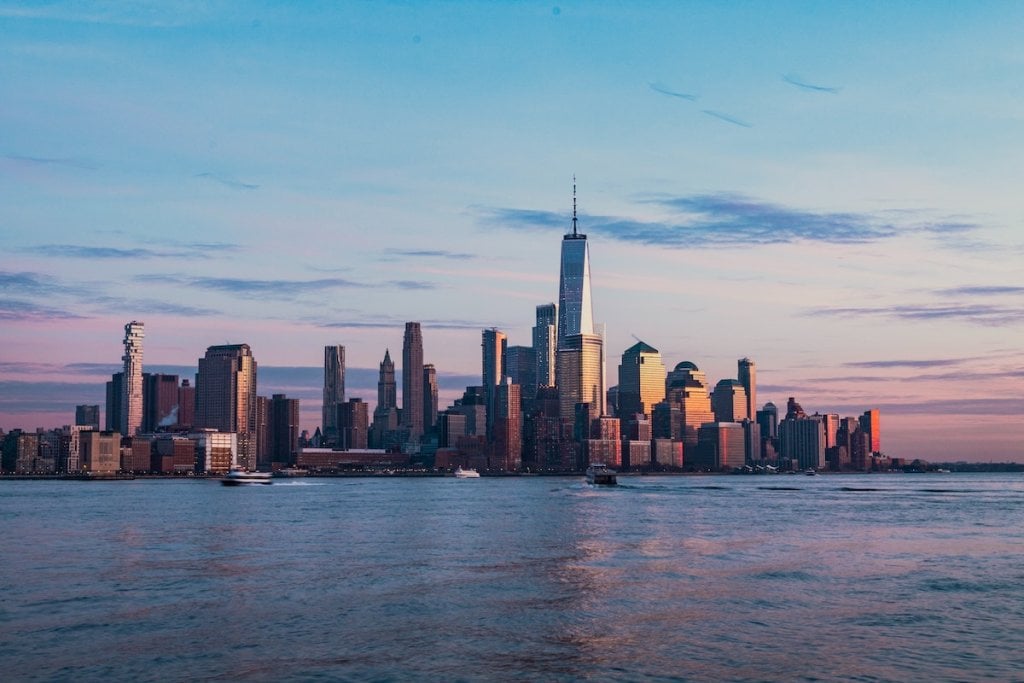
The contemporary New York City skyline

Twenty-two years ago, I sat in the office — actually the bottom two floors of a Victorian home with creaking, carpeted floorboards and an overstuffed kitchen — at Daily Information, the local paper where I worked in Oxford. It was mid-afternoon, and I probably had Dreamweaver open; I can’t remember exactly now. I’d taken a year’s break from my computer science degree because my as-yet-undiagnosed anxiety had gotten the better of me in the wake of the death of a close friend. It was the first job I’d ever had that paid for lunch, and the remains of a wholewheat bread slice with spicy red bean paté sat on a plate beside me. Between that and the array of laser printers, the room smelled of toast and ozone.

My dad showed up and told me what had happened: the twin air strikes of September 11, 2001, the details of which are now part of our indelible cultural consciousness. For the rest of the afternoon, we tried to learn what we could, refreshing website after website on the overloaded ISBN connection. One by one, every news website went down for us under the strain of unprecedented traffic, with the exception of The Guardian. I alternated between that and a fast-moving MetaFilter thread until it was time to go home. I vividly remember sitting at the bus stop, watching the faces of all the people in the cars that drove past, thinking that the world would likely change in ways that we didn’t understand yet.

George W Bush was President of the United States: a man who previously had presided over more executions than any other Governor of the State of Texas in history (roughly one every two weeks). While the attacks themselves were obviously an atrocity, he was, in my eyes, unmistakably an evil, untrustworthy leader, and it wasn’t clear that he wouldn’t start a terrible war in response. That was the fear expressed by most of my friends in England at the time: not who was behind the attacks and why?, but what will America do? I was the only American in my friend group, but I shared the same fear.

Of course, now we all know the story of the next two decades. We invaded Iraq under false pretenses, established a major erosion of civil liberties ironically called the PATRIOT Act which granted unprecedented authorities that live on to this day, and racist anti-Muslim rhetoric cranked up to eleven. All in the name of 2,753 people who didn’t ask for any of it. Even the first responders, much lauded at the time, struggle to get the support they need.

In 2002, my parents moved back to California to look after my Oma, and I joined them for a few months. I had the whole row on my transatlantic flight to myself, which seemed strange until I remembered, mid-flight, that it was September 11, 2002 (in retrospect probably the safest day to fly in history). When I arrived, I saw that the freeways were littered with tiny American flags that had fallen off the cars they had presumably been waving from over the last year. As a metaphor, discarded disposable American flags bought to illustrate a kind of temporary superficial patriotism seemed a little on the nose.

While the roads were littered with flags, the air was still thick with fear. My parents had moved to Turlock, a small town outside of Modesto where the radio stations mostly played country music and almond dust polluted the air. There was still a feeling that the next attack could happen at any time, and if it did, why wouldn’t it be here? The dissonance between the significance of the World Trade Center in New York City and the Save-Mart in Turlock seemed to be lost on them. It could happen anywhere. It was the perfect environment for manufacturing consent for war. What did it matter that Saddam Hussein had precisely nothing to do with the attacks and that the purported weapons of mass destruction were obviously fictional? He was brown too, wasn’t he? And, boy, we needed to get revenge.

Even now, I wonder if I should be writing these opinions. In a way, September 11 has become a sacred event. And, seriously, what gives me the right to be talking about it to begin with?

But the tragedy of that day has touched all of us, everywhere. It has also been used as a cover for harms that continue to this day. The deaths of those innocent people are still used to justify erosions of civil liberties; they are still used to justify racism; they are still used to justify mass surveillance domestically and drone strikes internationally; they are still used to justify draconian foreign policies. If any lessons at all were learned from September 11, I think they were the wrong ones.

There’s an alternate universe where America as a population decided that funding and arming covert operations in foreign nations to support American aims was a bad idea. The late Robin Cook, MP, the former British Foreign Secretary, wrote in the wake of the July 7 bombings in London:

‌In the absence of anyone else owning up to yesterday's crimes, we will be subjected to a spate of articles analysing the threat of militant Islam. Ironically they will fall in the same week that we recall the tenth anniversary of the massacre at Srebrenica, when the powerful nations of Europe failed to protect 8,000 Muslims from being annihilated in the worst terrorist act in Europe of the past generation.

[…] Bin Laden was, though, a product of a monumental miscalculation by western security agencies. Throughout the 80s he was armed by the CIA and funded by the Saudis to wage jihad against the Russian occupation of Afghanistan. Al-Qaida, literally "the database", was originally the computer file of the thousands of mujahideen who were recruited and trained with help from the CIA to defeat the Russians. Inexplicably, and with disastrous consequences, it never appears to have occurred to Washington that once Russia was out of the way, Bin Laden's organisation would turn its attention to the west.

The CIA, for the record, denies this. But there’s no denying the effect of American foreign policies overall, from Chile (whose US-aided coup was 50 years ago today) to Iran, let alone the disastrous wars in Iraq and Afghanistan. It’s still a mystery to some Americans why the rest of the world isn’t particularly fond of us, but it really shouldn’t be. (And it’s not, as some particularly tone deaf commentators have suggested, jealousy.)

I remember visiting Ground Zero for the first time. By that time, reconstruction was underway, but the holes were clearly visible: conspicuous voids shot through a bustling, diverse city. I think New York City is one of the most amazing places I’ve ever been to: all kinds of people living on top of each other in relative harmony. It’s alive in a way that many places aren’t. Every time I visit I feel enriched by the humanity around me. One of the reasons I live where I do now is to be closer to it.

I think New York City itself is a demonstration of the lesson we should have learned: one that’s more about cross-border co-operation and humanity than isolation and dominance. To put it another way, a lesson that’s more about love than fear. Some conservative politicians talk derisively about “New York values”, but man — if those values were actually shared by the whole nation, America would be a far better place. That was obvious in the way the city came together that day, and it’s been obvious in the way it’s held itself together since.

In contrast, I think the way America as a whole responded to the September 11 attacks directly paved the way to Trump. It enriched a right-wing populist leader and his party; it created divisive foreign policy based on a supremacist foundation; it once again marked people with a certain skin tone and a different religion as being second-class citizens; it promoted nationalism and exceptionalism; it eroded hard-won freedoms for everyone. We can thank Bush for stoking those fires.

True progress towards peace looks like a collaborative world where we consider ourselves to have kinship with everyone of all religions, skin tones, and nationalities, and where every human being’s life has inherent value. It looks like building foreign policy for the benefit of all people, not the people of one nation. It looks like true, vibrant democracy. It doesn’t look like performative flag-waving, drone strikes, religious intolerance, homogeneity, or surveillance campaigns.

Saying so shouldn’t dishonor the memories of everyone who died on that day, or everyone who died as a result of everything that followed. It also doesn’t besmirch our values. One of the greatest things about America is our freedom to hold it to account. That’s what democracy and free expression are all about. And those values — collaboration, inclusion, freedom, representation, multiculturalism, democracy, and most of all, peace — are what we should be working towards.


· Posts · Share this post

Email me: ben@werd.io

Signal me: benwerd.01

Werd I/O © Ben Werdmuller. The text (without images) of this site is licensed under CC BY-NC-SA 4.0.