 

On TikTok, misogyny and white supremacy slip through ‘enforcement gap’

"News investigations have nevertheless revealed that TikTok is used by Islamic State militants and to promote neo-Nazism. While the platform has started releasing transparency reports with details about the content it has removed for violating its guidelines, it is not yet part of a consortium of tech giants such as Facebook, Twitter and YouTube involved in an industry anti-terrorism effort to collaboratively track and review content from white supremacists and far-right militia groups."

[Link]

· Links · Share this post


Evolution is now accepted by a majority of Americans

“The level of public acceptance of evolution in the United States is now solidly above the halfway mark, according to a new study based on a series of national public opinion surveys conducted over the last 35 years.” That number is 54%, which is absolutely pathetic.

[Link]

· Links · Share this post


‘Bloody’ overtaken as the UK’s most popular swear word, study suggests

I've been self-censoring since I got to the US - people swear much less often here - but I'm being less diligent over time.

[Link]

· Links · Share this post


11 assertions about blockchain

  1. Proof-of-work is a disaster. There’s no way to couch it; arguments about it providing economic incentives for renewable energy are cognitive dissonance at best. Proof-of-work blockchains have the environmental footprint of a small country. Bitcoin could raise global temperatures by two degrees over the next decade all on its own. There is no valid argument for that being acceptable - or necessary.

  2. Not all blockchains are terrible. Algorand could be considered to be carbon-negative if you accept that carbon offsets are effective (I don’t). Still, it’s got a very low footprint. Proof-of-stake chains have a much lower impact; Ethereum is a high profile example of one that’s making the change. But, of course, it should have happened faster.

  3. The financialization of everything sucks. The instinct to put everything on-chain is a horrible idea that undermines social contracts in favor of free markets. In its worst embodiments, it’s a hardcore conservative libertarian’s wet dream. To have value, something doesn’t need to have financial value. Social contracts, representative democracy, social programs, and welfare all have immeasurable social value that should not be replaced with a Decentralized Autonomous Organization or anything else. Not to mention creating art for the sake of art, or community spaces for the sake of community. We don’t have to - and shouldn’t - make everything into a market.

  4. But putting some resources on-chain isn’t bad. A rough rule of thumb for me: if the current gatekeeper for a resource is a wealth silo (giant corporation, wealthy individual) then it’s a prime candidate for replacement by a decentralized mechanism. Once again for the conservative libertarians: our democratically-elected government represents us and our interests, so government-run programs are not candidates for this.

  5. Too many projects use an “if we built it they will come” mentality. I once saw a crypto investor tell an audience that he likes crypto projects to find an audience for their work in year two or three. That’s bonkers. As with every other software project - or every project - you need to validate the need and the users on day one. Otherwise you’re playing a very risky game, probably with other people’s money. It’s fun to pretend that you’re smarter than everyone else and can make something amazing without outside input, but it’s also highly unlikely.

  6. And most of them are near-impossible to use. Using web3 projects is a horrible, archaic user experience. Centralized exchanges like Coinbase are far easier to use than decentralized exchanges for almost everyone, and unless someone comes up with the equivalent of Netscape Navigator (the first truly usable web browser), centralized services will always be the gateway to blockchain tech for most people.

  7. Crypto may threaten to replace reserve currencies. The dollar has been used as a reserve currency for decades, but the ease of cross-border trade with cryptocurrencies may unseat it. Countries like China and El Salvador seem to be betting on this. It’s not obvious to me that a truly-decentralized currency replacing the dollar is a bad thing; but of course, not every cryptocurrency is truly decentralized. Even the likes of Bitcoin aren’t if a single entity controls enough of the miners.

  8. Crypto is transforming global trade on a local level (which is great). I’m personally aware of freelancers in countries like Colombia being paid in crypto rather than USD or local currency. Vietnam, India, and Pakistan lead global adoption. I think this is a really positive change that could have a major impact on traditional global power hierarchies.

  9. Some incumbents won’t go down without a fight. Both the empowerment of individuals in the global south and the upending of reserve currency structures will be major issues over the next decade or so. It’s the kind of change that has the potential to start wars. And at the very least, there are plenty of interests locked up in the traditional financial system that will do what they can to preserve their wealth.

  10. Free markets tend not to protect the vulnerable - and we can’t afford to not. We need mechanisms to mitigate climate change, to empower people who live in poverty, to support social goods like education and public health, and to ensure that everyone has the opportunity to lead a prosperous, good life in health and safety. Those things need to be dealt with intentionally.

  11. We need to be wary of crypto-libertarians. We need to beware of people who want to replace representative democracy with a financialized system, and who want to replace social safety nets with markets. Markets and society can happily live hand in hand; one does not need to replace the other. There are lots of opportunities that come with decentralization; conservative libertarians see opportunities to remove these social protections. We should continue to build for progress, and not tear down important protections that were hard-won over generations.


Photo by NASA on Unsplash

· Posts · Share this post


Feds Deliberately Targeted Black Lives Matter Protesters, A Report Says

"Movement leaders and experts said the prosecution of protesters over the past year continues a century-long practice by the federal government, rooted in structural racism, to suppress Black social movements via the use of surveillance tactics and other mechanisms."

[Link]

· Links · Share this post


Rain falls at Greenland ice summit for first time on record

“That meltwater is streaming into the ocean, causing sea levels to rise. Already, melting from Greenland's ice sheet --the world's second-largest after Antarctica's -- has caused around 25% of global sea level rise seen over the last few decades, scientists estimate. That share is expected to grow, as global temperatures increase.” We’re increasingly screwed.

[Link]

· Links · Share this post


Court rules California gig worker initiative is unconstitutional, a setback to Uber and Lyft

“A California judge on Friday ruled that a 2020 ballot measure exempting rideshare and food delivery drivers from a state labor law is unconstitutional because it infringes on the Legislature’s power to set workplace standards.” Great news!

[Link]

· Links · Share this post


Fairness Friday: California Immigrant Youth Justice Alliance

I’m posting Fairness Fridays: a new community social justice organization each week. I donate to each featured organization. If you feel so inclined, please join me.

This week, I’m donating to the California Immigrant Youth Justice Alliance. CIYJA is an organization run and developed by undocumented youth organizers. It describes its work as follows:

CIYJA is a statewide immigrant youth-led alliance that focuses on placing immigrant youth in advocacy and policy delegations in order to ensure pro-immigrant policies go beyond legalization, and shed light on how the criminalization of immigrants varies based on identity.

Its work includes pressure to divest from private prisons and to prevent deportations and family separations.

I donated. If you have the means, I encourage you to do the same.


Photo by Peg Hunter.

· Posts · Share this post


Op-Ed: As a doctor in a COVID unit, I’m running out of compassion for the unvaccinated. Get the shot

“I can pretty much guarantee we would have never met had you gotten vaccinated because you would have never been hospitalized. All of our COVID units are full and every single patient in them is unvaccinated. Numbers don’t lie. The vaccines work.”

[Link]

· Links · Share this post


The three-dimensional engineer

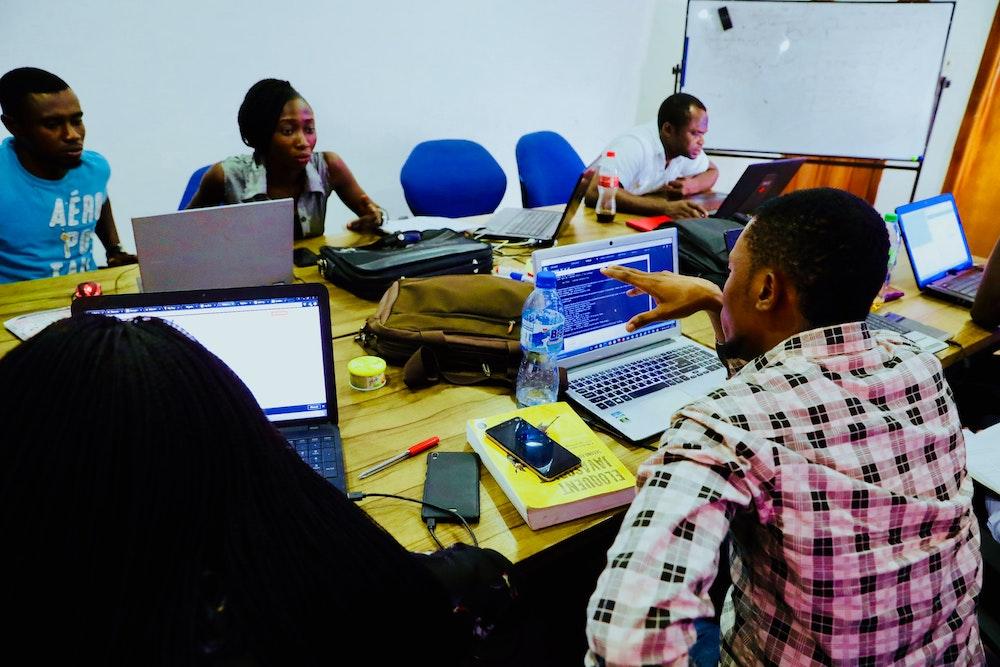
I’m hiring for a few engineers right now: five Ruby on Rails positions (most of them senior), two JS positions, and a quality engineer. More than a few people I’ve spoken to for these roles have apologized to me for coming from different backgrounds and not having been the product of a conventional CS track.

There’s no need to apologize for this. At all. In fact, I really like working with people who come from non-traditional backgrounds and/or small startups. Conversely, I’m not at all swayed by whether people went to top CS schools (or did CS at all) or are an an alumnus of a Fortune 500 tech company. Perhaps it’s worth exploring why; it seems obvious to me, but maybe isn’t to everyone.

The short answer is: it’s about priorities and values. Big companies and well-established CS tracks tend to (but don’t always!) lead to a certain kind of templated thinking that doesn’t necessarily translate to a smaller startup environment. People from more creative backgrounds or who have worked on smaller startups tend to be focused on making an outsized impact on a real, human problem using a broader set of skills, rather than developing a niche skill and working their way up the corporate ladder.

The skills required to climb the corporate ladder are intrinsically different to the ones required to solve problems quickly. One of the reasons I’ve avoided big tech companies for most of my career is that I’m allergic to office politics and the confrontation that inevitably arises: if a major concern for someone is building and maintaining power within an organization, becoming a gatekeeper to information, or not being willing to help build a supportive team culture, they’re going to be an obstacle to the team’s success.

If, on the other hand, a person’s focus is on solving the problems in front of the team and building the best product possible (including the best culture that leads to building the product), everyone is going to have a better time working together, and the product is exponentially more likely to be fit for purpose. All teams are communities of people pulling together to achieve a common goal. For any community to work well, the focus must be on the whole community’s success, while also ensuring that every member of the community is treated well and benefits from the group’s work.

In a smaller startup or organization, this is crucial. In these contexts, the focus needs to be on building. You have to go broad, because there just aren’t enough people to go around; you have to have a “no job too big / no job too small” mindset. Everyone needs to be a doer, not a manager. The CEO is doing everything from setting business strategy to unplugging the toilets. Engineers will sometimes need to make product decisions, think about design, or gather insights from customers. They need to find scrappy ways to get answers to questions themselves, sometimes by any means necessary. It’s not about hustling - hustle culture is not productive - but it is about pulling together to build the right product in the right way, using the full weight of your skills and insights.

I’ve been really impressed by engineers who have made their way to the discipline through meandering paths. Some of the best engineers I’ve ever worked with don’t have degrees; some studied music or art or literature. Perhaps this group has self-selected to be particularly passionate about solving the right sorts of problems; perhaps the wider breadth of disciplines helps to build stronger problem-solving skills; perhaps it’s something else entirely.

It’s not that you can’t have these skills if you’ve come from a traditional CS path. I studied computer science (with AI) in Edinburgh, and have met plenty of really strong team players with this background too. But they tend to be people who have been drawn to smaller, scrappier startups in the past. They’ve often built their own thing (although not everybody has the resources and freedom to do so, so perhaps they’ve been drawn to other people’s startups). They have a bias towards working on interesting projects rather than simply building up their own wealth and career.

It’s unfortunately also true that people from more “traditional” paths tend to be from a narrower demographic: CS degrees and Fortune 500 tech companies infamously have an inclusion problem. If you’re serious about solving problems for a breadth of people, you’d better have a team who represents those people. And, honestly, as well as being the right thing to do, it’s just more fun to work on a more diverse team.

Everyone on a team should be compensated well, should enjoy good work-life integration, and should be able to work in an emotionally supportive (not just emotionally safe) environment. Ideally, everyone should bring a different perspective, their unique creativity, and a set of skills and personality traits that allows them to contribute uniquely to the community as a whole. They should have a bias towards action and be able to Sherlock Holmes their way through problems in collaboration with their colleagues. That requires a sort of scrappiness that isn’t taught in CS degrees, and isn’t required in resource-rich Fortune 500 companies.

There’s no need to apologize for being different. I’m grateful for it, and I’m excited to build a community of unique, talented, creative people who build software that matters together.


This is a personal post, but I'm hiring Ruby on Rails, Front End JS, and Lead Quality engineers. If this is you, I'd love to meet you!

Photo by Lagos Techie on Unsplash

· Posts · Share this post


Global organizations urge Apple to drop child safety features

"More than 90 civil liberties organizations around the world sent a letter to Apple's Tim Cook Thursday, urging the CEO to walk back its plans to use machine learning to automatically detect child sexual abuse material on users' devices." Although everybody wants to protect children, the implications are unfortunately enormous.

[Link]

· Links · Share this post


Afghanistan's all-girls robotics team frantically trying to flee Taliban

"Members of the team, who range in age from 12 to 18, have overcome war and other hardships to pursue their love of engineering and robotics and strike a blow for national pride. They've made global headlines as a symbol of a more progressive Afghanistan."

[Link]

· Links · Share this post


If your question is "how can we keep all these people out of our country" and not "how can we help all these people in need", I'm not sure what to even say to you.

· Statuses · Share this post


‘It’s not hard work for me’: At 101 years old, this Maine lobsterwoman still works the water

"Virginia Oliver is the oldest licensed lobsterer in Maine and possibly on the planet. But in her eyes, it’s simply what she does. Her world has changed in once-unimaginable ways since 1920, but in other ways it’s hardly changed at all." Come for the story, stay for the amazing photo.

[Link]

· Links · Share this post


Afghanistan Meant Nothing. A Veteran Reflects on 20 Wasted Years

“And so I sit here, reading these sad fucking articles and these horrified social media posts about the suffering in Afghanistan and the horror of the encroaching Taliban and how awful it is that this is happening but I can’t stop feeling this grim happiness, like, finally, you fuckers, finally you have to face the thing Afghanistan has always been. You can’t keep lying to yourself about what you sent us into.”

[Link]

· Links · Share this post


Disability Advocates Fight Ruling Allowing Electric Shock Treatment Back In Mass. Residential School

“students wear backpacks equipped with electrical stimulation devices around the clock. Workers at the residential school employ the shocks using a remote control device when the students display a range of unwanted behaviors.” WTF?

[Link]

· Links · Share this post


2020 Census data: The United States is more diverse and more multiracial than ever

“While the under-18 population decreased during the last decade, it is rapidly diversifying. Non-White US residents younger than 18 now make up 53% of the population among minors, up from 47% in 2010.” (NB: I don’t like the “non-white” framing; white is not the default.)

[Link]

· Links · Share this post


Fairness Friday: California Environmental Justice Alliance

I’m posting Fairness Fridays: a new community social justice organization each week. I donate to each featured organization. If you feel so inclined, please join me.


This week, I’m donating to the California Environmental Justice Alliance. Based in Pittsburgh, Pennsylvania, the Abolitionist Law Center describes its mission as follows:

The California Environmental Justice Alliance (CEJA) is a statewide, community-led alliance that works to achieve environmental justice by advancing policy solutions. We unite the powerful local organizing of our members in the communities most impacted by environmental hazards – low-income communities and communities of color  – to create comprehensive opportunities for change at a statewide level. CEJA builds the power of communities across California to create policies that will alleviate poverty and pollution.

Particularly in the wake of the UN climate change report, climate change and establishing environmental justice is the key issue of our time. Low-income communities, and disproportionately people of color, will be the worst hit by climate change. Organizations like CEJA are crucial to solve the underlying problems and advocate for the vulnerable.

CEJA's campaigns include climate justice, advancing energy equity in California, and establishing green zones.

I donated. If you have the means, I encourage you to do the same.


· Posts · Share this post


Remarks Before the Aspen Security Forum by SEC Chair Gary Gensler

"Right now, large parts of the field of crypto are sitting astride of — not operating within — regulatory frameworks that protect investors and consumers, guard against illicit activity, ensure for financial stability, and yes, protect national security."

[Link]

· Links · Share this post


Nearly half of American workers don’t earn enough to afford a one-bedroom rental

“Rents in the US continued to increase through the pandemic, and a worker now needs to earn about $20.40 an hour to afford a modest one-bedroom rental. The median wage in the US is about $21 an hour.” Some absolutely dire statistics here.

[Link]

· Links · Share this post


What Peter Jackson’s Lord of the Rings looked like as two Weinstein movies

"My script review became the second part of a carefully coordinated one-two punch. At that point, Ain’t It Cool was a useful platform for filmmakers who were trying to convince studio heads that there was an audience out there for serious-minded genre fare produced with all of the resources required, and it was not always an easy sell. I was happy to make the case: The scripts were great enough that Jackson deserved the chance to see them through."

[Link]

· Links · Share this post


A Major Report Warns Climate Change Is Accelerating And Humans Must Cut Emissions Now

"Global climate change is accelerating and human-caused emissions of greenhouse gases are the overwhelming cause, according to a landmark report released Monday by the United Nations. There is still time to avoid catastrophic warming this century, but only if countries around the world stop burning fossil fuels as quickly as possible, the authors warn."

[Link]

· Links · Share this post


VCs are financing a servant economy

"But this is more than just the most recent unicorn-bubble fad. It’s bringing us one step closer to living in a servant economy. The world’s most powerful VC investors are funding an economy where technology allows a ‘ruling class’ to command an ‘underclass’ of servants with the swipe of an app."

[Link]

· Links · Share this post


Inclusive icebreakers

"To ‘break the ice’ is a metaphor for dissipating tension in a group of people who don’t know each other very well. Word Histories gives a bit of background behind the phrase, which seems to be hundreds of years old. However, there are still some common activities being used that have the opposite effect for some people – making them feel even more disconnected from the rest from the group." An important point with some great suggestions.

[Link]

· Links · Share this post


Atlantic Ocean currents weaken, signalling big weather changes

“The Atlantic Ocean's current system, an engine of the Northern Hemsiphere's climate, could be weakening to such an extent that it could soon bring big changes to the world's weather.”

[Link]

· Links · Share this post

Email me: ben@werd.io

Signal me: benwerd.01

Werd I/O © Ben Werdmuller. The text (without images) of this site is licensed under CC BY-NC-SA 4.0.